Apple Executives Visit Samsung’s Texas Facility Amid TSMC Chip Supply Challenges
In a notable shift, Apple is reconsidering partnerships with Samsung Electronics and Intel as potential foundry collaborators for its core device processors.
This initiative signifies Apple’s most substantial effort in over a decade to dilute Taiwan Semiconductor Manufacturing Company’s (TSMC) predominant control over the semiconductors that power iPhones and Macs.
According to a report by Bloomberg on Tuesday, Apple has embarked on preliminary discussions with Intel regarding its chip fabrication capabilities.
Concurrently, Apple executives have toured the Samsung foundry currently under construction in Taylor, Texas, which aims to commence operations in the latter half of this year.
As of now, no formal orders have been placed, and engagements with both suppliers remain in their nascent stages, as noted by sources familiar with the negotiations.
During Apple’s recent earnings conference call, CEO Tim Cook addressed investors, indicating a shortfall of advanced processors essential for iPhones and Macs, a situation that is adversely impacting growth trajectories.
“Our supply chain flexibility is notably constrained,” Cook remarked, emphasizing that “the primary limitation lies in the availability of advanced nodes used to produce our SoCs (systems on chip), rather than memory.”
He projected that several months would be necessary to achieve a balance between supply and demand.
This predicament has largely arisen due to the burgeoning demand in the artificial intelligence sector. Firms like Nvidia and AMD have commandeered much of TSMC’s cutting-edge production capacity, rendering even Apple—one of the foremost silicon purchasers—unable to secure the requisite volume.
Apple has commenced shifting a portion of its production to TSMC’s facility in Arizona, with expectations to source approximately 100 million chips from there this year. However, this quantity accounts for only a minor segment of its annual device shipments.
For Samsung, securing an Apple contract would mark a substantial credibility benchmark for its foundry operations, which currently capture less than 10 percent of the global market and have historically trailed TSMC in production yield.
The Texas facility represents Samsung’s most significant U.S. investment, bolstered by a long-term supply agreement valued at around 23 trillion won (equivalent to $15.8 billion) with Tesla, finalized last July.
Any potential agreement is likely to commence modestly. An industry authority noted, “It is improbable that Apple will delegate the entire main SoC for its flagship A-series and M-series chips to Samsung.
A phased dual-sourcing strategy appears more feasible, beginning with chips designated for older or mid-tier iPhones and iPads, which would be evaluated at Samsung’s Texas fabrication site.”
The last instance of shared production between the two companies occurred in 2015 with the A9 chip for the iPhone 6s, which was manufactured using both Samsung’s 14-nanometer and TSMC’s 16-nanometer processes.
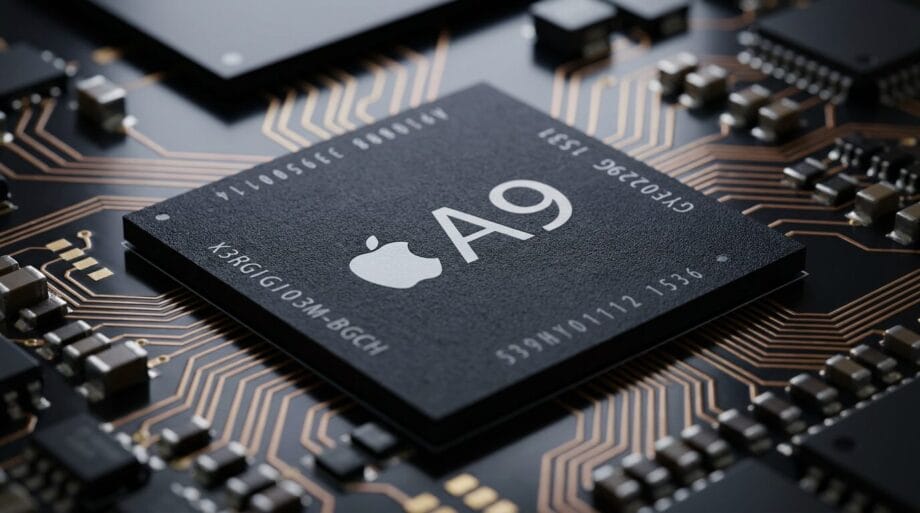
Disparities in battery performance under heavy usage sparked the controversial “chipgate” scandal, leading Apple to consolidate production exclusively at TSMC from the A10 Fusion onward.
Source link: Koreaherald.com.