In a groundbreaking departure from its conventional designs, Apple is poised to unveil the iPhone 20 featuring an unprecedented quad-curved display.
This innovative design, when paired with the company’s Liquid Glass UI, promises to create an alluring visual aesthetic that mimics a bezel-less appearance.
However, the realization of this advanced display presents formidable challenges, resulting in only a single manufacturer assuming this critical responsibility.
Nevertheless, an exclusive agreement for OLED components may prove to be financially burdensome for Apple, necessitating a premium for the supplier’s offerings.
Compounding these concerns, CEO Tim Cook has alerted stakeholders that the company’s DRAM inventory is dwindling. As a consequence, the iPhone 20 might emerge as the priciest smartphone ever produced by the tech titan in the coming year.
Samsung Only Supplier for iPhone 20’s Exclusive OLED: A Historical Context
In an era free from DRAM shortages, the iPhone X still set the benchmark as Apple’s most costly device, ushering in the age of $1,000 smartphones.
This price elevation stemmed largely from Samsung’s role as the exclusive OLED supplier, compelling Apple to pay upwards of $110 to $120 per unit, which necessitated a higher MSRP for the iPhone X.
As reported by The Korea Herald, the narrative may replay itself with the iPhone 20, as Samsung is again the sole source for the quad-curved display.
While LG remains a vital ally in Apple’s supply chain, Samsung’s established capacity and rigorous quality control mechanisms render it the most reliable partner for accommodating Apple’s demanding volume requirements.
However, this reliance on Samsung for the quad-curved OLED panels dictates that Apple will incur a significant premium for each iPhone 20 unit produced.
Moreover, with each 8GB LPDDR5X RAM module forecasted to incur a cost of approximately $180—accounting for 45 percent of the overall Bill of Materials (BOM)—Apple faces formidable obstacles in efforts to mitigate resulting price increases.
In light of these challenges, Apple could strategically harness the allure of its stunning design, positioning the iPhone 20 as a next-generation flagship worthy of its premium pricing.
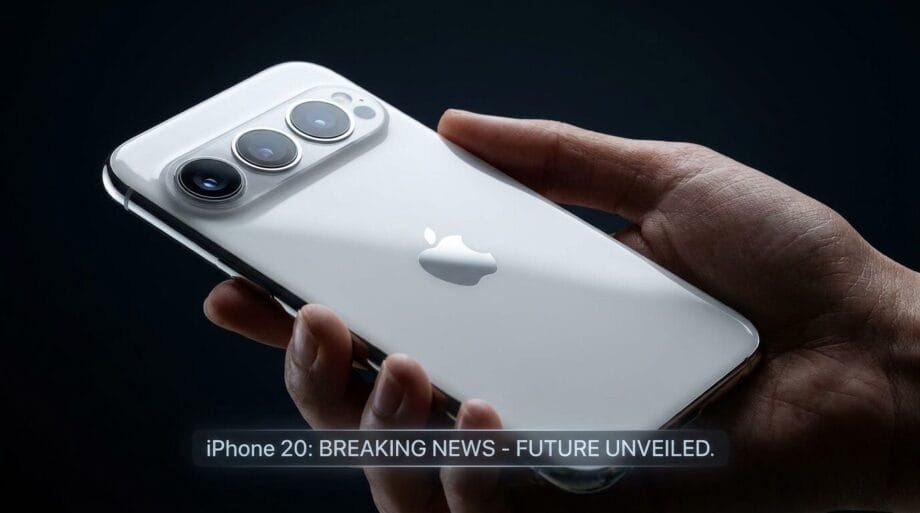
Those attuned to the “Apple effect” may find themselves enchanted by the product, ultimately adopting the iPhone 20 as their daily companion, although such an acquisition will come at a considerable cost.
Source link: Wccftech.com.