China Blocks Meta’s Acquisition of AI Startup Manus
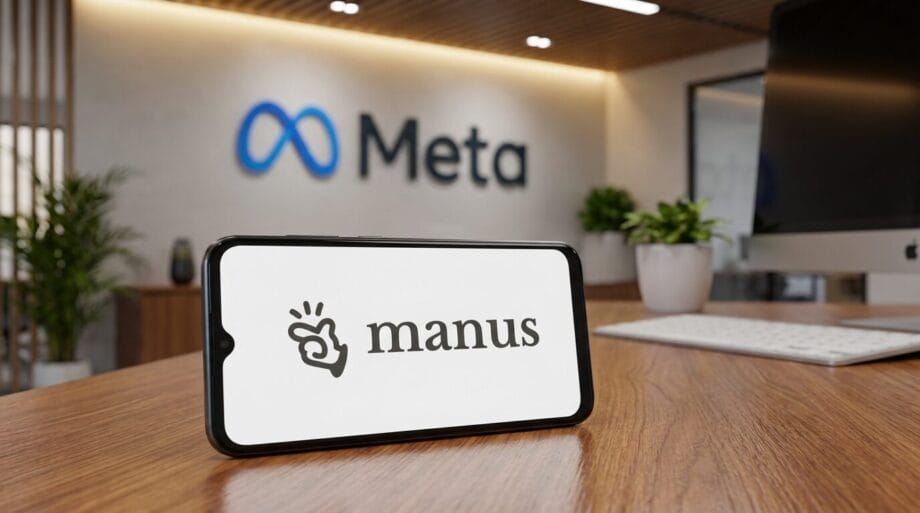
On Monday, China took the decisive step of blocking the acquisition of the artificial intelligence startup Manus by U.S. technology behemoth Meta.
This unexpected move appears to arise from Beijing’s apprehensions regarding the potential transfer of advanced technology.
China’s National Development and Reform Commission (NDRC), the nation’s apex planning authority, issued a succinct statement declaring a prohibition on the foreign acquisition of Manus.
All parties involved were instructed to withdraw from the agreement, although the statement fell short of explicitly naming Meta Platforms, the parent company of Facebook and Instagram.
Manus, although established with Chinese roots, operates from Singapore and furnishes a versatile AI agent capable of executing complex tasks autonomously, such as app development, conducting market research, or drafting quarterly budgets.
This decision originated from the commission’s Office of the Working Mechanism for Security Review of Foreign Investment, adhering to current Chinese laws and regulations. It follows earlier indications from Chinese authorities regarding an investigation into the deal.
The commission refrained from elaborating on the specific rationale behind the ban. The announcement emerged just weeks prior to President Trump’s anticipated visit to Beijing for discussions with Chinese leader Xi Jinping in May.
Kush Desai, a spokesperson for the White House, affirmed on Monday that the Trump administration is steadfast in its commitment to safeguard America’s innovative technology sector from unwarranted foreign interference.
Meta had revealed its intention to acquire Manus in December—a notable instance of a major U.S. tech entity seeking to purchase an AI firm with significant ties to China. The acquisition was projected to amplify AI capabilities across Meta’s diverse platforms.
Meta asserted that there would be “no continuing Chinese ownership interests in Manus” and that operations in China would cease. However, in January, Chinese authorities signaled they would scrutinize whether the acquisition conformed to their legal framework.
At that time, China’s Ministry of Commerce asserted that any entities involved in outbound investments, technology exports, data transfers, and cross-border acquisitions must adhere to Chinese law. According to Meta, most employees of Manus are situated in Singapore.
Before the acquisition attempt, Manus was under the umbrella of Singapore-based Butterfly Effect Pte, although its origins trace back to Beijing-registered entities established several years prior.
Manus has not responded to inquiries. Despite the blockade, the company’s website denotes that it “is now part of Meta,” suggesting the deal had indeed been concluded.
In a Monday statement, Meta maintained that the Manus transaction was compliant with all relevant laws, expressing optimism for a favorable resolution to the ongoing inquiry.
Industry analysts interpret this decision as indicative of China’s ruling communist regime tightening oversight on the AI sector, particularly against the backdrop of escalating geopolitical tensions with the U.S. regarding technology matters.
Lian Jye Su, a principal analyst at Omdia, commented, “China is demonstrating its readiness to adopt a tough stance towards AI talent and capabilities, a domain it considers a vital national security asset.”
He added that this scenario likely foreshadows future actions by Chinese authorities regarding acquisitions involving deep-tech entities.
The ban on acquisitions has the potential to deter similar interests from U.S. technology giants, according to analysts. Su remarked, “In this context of rivalry, it reflects U.S. export controls, entity lists, and investment restrictions imposed on China.”
Meta’s pursuit of Manus mirrors a broader trend among tech firms racing to develop advanced AI agents that surpass traditional chatbot functionalities, enabling them to perform computer-based tasks on behalf of users.
Recently, Meta acquired Moltbook, a social platform designed for AI agents to interact and create content, after it gained viral traction. This acquisition follows OpenAI’s hire of the creator behind the AI agent OpenClaw, previously known as Moltbot, which underpinned the technology for Moltbook.
Source link: Latimes.com.