GoPro, renowned for its innovation in mounting cameras on helmets, is now embarking on a bold new venture: envisioning a scenario where its compact device might supplant an entire cinematic setup.
The newly launched Mission 1 series represents GoPro’s most audacious endeavor yet to merge two sectors that seldom converge: ultra-portable, rugged cameras and high-caliber cinema equipment. On paper, this initiative boasts remarkable capabilities that seem astonishing given its diminutive size.
Compact Cameras with Impressive Specifications
The Mission 1 series comprises three distinct models — the Mission 1 Pro, Mission 1 Pro ILS, and the more user-friendly Mission 1 — each sharing a core genetic identity.
This begins with a new 50-megapixel 1-inch sensor, significantly larger than the customary offerings from GoPro, combined with a cutting-edge GP3 processor fabricated on an ultra-efficient 5nm architecture.
Such a combination yields headline-making specifications but, crucially, enhances their applicability in real-world scenarios. GoPro touts an impressive dynamic range of up to 14 stops, coupled with enhanced low-light capabilities attributed to larger effective pixel sizes.
In practical terms, this translates to superior detail retention in high-contrast settings — envision radiant skies alongside shadowy landscapes — alongside cleaner footage when the ambient light wanes.
Additionally, the performance potential is noteworthy. The premium models can capture 8K at 60 frames per second, as well as 4K at 240fps and ultra-high-speed bursts reaching 960fps in 1080p.
Such figures are typically associated with considerably larger and pricier cinema systems, not devices small enough to stash in a jacket pocket.
New: The DJI Avata 360 drone is now officially available for purchase in the U.S.
Amongst this impressive lineup, the Mission 1 Pro ILS emerges as the most consequential model. This variant integrates a Micro Four Thirds mount, unlocking access to a vast array of interchangeable lenses.
This pivotal development fundamentally transforms the camera’s functionality. Creators can now experiment beyond a confined ultra-wide perspective, delving into shallow depth-of-field, long-range telephoto shots, or specialized macro photography.
This versatility diverges from the rigid frameworks usually seen in mirrorless and cinema cameras — a notable evolution for GoPro users.
By venturing into interchangeable lens territory, GoPro not only augments its product offerings but also positions itself in direct contention with established entities in the lens market, while still capitalizing on its legacy of robustness and portability.
Constructed Like a GoPro, Functioning Like a Cinema Tool
Notably, amid this shift towards professional filmmaking, GoPro remains true to its origins. The Mission 1 and Mission 1 Pro models are waterproof to depths of 66 feet, eliminating the need for additional housing.
The design has been refined to better withstand arduous environments; larger buttons facilitate operation with gloved hands, while a more expansive OLED rear display enhances usability on location.
Battery longevity is another arena where GoPro seeks to distinguish itself. The manufacturer asserts that users can expect over five hours of recording at 1080p and upwards of three hours at 4K/30 on a single charge, bolstered by the efficiency of the GP3 chip and the newly designed Enduro 2 battery.
Thermal performance — often a weak link in compact high-resolution cameras — also features prominently, with GoPro touting the system’s capability for prolonged recording under demanding conditions.
Simultaneously, the camera embraces features that professionals anticipate. Support for 10-bit color, log profiles, elevated bitrates, and timecode synchronization positions the Mission 1 series as a formidable multi-camera production asset rather than merely a secondary or “crash cam.”
Audio quality has undergone substantial enhancements as well. A four-microphone array, complemented by 32-bit float recording, promises cleaner, more reliable sound.
Furthermore, a new wireless microphone system can seamlessly integrate with the camera and other compatible devices.
The comprehensive ecosystem surrounding this launch adds depth to its appeal. GoPro is not simply peddling a camera; it is constructing a modular system that can scale according to the user’s requirements.
An array of accessories includes grips that double as cages, media modifications that offer HDMI output and enhanced audio inputs, ND filters for cinematic exposure control, and even a powered grip that significantly extends recording durations.
For those desiring an all-in-one solution, bundled “Creator” and “Ultimate Creator” editions integrate these accessories into more extensive kits.
This cohesive approach is further solidified by the company’s software layer, which encompasses the GoPro Quik app, adept at managing cloud uploads, automated edits, and mobile-centric workflows. This combination of professional-grade capture and streamlined editing is evidently part of a broader strategy.
Pricing, Release Date, and Future Prospects
GoPro announced that it will disclose pricing and more detailed information at the NAB tradeshow (April 19-22), with preorders for select models commencing on May 21 and retail availability beginning May 28 in the United States.
The interchangeable lens variant, along with premium creator bundles, is anticipated to launch later this year, accompanied by a gradual introduction of accessories throughout the summer months.
Historically, GoPro has not only defined a category but has also found itself somewhat constrained by it. While action cameras are remarkably capable, they have seldom been recognized as primary tools for cinematic arts.
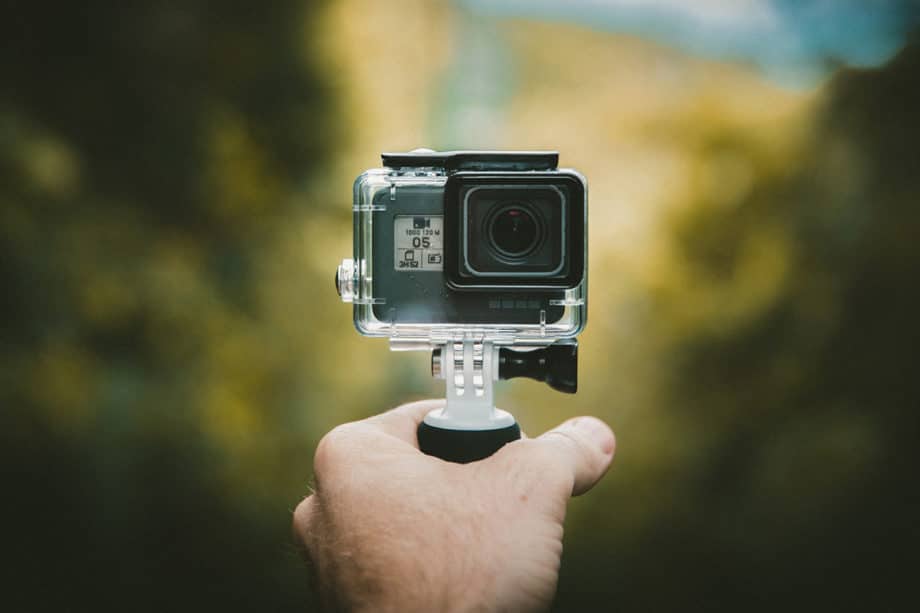
The Mission 1 series endeavors to shift that narrative. By amalgamating high-end imaging prowess with a robust, compact design, GoPro provocatively posits: what if your principal camera need not be large, fragile, or exorbitantly priced?
The real test of its equivalence with established cinema and mirrorless systems will ultimately hinge on practical performance. However, one observation stands clear — GoPro is not merely honing its niche but is actively striving to redefine its parameters.
Source link: Dronedj.com.