The Legacy of the IBM Simon: A Precursor to the iPhone
As the iPhone approaches its 20th anniversary next year, many reflect on its monumental role in ushering in the smartphone era. It is often mistakenly perceived as the first of its kind.
For those who witnessed its launch, the memory may be hazy regarding prior smartphones, largely because they have slipped into obscurity—exceptions being the Palm Pilot and BlackBerry. Yet, the narrative of the first smartphone extends well beyond these devices.
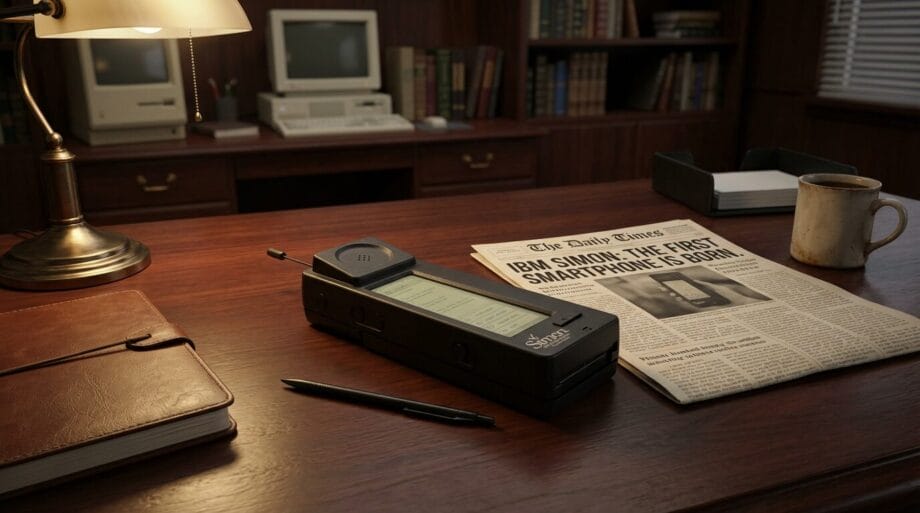
More than a decade before the iPhone revolutionized mobile technology, IBM introduced the IBM Simon in 1992, a bulky marvel that experts regard as the inaugural smartphone.
This groundbreaking gadget made its debut at COMDEX, a once-prominent computer trade show that flourished until 2003.
Although now a relic, COMDEX served as a pivotal platform for revolutionary products, including the unveiling of the first version of Windows in 1983.
Upon its release, the IBM Simon generated substantial buzz among technology aficionados. The device became commercially available in 1994, with its name chosen to convey user-friendliness, reminiscent of the classic Simon Says game.
Features of the IBM Simon
The IBM Simon showcased a remarkable suite of features for its era. It could make calls, send and receive emails, and even fax documents. Additionally, it was equipped with several built-in applications, such as a calculator, address book, and calendar.
Design-wise, however, it was a quintessential product of the early 1990s, measuring 8 inches in height, 2.5 inches in width, and 1.5 inches in thickness.
For comparison, the original iPhone stood at a mere 4.5 inches tall and weighed significantly less at just over a pound—more than three times lighter than the Simon.
The device’s user interface featured a backlit LCD touchscreen, operable via a stylus. In a twist of irony, the iPad Pro reintroduced the stylus in 2015—long after Steve Jobs criticized such interfaces when launching the iPhone.
However, Simon’s battery life was lackluster, lasting only about an hour with regular usage, and its starting price of approximately $900 made it prohibitively expensive.
Consequently, it was not surprising that the IBM Simon’s market presence was short-lived, enduring just six months.
The Visionary Behind the IBM Simon
The conceptualization of the IBM Simon stemmed from an innovative IBM engineer named Frank Canova.
By the early 1990s, Canova was exploring touchscreen technology for next-gen PCs while also utilizing cell phones. One day, inspiration struck him: why not amalgamate the capabilities of a phone and a computer into a single device?
IBM’s management was intrigued and promptly green-lit the development of this idea. Despite typical slowdowns in product development, Canova’s progress was significant enough that the company resolved to unveil Simon at the upcoming COMDEX.
His team faced a frantic race to finalize a groundbreaking concept that would not gain mainstream traction for over a decade.
Upon its release in 1994, the IBM Simon struggled to attract attention, partly due to its exorbitant price. Moreover, the device was simply ahead of its time, arriving as the internet began to gain traction, but while consumers were still grappling with the basics of email and web browsing.
The concept of a mobile phone facilitating such tasks was simply ahead of societal readiness. Consequently, poor sales prompted IBM to abandon the initiative, while Canova continued his career at Palm, contributing significantly to the Palm Pilot team.
Source link: Aol.com.