As Apple commemorates its 50th anniversary, it faces the imperative to demonstrate its prowess in the realm of artificial intelligence amid the rapidly evolving tech landscape of Silicon Valley.
Co-founders Steve Jobs, a visionary marketing strategist, and Steve Wozniak, the architect behind the Apple computer, catalyzed a transformative shift in technology usage during the internet era. Today, they preside over an enterprise valued at over $3.6 trillion.
These two college dropouts revolutionized not just computing, but how individuals engage with music and maintain communication on the go, ushering in lifestyles punctuated by smartphone applications.
Apple’s iconic products—the Macintosh, iPhone, Apple Watch, and iPad—boast an almost cult-like following, a testament to their enduring impact since the company’s inception on April 1, 1976, in Jobs’s modest garage in Cupertino, California.
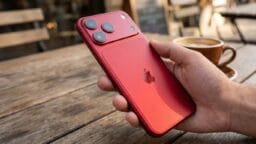
Since the iPhone’s launch in 2007, Apple has sold over 3.1 billion units, generating approximately $2.3 trillion in revenue, as reported by Counterpoint Research.
According to analyst Yang Wang from Counterpoint, the iPhone stands as the pinnacle of consumer electronics, fundamentally altering human communication while evolving into an emblem of global fashion and prestige.
Prior to the iPhone, Apple had already disrupted the home computing space with the groundbreaking Macintosh in 1984. Its iconographic interface and mouse accessibility democratized computing, igniting a legendary competition between Jobs and Microsoft’s Bill Gates.
“Apple was founded on the radical idea that technology should be personal. That belief transformed the landscape,” stated Tim Cook, the company’s CEO, in an anniversary correspondence shared online.
‘The Apple Cult’
Apple redefined the music industry through the iPod and iTunes, established the smartphone as a mainstream essential with the iPhone, and popularized tablets with the iPad.
The Apple Watch, despite entering the market later than competitors, swiftly ascended to dominance in the smartwatch domain.
While not an inventor by trade, Jobs—who passed away in 2011 at 56—was celebrated for his relentless pursuit of merging technology with design, creating user-friendly products that are intuitive to navigate.
Initially promoted as “the computer for the rest of us,” it was the iPhone that truly realized that vision, explained David Pogue, author of the newly released “Apple: The First 50 Years.”
The iPhone’s overwhelming success transformed Apple’s business model. With the premium smartphone sector appearing saturated, Cook has increasingly pivoted toward monetizing digital content and services from the company’s expansive user base.
Integral to this approach is the App Store, which serves as the exclusive channel for software on Apple devices, drawing scrutiny for alleged monopolistic practices and prompting regulatory investigations in Europe as well as legal challenges in the United States to diversify its platform.
‘The China Aspect’
No country has played a more significant role in Apple’s ascent or posed more complex challenges for its future than China. Cook has forged bonds with the Asian giant through consistent appearances in local Apple stores and high-level visits.
He spearheaded the strategy that positioned China as Apple’s primary manufacturing hub, with a substantial majority of iPhones assembled by contractor Foxconn and other local suppliers.
China also represents one of Apple’s largest consumer markets, generating tens of billions of dollars in annual revenue.
However, the company grapples with mounting pressures: escalating trade conflicts and tariffs have expedited efforts to relocate manufacturing to India and Vietnam, while domestic competitors like Huawei have encroached on Apple’s share of the Chinese market.
‘AI Enigma’
Investors harbor concerns that Apple is lagging in the generative AI sphere, as rivals Google, Microsoft, and OpenAI rapidify their advancements.
A promised enhancement to its Siri digital assistant faced delays, marking an atypical misstep for the company.
In a notable strategic shift, Apple has sought AI capabilities from Google rather than leveraging its own engineering resources to revamp Siri.
Nevertheless, whether developed in-house or through partnerships, Apple’s strong commitment to user privacy, coupled with its high-end hardware, could potentially position it to spearhead the widespread adoption of personalized AI—an endeavor that remains elusive for much of the industry.

Currently, Apple’s AirPods are undergoing iterative enhancements with new sensors and advanced software, while insights garnered from the Vision Pro may pave the way for AI-infused smart glasses to compete with those of Meta.
“They have a unique ability to simplify technology, making it irresistible to users,” noted Carolina Milanesi, an analyst at Creative Strategies.
Source link: Fox21online.com.