Quick Summary:
XR is quickly transforming virtual consultations by making them more lifelike, interactive, and confidence-building across industries. From healthcare and real estate to retail, finance, and education, XR delivers clearer communication, stronger decision-making, and more personalized guidance than traditional video calls. Its success hinges on reliable product sourcing and trusted supply chains behind the scenes.
As hardware improves and adoption accelerates, XR is becoming the new standard for immersive, efficient, and emotionally engaging consultations – bringing real presence into virtual interactions.
Introduction
There is a point where screens stop feeling enough. You notice it more now. People talk about connection, faster communication, and better ways to meet. Yet video calls still feel flat. Almost cold. And the world is clearly heading toward something richer. Something that sits between tech and real presence. That space is shaped by XR technology.
XR keeps pulling industries in, even the ones that once swore that nothing could replace in-person contact. And that is where things get interesting. Consultations that once demanded travel, scheduling gymnastics, and a long list of intermediaries now sit inside a headset or even a phone. The shift feels slow on the surface, but once you start looking at what has been happening behind the scenes, it feels like a quiet earthquake.
Why XR Consultations are Getting So Much Attention

Companies want efficiency but also a sense of realness. Customers want clarity but also comfort. XR sits right between those two needs. People are starting to see how much time gets saved when you can walk through a space or preview a product without leaving the house. And once someone experiences a lifelike session for the first time, regular video calls suddenly feel weak.
This momentum cuts across so many sectors. Healthcare, design, retail, finance, logistics. Everyone is trying to find a way to bring expertise closer to the user without making the experience stiff or complicated. And XR seems to offer that middle ground, the part where communication feels natural again.
The Link Between Better Virtual Experiences and Real-World Decisions
Here is where things start shifting. The stronger the XR environment, the more confident people become in their choices. No guessing. No vague explanations. No mental gymnastics. You see things the way they would look or work in reality.
To function at that level, digital platforms lean heavily on reliable product sourcing. Especially for businesses operating in fields where clients need reassurance that what they are discussing is backed by trusted supply chains.
Many companies base their virtual advisory frameworks on access to verified items and clear documentation. This kind of dependable backend is what helps consultations feel credible. The trust behind the scenes shapes how clients react on the screen.
How XR is Reshaping Consultations Across Industries
“The best consult no longer happens across a desk; it happens inside a shared scene. XR lets clients see, not guess – and that turns doubt into decisions.”medsupplysolutions.com
Every industry pulls XR in differently, yet the pattern is visible. People want realism. People want clarity. And people want to feel that someone is guiding them with proper insight.
1. Healthcare: Remote Expertise Without Losing the Human Touch
Telehealth used to feel rushed and blurry. XR changes that. A patient can walk through a visual model of a treatment path. A clinician can point to details inside a 3D diagram instead of waving their hands in front of a webcam. It feels less robotic and more like a genuine conversation.
Remote consultations become:
- clearer for people who struggle to picture what the specialist is describing.
- more engaging for those who need extra reassurance before moving forward.
It also helps clinicians decide when someone actually needs to come in physically. A more informed decision. A calmer patient.

2. Real Estate and Architecture: Faster Decisions, Fewer Surprises
Everyone knows the feeling of walking into a property and thinking; This is not what the photos showed. XR overrides that disappointment. Consultations with architects or agents become honest. Rooms appear at their real scale. Light, spacing, layout. You walk inside the plan instead of trying to read the measurements.
Remote design sessions start to feel collaborative. You point at something, the architect adjusts it in real time, and suddenly the plan clicks. People avoid expensive revisions because they see what they are approving.
3. Retail and Customer Experience: Trying Before Buying Without Leaving Home
Retailers love XR because it cuts return rates. Customers love it because they stop guessing. Virtual fittings, product demos, and consultations about sizing or customization. Everything becomes visual. You talk to a consultant while seeing the item on you or in your space. Decisions become lighter. Less pressure. More confidence.
4. Finance and Legal: A More Confident Client Sitting Behind a Screen
Surprisingly, professional services thrive with XR too. Complex topics feel less intimidating when broken down through visual layers. A client sitting across a virtual table from a financial advisor feels more guided. Legal consultations no longer rely on long documents shown in tiny windows. XR lets clients walk through diagrams, timelines, and contract elements in a way that feels digestible.
The key here is presence. XR gives the sense that the advisor is right there, even if physically somewhere else completely.
5. Education and Training: Skills Learned in a More Natural Setting
Teachers and trainers have been pushing for better tools for years. XR solves the biggest issue: engagement. Students stop drifting because the environment keeps their attention. Training that once required special labs or setups can now happen at home. It makes the learning curve smoother. Learners move at their own pace, yet still feel guided.
The Part That Quietly Reshapes Everything
Here is something people rarely bring up: XR does not work well without dependable logistics underneath. When a consultant recommends something in a virtual session, the product must be real, verifiable, and ready to deliver. That is the unglamorous foundation that keeps the whole system stable.
And this is why many businesses now build their consultation pipelines around suppliers that provide proper authentication, transparent sourcing, and a wide selection of legitimate items. The virtual scene may feel futuristic, but the trust comes from the supply chain behind it. Platforms that offer secure access to products used by licensed professionals help companies protect their reputation while using XR as their consultation stage. That reliability becomes part of the experience even if clients never see it directly.
Why Companies Want to Adopt XR Technology So Quickly
“Even the stodgy are blinking awake. XR turns rigid processes into human moments, and clients respond.”Wake Forest University School of Medicine
Decision fatigue is a real issue. People want clarity without extra steps. XR gives companies a way to keep customers engaged while cutting friction from the process. Businesses see how much faster clients decide when they feel fully informed. And the numbers behind satisfaction scores tell the rest.
Companies appreciate XR because it:
- cuts down on repeat consultations.
- helps reduce errors caused by miscommunication.
- increases customer trust with a visual explanation rather than text.
Even industries that once felt rigid now loosen up to the idea because clients respond better to immersive interactions.
The Emotional Side of XR Consultations
It surprises people, but XR also softens communication. A virtual room feels calmer than a harsh office environment. Clients open up more. They ask better questions. They stay focused. There is a small psychological comfort in having a layer of virtual space that still feels close but not overwhelming.
This shift helps consultants deliver advice with more nuance. Facial cues come through better. Body language becomes visible in context. And both sides feel like they are working together rather than handling a transaction.
Where This is All Heading

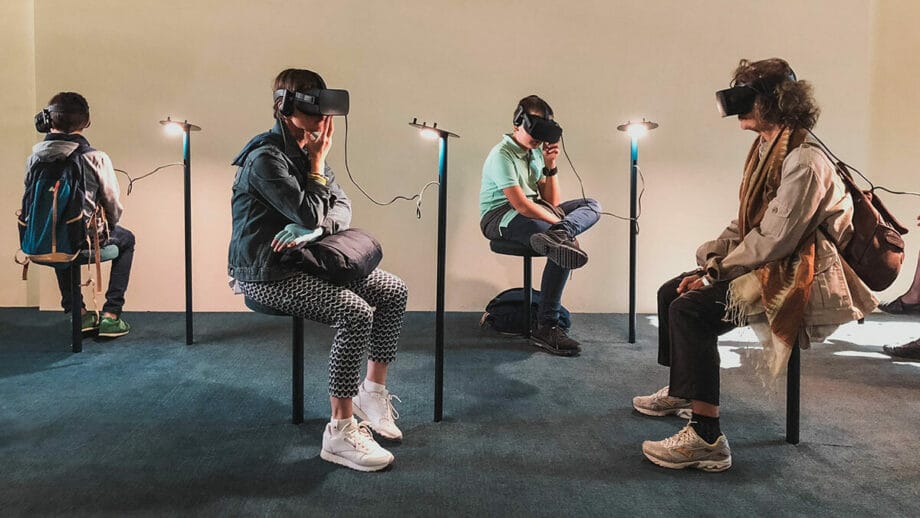
You can already see the early direction. Headsets are getting lighter. Phones handling AR as if it is nothing. Companies blending physical and digital advisory rooms. People expect hybrid support as a standard service. Not a luxury. Not a novelty.
The industries adopting XR today are basically laying the groundwork for how consultations will feel years from now. Effortless presence. Realistic demos. Clearer communication. And an environment that makes decisions feel grounded instead of rushed.
That shift will not slow down. Not now that people know what a consultation looks like when it almost feels real.