Quick Summary
Remote triaging uses telemedicine, AI analytics, and digital health tools to assess patients remotely, enabling faster access to care without unnecessary hospital visits. It reduces wait times, prevents hospital overcrowding, lowers costs, improves patient experience, supports better clinical decisions, and enables scalable, data-driven healthcare models. Overall, it delivers safer, faster, and more efficient care while strengthening continuity and preventive healthcare.
Introduction
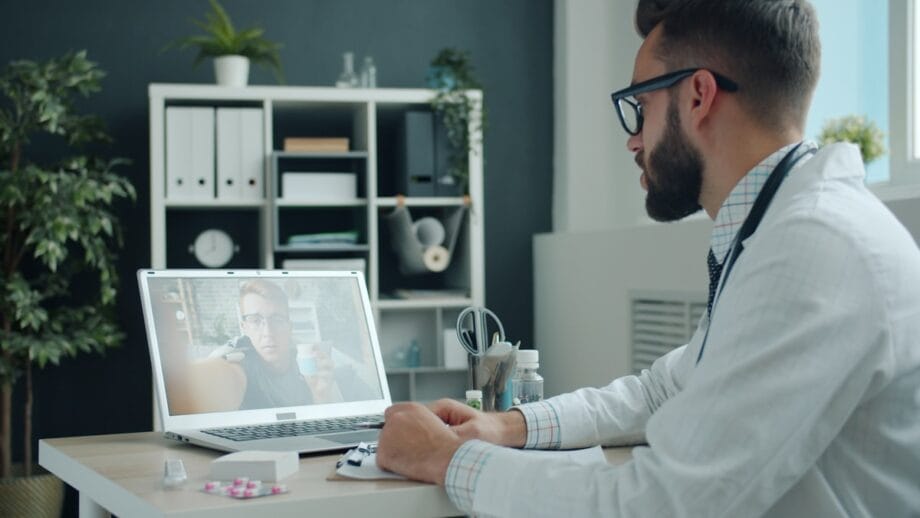
For healthcare professionals, it’s a well-known term. Typically, the healthcare industry considers remote triaging as an innovative process that allows patients’ health assessment and discovering their needs for well-being remotely. It means this process enables a doctor to communicate with patients from a distance over communication channels like the Zoom app.
AI-powered health analytics tools and managed applications complete remote triaging. These components ensure that patients receive instant care without visiting hospitals when their health does not require it. This practice also offloads operational burdens from doctors and operational teams in hospitals and clinics.
It’s a revolutionary transformation in the modern healthcare system where patients’ demands are beyond capacity. Remote triaging is emerging as a new prototype of healthcare systems.
Advantages of Remote Triaging in the Modern Healthcare System

Now that you have learned what it is, let’s introduce you to several positive outcomes of this modern healthcare system.
1. Faster Access to Medical Attention
One of the most compelling benefits of “remote triaging” is the speed of access to healthcare services. Traditional triage systems often require patients to physically visit hospitals or clinics, resulting in long waiting times and delayed interventions. Remote triaging, on the other hand, leverages digital platforms – such as video consultations, chatbots, and telemedicine portals – to assess patient symptoms in real time.
Speedy deliveries, speedy workflows, fast results, or whatever speed receives most appreciation. Remote triaging has made remote access to healthcare a reality. Unlike traditional systems, it provides healthcare and support from online channels. Result?
It’s awesome, as patients can leverage telemedicine portals to receive online health check reports and prescriptions without waiting for hours. This practice prevents delayed medical interventions. Doctors communicate with patients and assess their symptoms in real time through video consulting tools, chatbots, and telemedicine portals.
Furthermore, managed healthcare applications power remote triaging. Patients can use them to log their symptoms with medical history, and concerns online. Apps’ algorithms and even medical professionals can review it to diagnose whether the patient has an emergency to receive medical care at a hospital or if home-based care is sufficient. So, the response time significantly reduces.
2. Reducing Hospital Overcrowding
Did you see emergency departments? They appear overcrowded mostly, and this can be seen worldwide. It burdens healthcare staff who cannot compromise on the patient’s safety. The remote triaging method navigates this challenge, enabling screening before their hospitalization. If the case is not that bad, it is controlled remotely. Simply put, only critical ones are admitted to the emergency ward. So, the patients’ wait times are minimized via triage systems.
In cases of pandemics, when public health crises are at their peak, this method plays a crucial role. It restricts exposure risks by directing hospital visits to those who are in need. This is how it protects patients and frontline workers from contagious infections or diseases.
3. Cost Efficiency for Healthcare Providers and Patients
Do you think remote triaging is only clinically effective? It has economic benefits, also. Hospitals and clinics save administrative and operational costs associated with in-person assessments. It nurtures a sustainable healthcare economy in areas where quality healthcare services are not easily accessible.
Its success depends on its digital workflow, which must be smooth and fast. Managed medical IT support provides companies with glitch-free triage operations online. From cloud storage and maximizing uptime to data privacy, these companies put all efforts into keeping them seamless.
4. Enhancing Patient Experience and Engagement
A modern healthcare system focuses on patients’ well-being status, which helps in achieving this vision. With digital triage systems, patients can interact with doctors to report their symptoms during consultation. And in return, doctors guide them online – all without leaving home. This practice boosts satisfaction in both, promoting a more consistent engagement with healthcare specialists.
A few triage systems can show real-time reports on medical results, follow-ups, and medical records, which amplify their benefits. Patients appreciate this transparency. Also, they feel more confident in asking how to manage their health. Overall, it’s a trust-building practice that supports preventive care practices.
5. Supporting Healthcare Professionals with Better Decision-Making
Remote healthcare systems yield better results via AI-driven analytics and clinical tools. Physicians and doctors feel more connected with their patients from their comfort zone. They evaluate their health status accurately by leveraging AI-generated health analytical reports, which are backed by historical health patterns and recommendations from an established doctor.
So, smart analytical results eliminate the scope for fatal errors in discovering how well the patient’s health is. Accordingly, one receives the right treatment. Managed medical IT assistance is the foremost reason for this achievement.
Can you imagine if it might be possible without managed medical IT support? The answer is absolutely no. It helps enhance the quality of care.
6. Enabling Scalable and Remote Healthcare Models
Scalability is the need of the hour for worldwide healthcare systems. The remote-first care healthcare model makes it achievable. So, triaging is enabling healthcare systems to transform, offering valuable support to assess thousands of people’s health across regions. Every national and global healthcare network needs it.
Modern triage does not need a personal clinic or hospital, which has its own overheads and ownership costs. Simply put, triage operations don’t need expensive physical infrastructure. A clinic with the capacity to treat 100 patients can manage the health of 10,000 patients in real time. But without managed IT support, this would remain a dream. These tech specialists keep their systems connected, secure, and compliant with HIPAA or GDPR compliance.
7. Data-Driven Healthcare and Predictive Insights
Remote triaging has another benefit, which is related to data collection. It generates scalable health data, which is crucial to practicing and inventing new treatments in the medical world. With AI, discovering hidden patterns becomes effortless. It reveals prospective disease outbreaks and prepares healthcare specialists to optimize their resources. Later, these patterns can be ideally used for staffing, infrastructure management, and preventive care strategies accordingly.
Managed healthcare apps with smart analytics can tell triage outcomes, patients’ health trends, and performance. To keep this digital system healthy, the managed support team safeguards relevant data to process and share across authorized networks. This practice promotes actionable healthcare intelligence.
8. Strengthening Continuity of Care
Healthcare is a continuous process if one expects excellent results in the cases of chronic illness in the long term. With remote triaging, suffering patients can be observed regularly without frequently visiting hospitals. Even doctors don’t have to strain their brains. Its automated reminders, symptom trackers, and virtual follow-ups bring consistency in communication between patients and care teams.
For smart clinics and healthcare specialists, managed medical IT support can simplify the way to strengthen care by syncing triage data with electronic health records, or EHRs. Moreover, it automatically completes and keeps the data up to date, improving healthcare efficiency.
Conclusion

Remote triaging is indeed a new term, but it is one of the most fascinating innovations that brings technology and healthcare efficiency together. It powers them to provide safer, faster, and more affordable care to patients within limited resources. For sure, these remote triaging systems also need support, which managed medical IT support specialists can provide quickly. They boost value-based care traditions effectively.