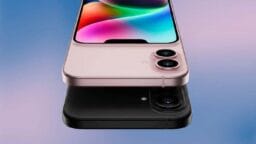
Xiaomi 18 Fold vs. Apple Duo: A Clash of Foldable Titans
Xiaomi unveiled its highly anticipated Xiaomi 18 Fold during a product launch event in China on September 7, 2026, while Apple countered with the announcement of the iPhone Duo just two days later, on September 9.
Although the iPhone Duo remained under wraps when the Xiaomi 18 Fold took to the stage, the immediate comparison was inevitable, particularly due to the distinct, rounded, passport-style design of both devices.
A meticulous comparison reveals striking similarities in format, screen dimensions, and thickness, yet contrasts emerge in terms of camera technology, battery capacity, materials used, and hinge mechanisms.
Current reports indicate a conspicuous leak chain, a rival company’s pattern of imitating Apple, and the reality of Apple entering a competitive market long dominated by Samsung and various Chinese manufacturers.
How Do They Stack Up?
Both devices embrace a wide, book-style foldable format that reveals a generous inner display when opened.
Gulf News characterized both phones as sharing similar passport-style designs with approximate outer and inner screen sizes.
The specifications listed below derive from external comparisons rather than the manufacturers’ disclosures.
- Format: Wide, passport-style book fold (Xiaomi) | Wide, passport-style book fold (Apple) | Identical.
- Inner Display: 7.58 inches, AMOLED, 2364 x 1672 (Xiaomi) | 7.6 inches, OLED, 2670 x 1878 (Apple) | 0.02-inch difference.
- Cover Display: 5.38 inches, 1712 x 1168 (Xiaomi) | Approximately 5.4 inches, 2034 x 1398 (Apple) | 0.02 inch discrepancy.
- Refresh Rate: 1-120Hz LTPO (Xiaomi) | 120Hz LTPO (Apple) | Equivalent capabilities.
- Unfolded Thickness: 5.02mm (Xiaomi) | 5.2mm (Apple) | 0.18mm variance.
- Folded Thickness: 10.68mm (Xiaomi) | 11.3mm (Apple) | Slight difference.
- Memory and Storage: Up to 16GB RAM, 256GB base (Xiaomi) | 12GB RAM, 256GB base (Apple) | Overlapping base tiers.
- Unlock Mechanism: Side fingerprint sensor (Xiaomi) | Touch ID (Apple) | Similar methods.
- Selfie Cameras: 16MP on both screens (Xiaomi) | Dual front and inner cameras (Apple) | Same configuration.
- Weight: 219g (Xiaomi) | 254g (Apple) | Discrepancy in heft.
- Battery Capacity: 6,000mAh (Xiaomi) | 5,400mAh (Apple) | Divergent specifications.
- Rear Cameras: 200MP main, 50MP telephoto, 50MP ultrawide (Xiaomi) | 48MP main, 48MP ultrawide (Apple) | Notable difference.
- Frame Material: 7000-series aluminum alloy (Xiaomi) | Grade 5 titanium (Apple) | Distinct choices.
- Hinge Design: Three-link “Dragon Bone” (Xiaomi) | Titanium, containing over 100 components (Apple) | Different constructions.
- Starting Price: 10,999 yuan (approximately $1,640) (Xiaomi) | $1,999 (Apple) | Pricing disparity.
Both devices exhibit nearly identical aspect ratios, with the calculated inner-screen resolutions approaching 1.41:1 for the Xiaomi 18 Fold and 1.42:1 for the iPhone Duo—figures derived from this article’s analysis rather than specifications provided by either company.
PC Guide described the internal displays as “nearly identical,” and Techloy noted the two devices’ unfolded thicknesses as being similar.
Additionally, Gizmochina pointed out that both models employ 120Hz LTPO panels with HDR and Dolby Vision capabilities, alongside Wi-Fi 7 support.
Where They Diverge
The telephoto lens stands out as the most significant functional distinction between the two devices. Xiaomi boasts a 50MP periscope telephoto lens with 3.5x optical zoom paired with a 200MP Leica main sensor.
In contrast, the iPhone Duo is equipped with two 48MP rear cameras but lacks a telephoto feature entirely, as noted by MacRumors.
Furthermore, Xiaomi’s offering is lighter at 219g, compared to the 254g of the Duo, and it integrates a larger battery with 67W wired and 50W wireless charging capabilities.
Apple’s device, meanwhile, employs a titanium frame and a different hinge design, affording it a broader international distribution.
Divergent Rollouts
The two phones do not directly compete on a global scale. The Xiaomi 18 Fold is confirmed exclusively for the Chinese market.
Reports from ChannelNews indicate that a broader availability and pricing strategy for Australia and other regions has yet to be announced, with previous iterations of Xiaomi foldables remaining confined to China.
Conversion estimates place the price at approximately $1,640 or between A$2,260 and A$3,290 for varying configurations.
Conversely, Apple intends for a worldwide rollout. As per MacRumors, the iPhone Duo will be available for pre-order on October 16 at 5 a.m. Pacific Time, with a retail debut on October 23 across the U.S. and over 70 additional countries, including Australia, Canada, France, Germany, India, and the U.K.
An additional 28 international markets are set to follow on October 30. Pricing in the U.S. ranges from $1,999 for the 256GB model up to $3,199 for the 2TB variant.
Consequently, China emerges as the primary battleground for these two devices. A CNBC report, shared by Silicon Report, announced that Apple’s launch in China is slated for October 23, contingent upon approval for eSIM from mainland authorities.
The report also identified Honor, Oppo, Vivo, and Huawei as established competitors in the foldable market that Apple is approaching.
The Market Apple Joins
Apple’s entrance is belated. Counterpoint Research, in a forecast released on September 8 and summarized by Apple World Today, anticipates that by the year’s end of 2026, Apple will capture about 25% of global foldable shipments, positioning itself as the second-largest player in the market.
Tarun Pathak, a Counterpoint director, remarked that Apple’s arrival “will undoubtedly intensify competition in the premium segment.”
Furthermore, Counterpoint’s earlier projections suggest a 21% year-on-year growth for foldable devices in 2026, with Samsung maintaining its leading position.
The timing of these launches sheds light on the competitive landscape. Xiaomi, along with brands like Huawei, has benefitted from a gap during which Apple’s foldable was anticipated but not yet launched, allowing products like the Xiaomi 18 Fold to generate excitement and comparison prior to consumer exposure to Apple’s offering.
The Role of Leaks
Apple’s product details tend to be challenging to keep under wraps once they enter production. AppleInsider reported earlier this year that major iPhone models commonly leak during mass production, with prototypes and component parts surfacing in the late validation phase.
Observations noted that the iPhone Air had already leaked detailed designs and dummy units as early as March 2025, while the foldable device had revealed nothing substantial until late February.
However, the situation began to shift as spring progressed. On May 28, TrendForce highlighted case listings from accessory manufacturer iFunSmart, showcasing a slim structure, dual rear cameras devoid of a telephoto option, and side-mounted Touch ID—features that mirrored the final product.
By June 1, Notebookcheck presented a hands-on video featuring a dummy unit from a Chinese factory, initially circulated on social media by a leaker, but they cautioned about its low quality and lack of resemblance to the final model.
By August, accessories designed for the unreleased iPhone were already available for purchase. Journalists who posed as buyers reportedly encountered vendors hesitant to divulge their data sources, simply claiming confidence in the durability of the information provided by the factories.
Nonetheless, the public leaks were not entirely accurate. The initial case listings spoke of a cover display of 5.5 inches and an inner display of 7.8 inches, along with a device thickness of around 4.5mm.
The finalized Duo reportedly features a 7.6-inch inner display and a thickness of 5.2mm. Xiaomi’s dimensions of 7.58 and 5.38 inches were indeed closer to the finalized Duo than the public estimates suggested, though this does not imply any direct insider knowledge.
Instead, both companies could be operating within the same panel and hinge constraints, indicating that public leaks alone do not elucidate the similarities fully.
A Pattern Long Established
Xiaomi’s founder, Lei Jun, acknowledged in 2022 the company’s strategy to “benchmark against Apple,” characterizing the competition within the high-end smartphone arena as “a war of life and death,” as reported by 9to5Mac.
The company’s flagship from 2018 bore resemblances to the iPhone X, and comparisons between the Mi Pad 5 Pro and the iPad Pro have been noted.
Tech journalist Yogesh Brar observed on August 31 that Xiaomi has frequently adapted Apple’s design ethos, reasoning that familiarity tends to resonate with consumers.
Moreover, Lei Jun cited Steve Jobs as a prominent source of inspiration. Brar asserted that the Xiaomi 18 Fold lacks a distinctive identity of its own.

TechRadar also commented on the Xiaomi 18 Pro’s deliberate mimicry of the iPhone 18 Pro in size and weight.
In conclusion, the upcoming competition between the Xiaomi 18 Fold and the Apple Duo signifies a crucial moment in the foldable smartphone market, with each brand leveraging unique strengths while confronting established opponents in a rapidly evolving landscape.
Source link: Ascendants.in.