A recently unveiled Bluetooth vulnerability, termed WhisperPair, has the potential to enable malicious actors to silently connect with your earbuds or headphones, allowing them to eavesdrop from a significant distance.
This flaw is attributed to improper implementations of Google’s Fast Pair protocol and has been designated a critical CVE.
Researchers at KU Leuven, whose findings were initially reported by Wired, have demonstrated successful attacks from distances up to 14 meters, prompting serious concerns regarding privacy during conversations in offices, cafés, airports, and other communal environments.
Understanding WhisperPair and Its Implications for Privacy
Fast Pair aims to facilitate near-instantaneous Bluetooth pairing: a mobile device (the “seeker”) discovers an earbud or headset (the “provider”) and completes the setup merely with a tap. WhisperPair exploits a critical oversight in many accessories that fail to rigorously verify their pairing status before accepting Fast Pair messages.
This oversight allows an attacker to impersonate a legitimate seeker, initiate the pairing process, and subsequently finalize a standard Bluetooth connection—without the user’s consent.
Once an attacker successfully pairs with a device, they may gain control over playback and volume settings, and in more egregious circumstances, activate microphones for clandestine recordings.
The researchers also discovered the potential to register vulnerable accessories with Google’s Find My Device network, should the device remain unclaimed, facilitating covert tracking of its location. The dual threats of eavesdropping and tracking elevate WhisperPair from mere inconvenience to a significant privacy hazard.
Identifying Those Affected by the WhisperPair Bluetooth Vulnerability
This vulnerability specifically impacts accessories that improperly utilize Fast Pair, not the smartphones themselves. Consequently, both Android and iPhone users are at risk if their earbuds or headphones are susceptible.
Notably, models from prominent brands—including Google, Sony, Harman’s JBL, and Anker—feature on the researchers’ test roster, although the availability of remedial measures varies across products and manufacturers.
With Bluetooth technology pervading nearly every corner of the market—over 5 billion devices are shipped annually, according to the Bluetooth SIG—a mere protocol-level flaw in any subset of audio devices can wield extensive ramifications.
It’s crucial to note that disabling Fast Pair on your device does not rectify the inherent vulnerability; the flaw persists within the firmware of the accessory itself.
Practical Execution of the WhisperPair Attack
Under normal circumstances, a provider should dismiss Fast Pair requests when not in pairing mode. WhisperPair capitalizes on devices that neglect or mismanage this verification process.
The attacker’s seeker transmits an initiation message, the accessory responds, and the attacker finalizes the pairing as if they were the legitimate owner.
Subsequent to this, they may commandeer the device or utilize built-in microphones to capture ambient conversations.
The KU Leuven researchers successfully validated this technique wirelessly within typical Bluetooth earbud ranges, rendering opportunistic attacks feasible in crowded settings.
The vulnerability is classified under a critical CVE and has qualified for a $15,000 bug bounty, underscoring its severity and encouraging manufacturers to expedite the deployment of fixes.
Immediate Remediation Through Firmware Updates and Reboots
The only dependable solution is to obtain a firmware update for your earbuds or headphones. Access your accessory’s companion app—such as Sony Headphones Connect, JBL Headphones, Soundcore, or the Pixel Buds app—or refer to the manufacturer’s support pages for release notes concerning Fast Pair or WhisperPair.
Install any available firmware, then reboot the accessory, remove it from your phone, and re-establish the pairing to ensure that the new security protocols are in effect.
After completing the update, verify the firmware version through the app and cross-check your model against the researchers’ catalog, if available.
Numerous vendors are implementing phased rollouts of fixes; thus, if an update is yet to appear, remain vigilant—some updates are distributed regionally or may require a specific battery level in the case prior to installation.
Precautionary Measures Until Vulnerable Earbuds Are Updated
Maintain realistic expectations: while workarounds diminish exposure, they do not eliminate it entirely. To mitigate risk, store your earbuds within their case when not in use to prevent unauthorized connections.
Execute a factory reset on the accessory to terminate any unknown pairings, then re-pair exclusively with your devices. Refrain from discussing sensitive matters through wireless earbuds in public or high-risk settings; opt for a wired headset for confidential communications.
If your accessory is compatible with the Find My Device network, consider registering it to your account to prevent unauthorized third-party access.
Activate platform alerts for unknown trackers and remain vigilant for irregular behavior—unexpected pairing prompts, unanticipated volume modifications, or your earbuds appearing connected to unfamiliar devices; in such cases, perform a reset of the accessory and consider altering your phone’s Bluetooth PIN or passkey, if applicable.
Verifying Your Model Against the KU Leuven List
The KU Leuven research team has published a searchable database of tested earbuds and headphones that indicates which models are vulnerable and whether patches are available.
Conduct searches by brand and model name within this catalog, and keep an eye on your manufacturer’s advisory pages.
Should your product be identified as vulnerable without a fix in sight, reach out to vendor support to register for update notifications and inquire about anticipated timelines.
Update Your Accessories and Remain Cautious
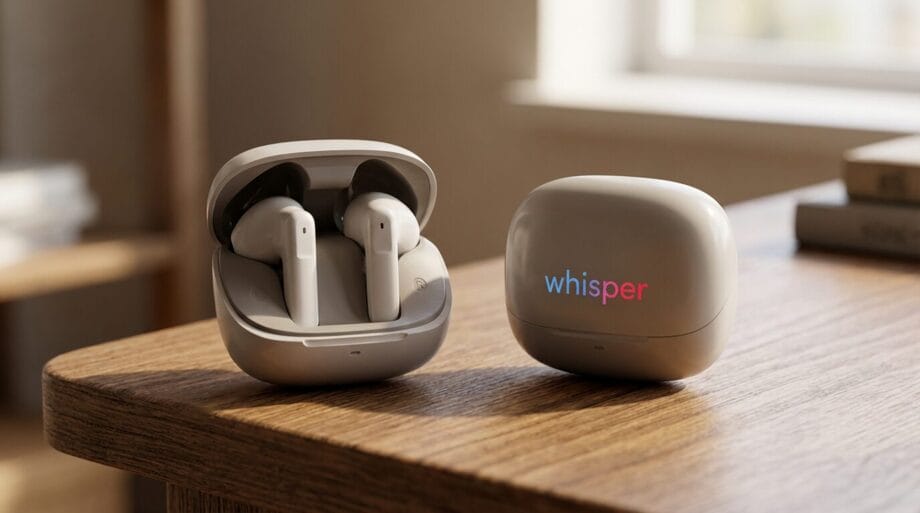
WhisperPair transforms a convenience feature into a potential surveillance threat by circumventing pairing-mode safeguards.
As the vulnerability resides in accessory firmware, only a manufacturer-issued patch can comprehensively address the risk.
Prioritize updating your earbuds upon the release of a fix, adopt prudent measures while in public environments, and remain attentive to vendor advisories and the researchers’ list to ensure your equipment is adequately secured.
Source link: Findarticles.com.