Once regarded as a staple in almost every Android device, microSD card slots have become something of a rarity.
This feature provided Android users the ability to augment their device’s storage capacity easily, which was crucial during an era when internal storage options ranged between a mere 8 to 16 GB.
The convenience of expanding one’s storage for documents, images, videos, and applications was a significant draw for consumers. However, the landscape has changed considerably.
Currently, the majority of smartphones no longer offer these dedicated microSD slots. While some Android models continue to include them, particularly in the budget segment, their presence has dwindled significantly in high-end devices.
Notable exceptions include Sony’s flagship models, but for brands like Google with its Pixel line and Apple with its iPhones, microSD support was never part of the equation.
Take, for instance, the Samsung Galaxy S26 series, Motorola Razr Ultra (2025), OnePlus 15, and Nothing Phone 3—all of which have forsaken microSD card support.
This raises an intriguing question: when exactly did smartphone manufacturers begin to phase out SD card compatibility?
The answer, however, is not neatly encapsulated in a singular date; rather, it represents a gradual evolution that unfolded over several years.
Smartphones Began Dropping SD Card Slots Over a Decade Ago
Contrary to popular belief, the trend of eliminating microSD card slots from smartphones did not arise overnight. Reports of this diminishing feature can be traced back to 2015, highlighted in an article by ZDNet.
That year, Samsung notably removed the microSD card slot from its Galaxy S6 series, although it made a temporary revival with the S7 in 2016. However, by 2021, Samsung definitively eliminated the slot from its flagship Galaxy S21 series.
The Galaxy A series retained this feature until it was ultimately excised from the Galaxy A36 and A56 models in 2025.
This trend continued across the industry, with Huawei also eliminating expandable storage in its flagship Mate series, commencing with the Mate 70 lineup unveiled in late 2024. Huawei removed expandable storage in its Nova series as early as 2019 with the Nova 6 release.
Similarly, Motorola’s flagship Edge series ceased to offer this slot in 2021 with the launch of the Edge 20 lineup. In contrast, some budget models in the Moto G series continue to support a hybrid slot for expandable storage.
While a concrete timeline remains elusive, it is clear that most modern smartphones have largely abandoned the microSD card slot.
Reasons Behind the Abandonment of MicroSD Cards by Smartphone Brands
Various contentious choices made by smartphone manufacturers often stem from a multitude of rationales. Notably, the removal of the 3.5 mm headphone jack aimed at achieving slimmer designs and optimising space for crucial components.
Regarding the widespread exclusion of expandable storage, manufacturers contend that traditional microSD cards do not match the rapid speeds offered by the UFS flash storage that modern devices utilise.
While advancements like the new microSD Express standard could theoretically provide speeds comparable to SSDs, manufacturers remain reticent to reinstate microSD slots.
Their reluctance is largely driven by financial considerations. By eliminating expandable storage, brands profit by encouraging consumers to purchase higher-tier models with increased internal storage options.
For instance, Samsung charges $200 for an upgrade from 256 GB to 512 GB on the Galaxy S26 Ultra, while Apple levies a similar cost for their iPhone 17 Pro.
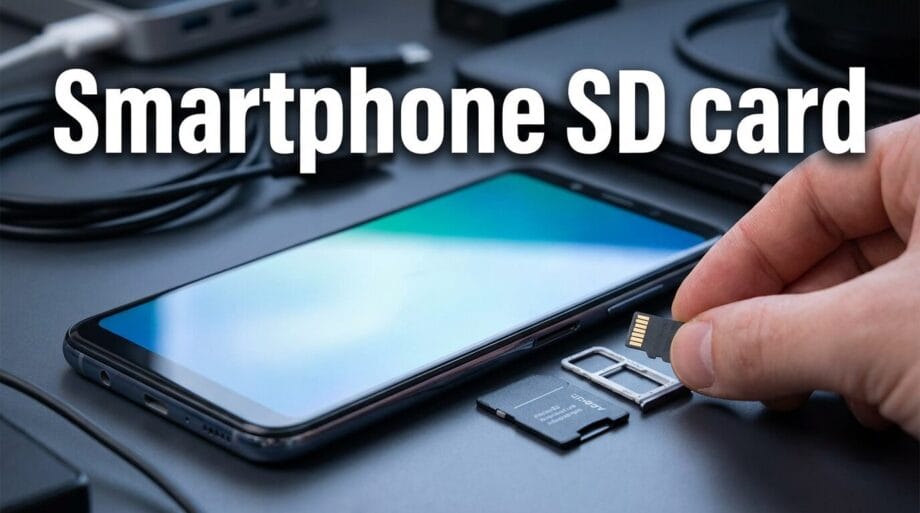
In contrast, smartphones featuring microSD card slots deter consumers from opting for internal storage upgrades. Users can simply acquire a cost-effective SD card later, allowing them to enhance storage capabilities without incurring exorbitant expenses.
This option undermines manufacturers’ pricing strategies, as customers can procure storage upgrades from external vendors at lower prices.
Source link: Bgr.com.