Debunking the Viral Claim of iPhone 18’s Charging Connector Transition
A video making the rounds on TikTok, and subsequently disseminated across various social media platforms, purports that Apple plans to discard the USB-C port in the forthcoming iPhone 18, substituting it with a diminutive magnetic charging connector akin to the MagSafe connector utilized in MacBooks. However, this video lacks any substantiation regarding an imminent Apple product launch.
Social Media Insights
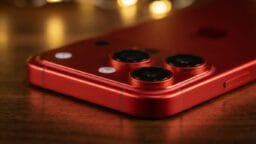
The sensational video showcases what seemingly resembles a close-up shot of an iPhone, featuring a slender, elongated magnetic connector along its edge.
This connector closely mimics the MagSafe charging port incorporated in recent MacBook iterations. The narratives accompanying the video assert that this connector is an innovative feature for the iPhone 18, insinuating that Apple has phased out USB-C.
Viral Video Does Not Constitute an Official Apple Announcement
The primary issue with the assertions made in this video lies in its presentation as proof of an iPhone 18 product specification; in actuality, the footage depicts a fabricated concept.
According to a report by Macworld on February 19, 2026, the trending TikTok video erroneously claimed that the iPhone 18 would incorporate a MagSafe connector akin to that used in MacBooks instead of USB-C.
The article clarified that the concept merges two distinct Apple technologies that are both branded as MagSafe.
AppleInsider conducted a parallel investigation, branding the trending TikTok content as devoid of factual foundation.
It elucidated that the connector illustrated in the video aligns more closely with the type of MagSafe used on Apple’s laptops, rather than the MagSafe system presently employed on iPhones.
Merely the appearance of the video does not authenticate the hardware as genuine. Reports from both Macworld and AppleInsider found no corroborative evidence indicating that the connector depicted is a legitimate Apple prototype.
Independent technology journalism has classified the viral material as an AI-generated concept as opposed to an authenticated leak.
A bona fide product declaration from Apple typically emerges alongside information disseminated through its official communication channels.
The current iPhone Newsroom provides updates on announcements through 2026, encompassing the iPhone 17e, yet there has been no indication of an iPhone 18 or a USB-C replacement.
Differentiating USB-C and MagSafe Usage by Apple
Apple employs MagSafe in two separate hardware contexts. In MacBooks, MagSafe denotes a tangible magnetic connector responsible for power transmission.
Conversely, on iPhones, MagSafe primarily refers to a magnetic system designed for wireless charging and accessory attachment on the device’s rear.
Apple’s official technical specifications for the iPhone 17 distinctly separate these functionalities. This device features a USB-C connector capable of supporting charging, DisplayPort, and USB 2 data transmission, while simultaneously accommodating MagSafe for wireless charging, reinforced by a series of magnetic alignments.
Notably, the announcement of the iPhone 17e in March 2026 further clarifies this distinction. The company specifies that the gadget supports rapid wired charging via USB-C while also sustaining MagSafe for wireless charging and accessory support.
Apple integrated USB-C across the iPhone 15 generation starting in 2023, and this connector has remained a staple in subsequent models.
Regulatory Context: EU Requirements for USB-C Charging
The regulations established by the European Union offer pivotal context regarding this claim. Under the EU Common Charger Directive, mobile phones equipped for wired recharging must feature a USB Type-C receptacle that is accessible and functional.
The European Commission indicates these rules have been applicable to new mobile phones and covered devices sold within the EU since December 28, 2024.
This stipulation implies that a proprietary magnetic connector, akin to that presented in the viral video, could not simply supplant USB-C on a wired-charging iPhone intended for the EU market.
The mere fact that the connector possesses magnetic properties or bears the “MagSafe” branding would not ensure compliance with the USB-C mandate.
While Apple could conceivably introduce an additional charging connector alongside retaining USB-C, this would diverge from the assertion that the iPhone will forsake USB-C.
A truly wireless-only iPhone would present an entirely different regulatory landscape since the USB-C requirement pertains only to equipment capable of wired charging.
Nevertheless, there exists no verified evidence to suggest that Apple harbors intentions to produce a wireless-only iPhone in the near future.
Speculative reports regarding a potential portless iPhone should not be conflated with the claims depicted in the viral video, which distinctly illustrates a new physical wired connector.
The EU regulations do not delineate which charging system Apple may opt for in forthcoming iPhones; however, they elucidate the regulatory challenges that the design illustrated in the viral video would confront in the EU if the phone were to maintain wired charging capabilities.
The assertion that the iPhone 18 will phase out USB-C in favor of a compact, MacBook-style MagSafe connector is patently false.
The viral video, featuring a MacBook-esque MagSafe connector on an iPhone, is an AI-generated fabrication, not an authorized Apple preview. It conflates the wired MagSafe charging utilized in MacBooks with the iPhone’s wireless MagSafe system.
Presently, Apple’s specifications meticulously differentiate USB-C wired charging from MagSafe wireless charging, and no announcements regarding the iPhone 18’s specifications have been made public. Moreover, EU regulations necessitate a USB-C port for smartphones that support wired charging.
While discussions of a portless iPhone linger in the realm of speculation, they are distinct from the assertions made within the viral video.
The highlighted connector remains an entirely fictional concept, divorced from authentic Apple developments.
Source link: English.factcrescendo.com.