The American job market is witnessing a seismic shift, one that has fundamentally challenged the notion that a college degree guarantees a swift path to employment.
Data, particularly that emerging from 2025 into 2026, suggests that recent college graduates are securing jobs at rates comparable to or even slower than their non-college-educated counterparts.
This transformation, underpinned by automation, evolving corporate strategies, and the lingering repercussions of the pandemic, calls for a comprehensive examination of the economic landscape.
The Federal Reserve Bank of New York has illuminated this trend in its recent labor market assessment.
Their report, titled The Labor Market for Recent College Graduates, indicates that the unemployment rates for individuals aged 22 to 27 have ascended to alarming heights, reaching approximately 5.8% by mid-2025.
This figure starkly contrasts with the broader unemployment statistics, which remain relatively stable at lower levels.
Moreover, non-college graduates within the same age group are now finding job placements that either match or exceed those of their degree-holding peers, effectively calling into question the intrinsic value of higher education.
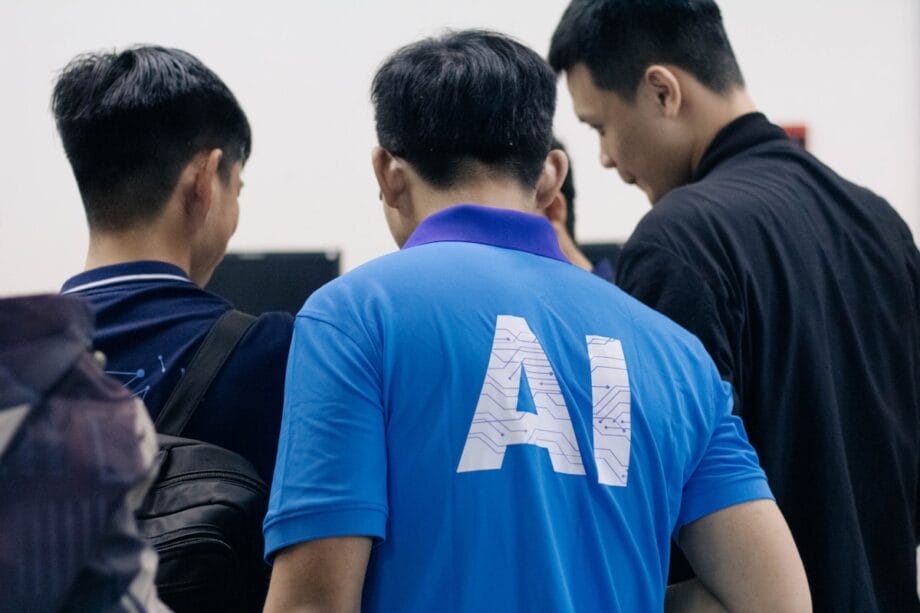
Several factors contribute to this unexpected pivot, according to industry experts. The advent of automation, particularly through artificial intelligence, has usurped many entry-level positions that previously aided fresh graduates in gaining a foothold within the workforce.
Companies, in their quest for efficiency, increasingly prioritize seasoned candidates capable of immediately delivering results, leaving many young graduates in a precarious employment situation.
Commentary on X from economists and career consultants resonates with this observation, indicating that the labor market for those graduating in 2026 has become exceedingly competitive, as AI technologies take over tasks once designated for interns and junior staff.
Economic Shifts and Market Realities
The National Center for Science and Engineering Statistics offers further clarity through its survey data.
Their report, The College-Graduate Workforce in the Transition to a Post-Pandemic Labor Market, reveals an increase of 4.3 million employed college graduates from 2021 to 2023, although this growth has significantly decelerated.
By 2025, the employment rate among recent associate degree recipients stood at 78.1%, in stark contrast to bachelor’s degree holders, many of whom endure protracted job searches.
This deceleration is particularly pronounced in sectors such as technology and finance, where hiring freezes and layoffs have become routine.
In their analysis, the St. Louis Fed’s report titled Recent College Graduates Bear Brunt of Labor Market Shifts highlights that young graduates aged 23 to 27 are confronting the highest unemployment rates, surpassing pre-pandemic levels.
Conversely, non-college workers, particularly those engaged in trades or service sectors, are witnessing a resurgence in demand, buoyed by heightened infrastructure investments and a revival in hospitality.
Online dialogues on X amplify these dynamics, with countless recent graduates recounting their experiences of submitting hundreds of applications to no avail.
A prevalent theme is the disparity between academic training and the requisites sought by employers, with degrees in liberal arts or general business depreciating in value compared to specialized skills such as coding or data analytics.
This incongruity is prompting a reevaluation of educational trajectories, as apprenticeships and vocational training are increasingly favored.
The Role of AI and Automation
The encroachment of artificial intelligence into white-collar occupations stands as a crucial aspect of this phenomenon.
An analysis from Reuters Breakingviews, entitled Graduate Job Cull Spells Doom for College Degrees, posits that graduate unemployment rates have eclipsed the national average, complicating the justification of the considerable $500,000 lifetime investment in a degree.
AI systems are increasingly automating routine functions, such as data entry and entry-level legal research, roles that traditionally provided gateways for college-educated youths.
This technological upheaval intertwines with economic policies that favor experienced hires. According to the Society for Human Resource Management (SHRM), their findings in College Grads’ Job-Finding Advantage Shrinks to Historic Low indicate that college graduates are now encountering employment challenges akin to those faced by high school graduates, marking an unprecedented low in their competitive edge.
In contrast, non-college pathways in manufacturing and renewable energy are flourishing, propelled by federal initiatives such as the Infrastructure Investment and Jobs Act.
Insights gleaned from discussions on X illustrate surging frustrations among young professionals, with many asserting that the remote work environment has diminished networking opportunities, crucial for securing initial employment.
Career advisers on the platform advocate for the development of diverse portfolios rather than reliance on academic credentials, reflecting a wider sentiment that practical experience is increasingly paramount in the contemporary job market.
Demographic and Sector-Specific Impacts
A demographic analysis reveals that women and minorities among recent graduates are confronting heightened obstacles.
The Bureau of Labor Statistics provides data on Employment Status of Recent Associate Degree Recipients and College Graduates, indicating that while 79.8% of male recent associate degree graduates were employed in 2024, the figure for females stood at 76.8%.
The disparities widen for bachelor’s degree holders, most notably in fields such as the humanities, where employment prospects have diminished.
In terms of sectoral analysis, the technology industry, previously a bastion for new graduates, is experiencing contraction.
Fastweb’s overview in Career Outlook for College Graduates in 2025 identifies healthcare and green energy as the top industries still hiring, albeit at reduced rates for entry-level positions.
Pathways for non-college individuals in these fields, such as certifications in nursing assistance and solar installation, are yielding quicker employment opportunities with competitive wages.
Discussions on X further highlight regional disparities, with tech-centric coastal cities like San Francisco and New York witnessing elevated graduate unemployment compared to manufacturing hubs in the Midwest.
Users narrate experiences of relocating to regions abundant in non-degree job opportunities, illustrating a geographical realignment in the pursuit of employment.
Policy Responses and Educational Reforms
Policymakers are beginning to respond to these developments. There is an increasing chorus advocating for reforming student loan systems and incentivizing vocational training.
An analysis by Encoura.org in The Labor Market for Recent College Graduates – Part 1: No More Jobs? Raises questions whether the proliferation of college degrees has saturated the market, leading to underemployment, where graduates are compelled to accept roles beneath their qualifications.
In reaction, universities are beginning to incorporate more hands-on training into their curricula. Collaborations with industry for internships are on the rise, aimed at bridging the skills gap.
However, statistics from Wooclap on Unemployment Rate for College Graduates: Key Statistics [2025] reveal that recent graduates may endure unemployment rates of up to 5.3%, with disparities across fields further exacerbating the challenge—STEM disciplines generally outperform arts-related areas.
Conversations on X among educators and economists predict declining enrollment in higher education, as the diminishing return on investment becomes increasingly apparent.
Commentary points to a potential pivot in 2026 toward hybrid models combining online education with apprenticeships, which may restore some advantages to degree holders.
Personal Stories and Broader Implications
Amid statistics, personal experiences serve to humanize the issue. For instance, Sarah, a 2025 graduate from a prestigious institution, secured a retail position unrelated to her marketing degree after six months of unsuccessful job hunting.
Such narratives are prevalent on X, where hashtags like #GradJobCrisis trend, facilitating the exchange of tips on acquiring skills through online platforms.
The broader societal implications are staggering. Should the advantages conferred by a diploma continue to wane, it could precipitate a decline in college enrollment, as projected in Mission Graduate NM’s 49 College Graduation Statistics 2026 (Updated Data).
This development may alleviate the burdens of student debt, but risks exacerbating inequality if access to alternative training options remains inconsistent.
Looking to the future, experts from Coursmos in College Graduation Statistics [2026] — Numbers & Trends predict that non-traditional career paths may soon predominate, necessitating a reinvention of the framework surrounding successful career beginnings.
Navigating the New Normal
For young graduates maneuvering through this evolving landscape, adaptability is of the essence. Harnessing platforms like LinkedIn for networking and obtaining certifications in high-demand fields may alleviate some of these challenges.
Users on X frequently recommend pursuing side hustles or gig opportunities as interim solutions leading to full-time roles, indicative of a gig economy that poses a more accommodating environment for non-degree holders.
Corporations, too, face an imperative to adapt. By investing in robust training initiatives for new hires, they can leverage the talent pool of educated youth.
A discussion on Slashdot, linked in Young US College Graduates Suddenly Aren’t Finding Jobs Faster Than Non-College Graduates, encapsulates community sentiments, with tech aficionados deliberating about AI’s transformative role in reshaping entry-level job prospects.
This ongoing trend provokes a crucial national dialogue regarding the intrinsic purpose of education. As the employment landscape continually shifts, the previously clear trajectory from academic institutions to professional careers becomes increasingly nebulous, compelling all participants to innovate in fostering a future where opportunities extend beyond mere qualifications.
Source link: Webpronews.com.