The U.S. Government Secures Two Shipping Containers Containing Training Equipment from South African Flight Academy
The United States Department of Justice has leveled serious allegations against a South African flight academy, claiming it engaged in clandestine operations to facilitate the transfer of sensitive information to the Chinese military.
On Thursday, U.S. officials disclosed that formal actions had been initiated to confiscate two mobile simulators—mission crew training devices—manufactured by the Test Flying Academy of South Africa (TFASA).
These flight simulation units were contained within shipping containers that had been seized in Singapore in November 2024 while in transit on a Chinese-owned vessel destined for China.
TFASA has firmly denied any malfeasance, airing the findings of a 2025 independent investigation that examined the legitimacy of the confiscation.
TFASA Allegedly Operates Under False Pretenses
U.S. authorities assert that these mobile training units were aimed at aiding the People’s Liberation Army (PLA) of China in airborne anti-submarine warfare training, employing restricted U.S. technology.
Roman Rozhavsk, Assistant Director of the FBI’s Counterintelligence and Espionage unit, stated, “TFASA illicitly exported U.S. military flight simulator technology and enlisted former NATO pilots with the explicit goal of training China’s military, thereby endangering U.S. national security and risking the lives of American personnel.”
John Eisenberg, U.S. Assistant Attorney General for National Security, elaborated, “TFASA masquerades as a civilian flight training organization, yet functions as a substantial enabler of the Chinese air and naval forces, acting as a conduit for the transfer of NATO aviation expertise, operational acumen, and restricted technology directly to the PLA.”
Court documents allege that the simulators provided by TFASA were part of a scheme dubbed Project Elgar, intended to train PLA pilots to locate U.S. submarines in the Pacific region.
According to U.S. officials, the training simulators were derivatives of a Boeing product, which serves as the primary operations platform for U.S. maritime patrol aircraft.
The statement from the U.S. Department of Justice further contended, “The software employed a basic flight simulation program developed and marketed by a U.S. company, which TFASA’s software engineers subsequently augmented using technical data pertinent to Western anti-submarine warfare aircraft.”
Claims of Illegal Software Usage Denied
TFASA refuted the U.S. assertions, maintaining that its operations were conducted within legal boundaries and that there was no transfer of NATO expertise, U.S. military technology, or relevant technical data.
An independent report—released without disclosing the investigative body’s identity—concluded that no advanced systems or flight simulation apparatus were present within the containers.
The report specifies, “Each mobile learning unit contains only individual workstations, equipped with a desk featuring a monitor cutout and a standard commercial Windows PC.”
It further indicated that all “project-specific software” had been removed prior to shipment, and the only programs on the computers were licensed versions of Windows and commercial Lockheed Martin 3D training tools.
“There is no substantiated evidence of illegal software use or export breaches. The current allegations appear to result from an overreach fueled by unauthorized access to historical backup data, rather than from the actual content or condition of the dispatched containers,” the report concluded.
According to the investigation, the Chinese firm responsible for shipping the containers had deferred inquiries for clarification, offering insufficient feedback.
“The evident lack of transparency and coordination implies that this issue is being navigated within a broader geopolitical framework, rather than through conventional legal or commercial channels,” the report noted.
Concerns Over National Security Escalating
TFASA acknowledged awareness that the supply of their training devices might generate “heightened international scrutiny and varied policy perspectives.”
The academy contended that the shipment was dispatched “lawfully and in good faith,” under the impression that prior assessments were sufficiently robust to merit approval from authorities.
“TFASA has consistently operated with transparency and without any intention to obscure the nature or purpose of the equipment,” they stated.
U.S. officials noted that this incident is not an isolated case of TFASA allegedly assisting the PLA, revealing that the organization was added to a list of entities in 2023 that employed NATO resources to undermine U.S. interests.
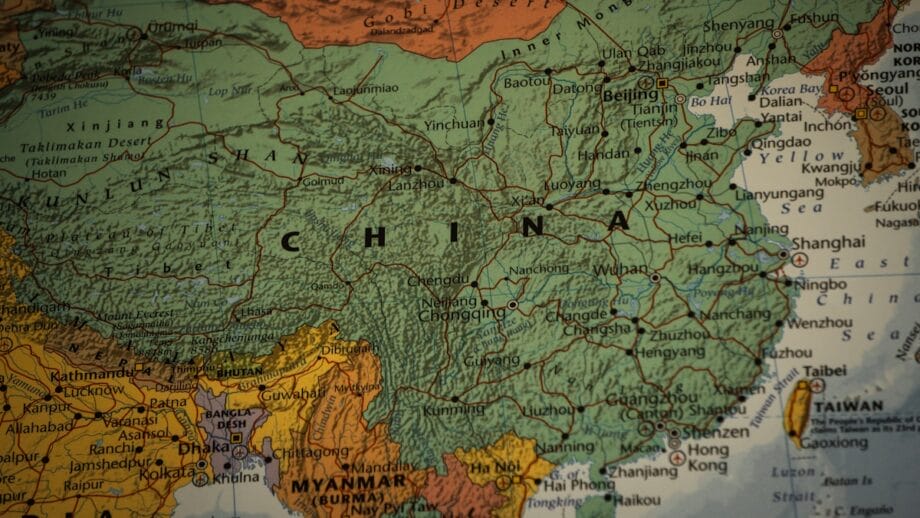
“Established in 2003 with the backing of the South African government to foster cooperation with China, TFASA’s operations have raised significant apprehensions,” the U.S. Department of Justice remarked.
This seizure represents a concerted effort by the U.S. government to thwart the PLA and its collaborators from further undermining U.S. national security.
Source link: Citizen.co.za.