The Ascendancy of AI in Autonomous Vehicles: Transformative Trends and Challenges
The swift progression of artificial intelligence within autonomous vehicles marks a crucial transition in transportation technology. Firms such as Tesla and Waymo spearhead this evolution with data-centric innovations.
Recent data from the National Highway Traffic Safety Administration (NHTSA) in 2023 reveals that AI-equipped autonomous vehicles exhibit markedly reduced crash rates compared to their human-operated counterparts.
Notably, Tesla’s Autopilot system has accumulated over 1.3 billion miles by mid-2023, demonstrating a crash rate of one incident every 4.85 million miles when active, contrasting starkly with the U.S. average of one crash per 670,000 miles for human drivers, according to 2022 statistics.
Furthermore, Waymo, a subsidiary of Alphabet, disclosed in its 2023 safety report that its vehicles have traversed over 7 million miles without a driver, incurring only minor incidents, thus emphasizing the role of AI in bolstering road safety through instantaneous decision-making fueled by machine learning algorithms.
This advancement occurs amid fierce global competition, particularly as China accelerates its own autonomous vehicle deployment.
Baidu’s Apollo program, for example, conducted over 10 million kilometers of public road testing by 2022, as reported by state media.
Conversely, the United States grapples with antiquated regulations, dating back to the 1960s, such as those outlined in the Federal Motor Vehicle Safety Standards.
These guidelines inadequately address contemporary AI-driven scenarios like sensor fusion and neural network-based perception, inadvertently stymying innovation.
Insights into the industry reveal that AI integration within AVs harnesses technologies such as computer vision, lidar, and radar to analyze extensive datasets.
This approach enables predictive analytics that significantly mitigate human error, the causation behind 94 percent of traffic accidents, per NHTSA’s 2019 findings.
By 2024, investments in AI for autonomous vehicles have surged to $12 billion globally, with the U.S. accounting for 40 percent of this sum.
However, regulatory impediments may tilt this equilibrium in favor of Asian markets, a concern articulated by analysts at the Brookings Institution in 2023.
The urgency of this situation is underscored by projections from McKinsey, which anticipates that the autonomous vehicle market could burgeon to $10 trillion by 2030.
Furthermore, the potential for AI-driven vehicles to avert up to 30,000 annual road fatalities in the U.S., based on 2021 CDC data, accentuates the necessity for regulatory frameworks that not only ensure safe deployment but also promote technological advancement.
From a commercial standpoint, the incorporation of AI in autonomous vehicles opens expansive market avenues, especially in logistics, ride-sharing, and urban mobility sectors.
- According to PwC’s 2023 analysis, the global autonomous vehicle market is projected to reach $556 billion by 2026.
- AI advancements are anticipated to drive significant cost reductions in fleet operations.
- Waymo’s commercial services in Phoenix reportedly generated over $1 million in revenue in 2023, highlighting monetization opportunities through subscription models.
- Tesla’s Full Self-Driving beta, launched in 2021 and continuously updated, has produced additional revenue streams via over-the-air software updates, amounting to $1.5 billion in deferred revenue from FSD subscriptions by Q3 2023.
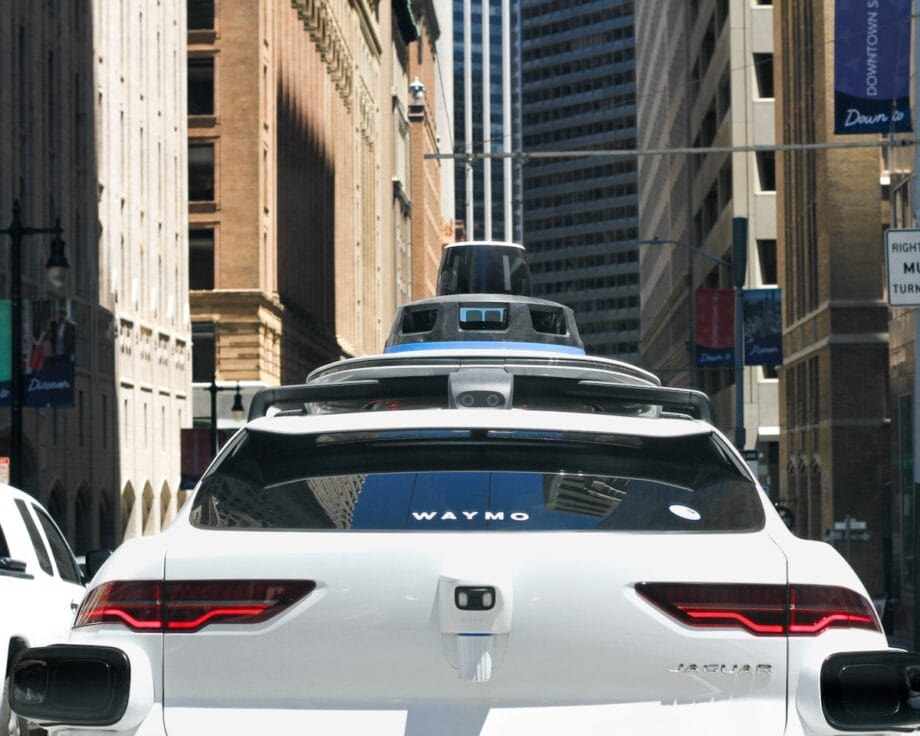
The competitive landscape features notable players such as Cruise (GM) and Zoox (Amazon), both of which are leveraging AI to challenge traditional automotive paradigms.
However, U.S. regulatory delays, exemplified by the absence of federal standards beyond NHTSA’s voluntary guidelines from 2017, present formidable implementation obstacles.
Businesses are obliged to maneuver through state-by-state approvals; for instance, California requires over 5 million miles of testing data as stipulated by 2023 DMV regulations, contributing to a 20 percent increase in costs according to Deloitte’s 2024 analysis.
Emerging market opportunities encompass AI-driven predictive maintenance, projected to decrease downtimes by 30 percent per McKinsey’s 2023 insights, and ethical AI frameworks designed to counteract biases in algorithmic decision-making.
The significance of regulatory frameworks cannot be overstated; the European Union’s AI Act of 2024 categorizes AV systems as high-risk, mandating transparency—a model that U.S. companies could adopt to align with international compliance.
Monetization strategies may encompass data licensing from AV fleets, potentially generating an annual revenue of $200 billion by 2030 as forecasted by BCG in 2022, while ethical best practices, such as those delineated in IEEE’s 2021 standards, aim to ensure equitable AI deployment.
In summation, revising U.S. legal frameworks is imperative to hasten innovation, preventing a retreat into a state-supported ecosystem like China’s, which registered over 500 AV patents in 2023 alone, as reported by WIPO.
On a technical note, AI in autonomous vehicles hinges on deep learning models that are trained using petabytes of data, facing challenges particularly with edge cases such as adverse weather conditions.
Tesla’s Dojo supercomputer, introduced in 2021 and operational by 2023, boasts the capability to process 1.8 exaflops for neural network training, facilitating real-time enhancements in object detection accuracy, which reportedly reached 99 percent as disclosed by the company in 2024.
However, implementation considerations must also encompass cybersecurity, as NHTSA identified 1,800 vehicle hacks in 2022, prompting the need for robust AI defenses, including anomaly detection systems.
The future landscape envisions level 5 autonomy by 2030, according to Gartner’s 2023 hype cycle, ultimately transforming industries by potentially reducing logistics costs by 40 percent, as projected by UPS in 2024.

Competitive advantages emerge from proprietary datasets, with Waymo’s 20 billion simulated miles by 2023 improving model resilience.
Regulatory updates could standardize AI testing protocols, thereby alleviating challenges such as the 2023 Cruise incident in San Francisco that necessitated operational halts.
Ethical ramifications must also be taken into account, particularly in ensuring AI fairness, with best practices from the Partnership on AI’s 2022 guidelines advocating for diverse training datasets to avert biases.
Experts predict a potential 25 percent reduction in insurance premiums by 2028, attributed to AI-driven safety improvements, as outlined in Swiss Re’s 2023 report.
In conclusion, proactive regulations are critical to leveraging these AI advancements, balancing innovation with safety in a dynamically evolving milieu.
Source link: Blockchain.news.