The Ascendance of Autonomous Technology: Apple’s Siri 2.0 and iPhone 17
By late 2025, smartphones will have evolved beyond mere gateways to applications; they will now function as autonomous digital executives. The advent of Siri 2.0, coupled with the release of the flagship iPhone 17 series, positions Apple (NASDAQ: AAPL) at the forefront of this transformation.
The iconic virtual assistant has transitioned from a reactive voice interface to a proactive “agentic” force, silencing critics who previously argued that Apple lagged in artificial intelligence.
This evolution, propelled by the Apple Intelligence 2.0 suite, has ignited what analysts are referring to as the “AI Supercycle,” resulting in unprecedented hardware sales and a profound shift in user-device interaction.
Revolutionizing User Engagement
The crux of Siri 2.0’s significance lies in its enhanced capability to decipher user intent rather than merely processing commands.
By merging acute on-screen awareness with a cross-application action framework, Siri can now perform intricate, multi-step workflows that once demanded substantial manual navigation.
Whether it involves retrieving a specific document buried within an email thread for summarization and forwarding via Slack or identifying a product from a social media feed to add to a shopping list, the “agentic” Siri exemplifies a level of autonomy that renders the traditional “App Store” model obsolete.
The Technical Architecture of Autonomy
From a technical standpoint, Siri 2.0 embodies a comprehensive overhaul of the Apple Intelligence framework. At its nucleus is the Semantic Index—an on-device cartography of a user’s complete digital existence, encompassing Messages, Mail, Calendar, and Photos.
Unlike its predecessors, which relied on rigid intent-matching algorithms, Siri 2.0 employs an adept generative reasoning engine capable of “planning.”
When a user issues a multifaceted instruction, the system disaggregates it into sub-tasks, discerning which applications house the requisite data and which APIs are essential for executing the final action.
This extraordinary capacity is fortified by the A19 Pro silicon, crafted using TSMC’s (NYSE: TSM) advanced 3nm (N3P) process.
The chip boasts a reengineered 16-core Neural Engine, specifically optimized for handling 3-billion-parameter local Large Language Models (LLMs).
To accommodate these memory-intensive operations, Apple has elevated the baseline RAM for the iPhone 17 Pro and the new “iPhone Air” to 12GB of LPDDR5X memory.
For tasks necessitating extreme reasoning prowess, Apple harnesses Private Cloud Compute (PCC)—a stateless, Apple silicon-driven server environment ensuring user data remains unsaved and verifiably secure.
Positive Reception Among AI Experts
Initial feedback from the AI research community has been predominantly favorable, particularly regarding Apple’s App Intents API.
By mandating a standardized methodology for applications to communicate their functionalities to the operating system, Apple has addressed the longstanding “interoperability” dilemma that has previously hindered agentic AI.
Industry specialists note that while competitors such as OpenAI and Google (NASDAQ: GOOGL) possess more formidable raw models, Apple’s deep integration into the operating system confers a “last-mile” execution advantage that cloud-centric agents cannot replicate.
A Seismic Shift in the Tech Landscape
The emergence of a truly agentic Siri has reverberated throughout the competitive arena. Google (NASDAQ: GOOGL) has expedited the deployment of Gemini 3 Pro and its “Gemini Deep Research” agent, seamlessly integrated into the Pixel 10.
Concurrently, Microsoft (NASDAQ: MSFT) is championing its “Open Agentic Web” initiative, deploying GPT-5.2 to energize autonomous background workers within Windows.
Nevertheless, Apple’s “privacy-first” narrative—predicated on localized processing—continues to serve as a significant barrier against rivals more dependent on cloud-based data harvesting.
The ramifications for the App Store could be transformative. As Siri evolves into the primary conduit for task completion, the “App-as-an-Island” model faces substantial jeopardy.
If users can book flights, order groceries, and send gifts solely through Siri sans engaging the respective applications, conventional in-app advertising and discovery frameworks may begin to disintegrate.
In response, Apple is reportedly investigating the introduction of an “Apple Intelligence Pro” subscription tier at $9.99/month, aimed at monetizing the high-compute agentic features that define this new user experience.
Smaller startups within the “AI hardware” sector, such as Rabbit and Humane, find themselves increasingly marginalized by these advancements.
The iPhone 17 has effectively subsumed the “AI Pin” and “pocket companion” use cases, reaffirming that the smartphone remains the hub of the AI revolution, provided it possesses the necessary silicon and software integration to function as a genuine agent.
Privacy, Ethics, and the Semantic Index
The broader implications of Siri 2.0 extend into the domains of digital ethics and privacy. The Semantic Index effectively creates a “digital twin” of the user’s history, prompting concerns over the potential for a “master key” to one’s private existence.
While Apple contends that this data remains on-device in an unencrypted and non-perpetual form, security analysts have flagged the “network attack vector”—the ephemeral period during which data is processed through Private Cloud Compute.
The evolution toward “Intent-based Computing” signifies a notable divergence from the long-standing UI/UX paradigms that have characterized technology for decades. Society is transitioning from a “Point-and-Click” landscape to a “Declare-and-Delegate” framework.
While this enhances efficiency, some sociologists caution against “cognitive atrophy,” wherein users forfeit their capability to navigate complex digital ecosystems, becoming wholly reliant on the AI intermediary.
This milestone is being heralded as the “iPhone 4 moment” for artificial intelligence—the juncture at which the technology reaches adequacy for widespread adoption.
By standardizing the Model Context Protocol (MCP) and advocating for state-free cloud computing, Apple is not merely selling smartphones; it is establishing the architectural paradigms for the ensuing decade of personal computing.
The 2026 Roadmap: Beyond the Phone
Looking toward 2026, the agentic functionalities of Siri 2.0 are expected to expand into Apple’s wearable and spatial categories.
Speculation surrounding visionOS 3.0 hints at the inception of “Spatial Intelligence,” enabling Siri to recognize physical objects within a user’s environment and take relevant actions—such as diagnosing a malfunctioning appliance and autonomously seeking a repair manual or scheduling a technician visit.
The upcoming Apple Watch Series 12 is poised to occupy a significant role, potentially showcasing an advanced “Visual Intelligence” mode that empowers Siri to “perceive” through the watch, delivering real-time fitness guidance and environmental notifications.
Additionally, a forthcoming “Home Hub” device, anticipated in March 2026, is likely to serve as the principal “face” of Siri 2.0 within households, employing a robotic arm and display to function as a central controller for an agentic home.
The paramount challenge ahead will be addressing the “Hallucination Gap.” As users place their trust in Siri to execute tangible actions, such as transferring funds or dispatching sensitive documents, the margin for error narrows to nil.
Ensuring that agentic AI remains predictable and manageable will be the focal point of Apple’s software refinements in the forthcoming year.
The Digital Executive Has Arrived
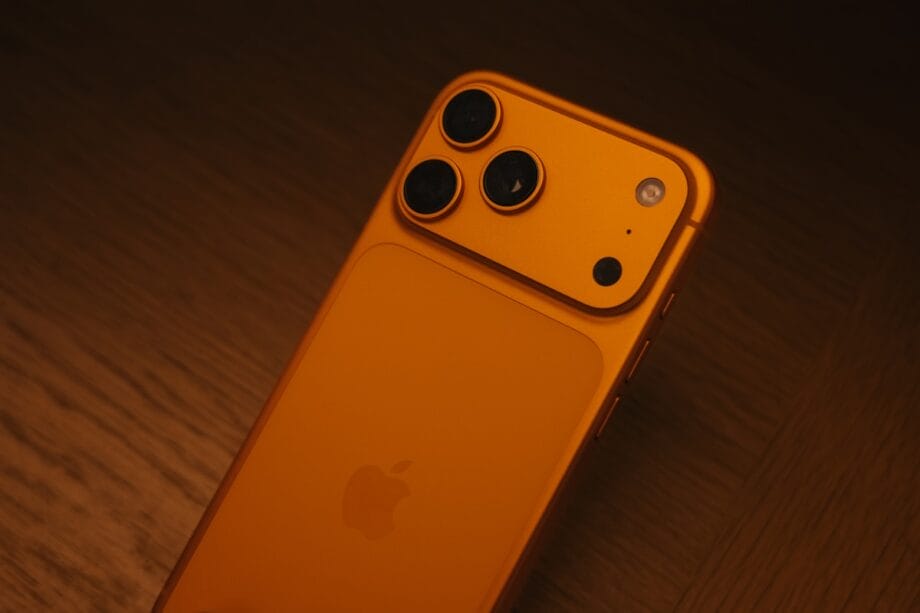
The introduction of Siri 2.0 and the iPhone 17 delineates a pivotal chapter in the annals of artificial intelligence. Apple has seamlessly transitioned from the era of the “chatty bot” to the age of the “active agent.”
By capitalizing on its vertical integration of silicon, software, and services, the company has crafted the iPhone into a digital executive that comprehends context, interprets the display, and operates across the entire app ecosystem.
With projections indicating record shipments of 247.4 million units for 2025, the market has emphatically signaled its approval.
As the industry advances into 2026, all eyes will be on whether Apple can sustain its privacy leadership while extending Siri’s agency into the household and beyond.
For the moment, the “AI Supercycle” is in full momentum, heralding the rebirth of the smartphone as the quintessential personal assistant.
Source link: Markets.financialcontent.com.