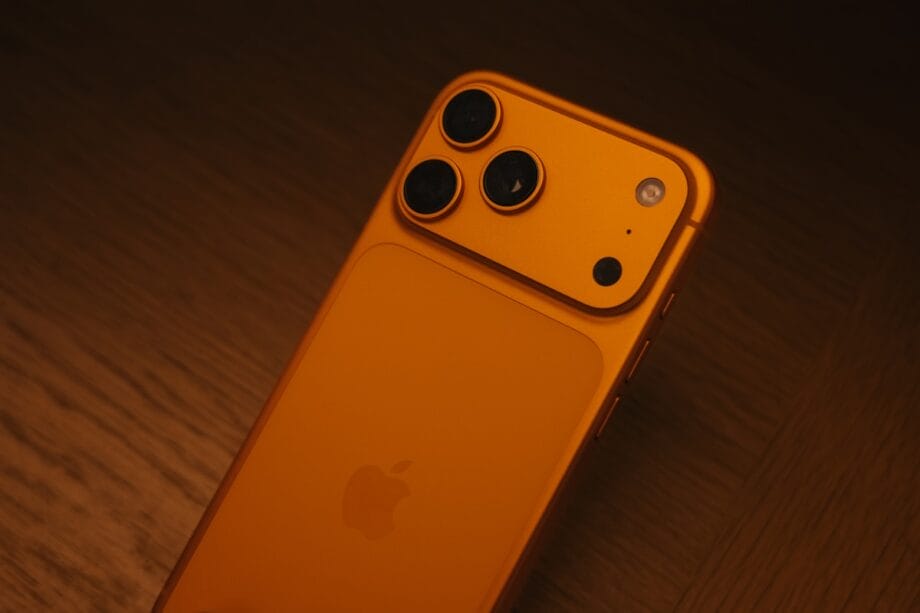
The concept of the Mechanical Eye camera has garnered significant attention as anticipation builds for the impending launch of the iPhone 18 Pro.
Within the smartphone sector, reports indicate that Apple may unveil a groundbreaking variable aperture camera system designed to render a more authentic optical bokeh effect in photography.
This innovative feature, often referred to as the “Mechanical Eye,” would enable the camera lens to physically adjust its aperture.
Such a mechanism would afford photographers the ability to manipulate depth of field directly through hardware modifications, rather than relying predominantly on software algorithms.
Variable Aperture: A Leap Toward Authentic Bokeh in Smartphones
Historically, smartphone cameras have employed fixed apertures. The most recent flagship models typically incorporate a wide lens opening to optimize light capture. For instance, current iPhone Pro versions feature a principal camera aperture approximating f/1.78.
This fixed design facilitates low-light photography but restricts the nuanced control of depth of field, necessitating a reliance on simulated background blurring through portrait modes and computational photography.
The Mechanical Eye methodology would revolutionize this dynamic. A miniature diaphragm located within the lens could open or close to vary the aperture size. When fully opened, the lens could achieve an aperture close to f/1.4, resulting in a pronounced natural background blur.
Conversely, when partially closed, the camera could transition to narrower apertures like f/2.8 or even f/4.0, providing sharper, more focused images.
This adaptable system mimics the mechanics observed in traditional photography equipment, where the aperture dictates the quantity of light entering the lens and the degree of focus within the scene.
Should this technology be successfully integrated, the iPhone 18 Pro could deliver genuine optical bokeh, reducing reliance on software-generated effects. Optical blurring tends to exhibit a smoother, more lifelike quality as it is derived directly from the lens’s physical characteristics.
Previous Smartphone Ventures: A Mixed Bag
The exploration of variable aperture cameras in smartphones is not entirely novel. Over the past decade, various manufacturers have trialed this technology.
In 2018, Samsung debuted a dual-aperture camera with its Galaxy S9 series, enabling the device to switch between two aperture settings. Although functional in select scenarios, subsequent advancements in software rapidly took precedence in the industry.
Another smartphone manufacturer later presented a multi-tier variable aperture system, capable of toggling between multiple aperture sizes. This technology demonstrated promise in portrait photography but proved inconsistent under varying shooting conditions.
Since those early ventures, most smartphone brands have pivoted towards computational photography. Enhanced image processing, night mode functionalities, and AI-driven optimizations have substantially elevated smartphone photography, all without the need for intricate mechanical components.
The Mechanical Eye proposition signals a potential renaissance in optical hardware innovation. Merging physical lens modifications with sophisticated image processing could yield more reliable and visually compelling portrait images.
Technical Advancements Paving the Way for the Mechanical Eye
Several cutting-edge trends presently render the Mechanical Eye more viable than in the past. Today’s smartphone camera sensors are larger, capturing more light and detail than their predecessors.
Moreover, contemporary devices boast advanced image processors. These chips facilitate instantaneous scene analysis by the camera system, allowing for real-time adjustments to lens settings based on environmental conditions.
Advancements in mechanical engineering have also evolved. New compact actuators and precision components are now capable of moving minuscule camera elements reliably, without inflating the overall device size.
Thanks to these technological strides, manufacturers can effectively integrate movable mechanisms within compact camera modules, thus making a variable aperture system increasingly feasible for mainstream flagship smartphones.
The Mechanical Eye camera remains speculative, yet it underscores the ongoing evolution of smartphone photography. Should Apple adopt this innovative approach in the iPhone 18 Pro, the device could bring natural optical depth effects closer to the expectations of seasoned photographers.
For Your Information (FYI)
What is a Mechanical Eye camera on smartphones?
A Mechanical Eye camera denotes a smartphone lens system with a variable aperture, allowing for physical adjustments of the lens opening to govern light input and depth of field. How does variable aperture enhance smartphone photography?
Variable aperture empowers the camera to alternate between wider and narrower lens openings, thereby producing genuine background blurring in portraits and refined sharpness in landscape images. Will the iPhone 18 Pro definitely feature a Mechanical Eye camera?
As of now, this feature is predicated on industry speculation and preliminary reports. Apple has yet to formally affirm any camera specifications for the iPhone 18 Pro.
Source link: Inews.zoombangla.com.