Potential Supremacy of a Hybrid Fighter
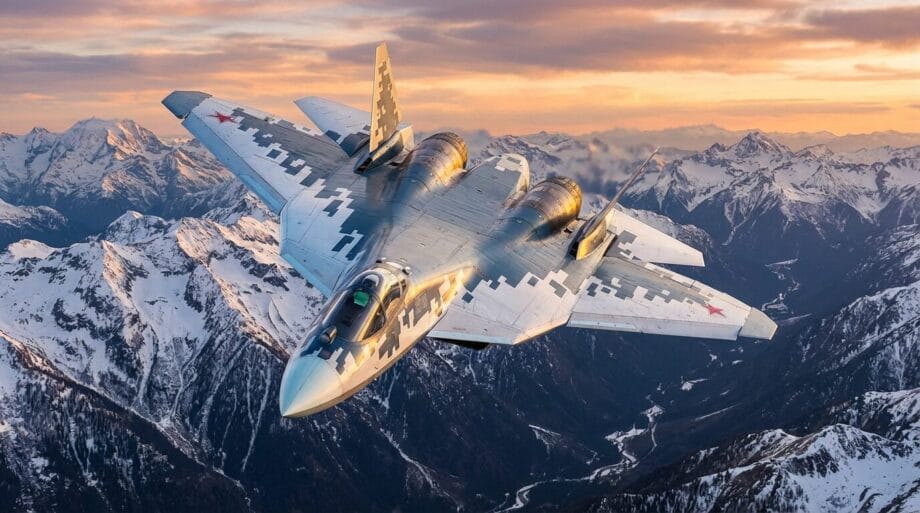
Envisioning a future aerial combat model, experts suggest that an amalgamation of Russia’s Su-57 and India’s sophisticated avionics and mission software could potentially eclipse the American F-35 Lightning II in operational efficacy.
This perspective is prominently advanced by Group Captain (Retd.) Dr. M. J. Augustine Vinod is a former Indian Air Force fighter pilot and military analyst. He posits that such a synergistic platform would confer a significant edge in contemporary aerial engagement.
The Harmonious Fusion of Hardware and Software
In a discussion with RT India, Dr. Vinod articulated a vision wherein the aerodynamic excellence of the Su-57 harmonizes with India’s advancing software and sensor landscapes. He characterized this fusion as a “formidable amalgamation” capable of transforming the paradigms of air dominance.
This evaluation emerges at a pivotal moment in India’s defense strategizing, as the Indian Air Force (IAF) scrutinizes enduring solutions to reinforce its fighter fleet while addressing the interim gap prior to the deployment of the indigenous Advanced Medium Combat Aircraft (AMCA).
Despite the AMCA being the long-term aspiration, ongoing exploration of interim strategies involving deep-seated technical collaborations is actively underway.
Kinematic Supremacy versus Stealth Paradigm
Dr. Vinod highlighted that the Su-57 is predicated on a doctrine of kinematic supremacy. The aircraft is equipped with three-dimensional thrust-vectoring engines and is meticulously designed for high agility and supercruise capability—allowing flight at supersonic speeds without detrimental afterburner usage.
These features enable the fighter to perform acrobatically in both close-quarters dogfights and extended engagements. Conversely, the F-35, a product of American ingenuity, prioritizes low observability and network-centric strategies.
While the F-35 excels at evading radar detection, Dr. Vinod contends that it compromises on fundamental aerodynamic attributes, such as speed and maneuverability, when juxtaposed with its Russian counterpart.
He argues that a Su-57 variant, augmented with contemporary Indian sensors, could preserve its kinetic advantages while bridging the technological divide, thereby presenting a more balanced and formidable platform.
The Indian Technological Edge
Exemplifying India’s pivotal contribution, Dr. Vinod identifies its indigenous avionics infrastructure as the linchpin to actualizing this potential.
Over the past two decades, Indian defense establishments have adeptly engineered mission computers, electronic warfare (EW) systems, and sensor fusion capabilities for complex aircraft, including the Su-30MKI, Tejas Light Combat Aircraft, and Rafale.
In contrast to antiquated legacy systems, contemporary Indian avionics are predominantly software-centric, facilitating swift updates and seamless integration of new munitions, thus aligning with specific operational doctrines—attributes often restricted in foreign aircraft.
Dr. Vinod advocates for the replacement of standard Russian avionics with Indian-developed mission computers, anticipating an aircraft that excels not only in aerial agility but also in digital battlefield management.
Strategic Relevance for Diverse Operations
Dr. Vinod asserts that this specialized configuration would be exceptionally suited to India’s diverse operational landscape.
The IAF is tasked with conducting missions in some of the harshest environments worldwide, from the high-altitude theaters of the Himalayas to extensive maritime strike operations over the Indian Ocean.
A fighter that amalgamates the Su-57’s altitude capabilities and operational range with Indian software, tailored to counter local threats, would afford a strategic advantage that mass-produced models like the F-35 may struggle to achieve.
This development promises to deliver a bespoke solution, tailored to national requisites rather than a generic alternative.
Evolving From Buyer to Partner
Although this concept remains in the theoretical phase, it signifies a notable shift in India’s defense procurement paradigm.
Lessons gleaned from the earlier FGFA (Fifth Generation Fighter Aircraft) initiative—abandoned due to disputes over work-sharing and technology exchange—have precipitated a renewed emphasis on collaborative development rather than mere acquisition.
Dr. Vinod’s observations underscore a burgeoning confidence within the Indian defense establishment.
Whether or not a “Super Su-57” will eventually take to the skies, this discourse illuminates that India’s avionics and software capabilities have progressed sufficiently to potentially enhance even the world’s most advanced fighter airframes.
Source link: Defence.in.