The Indispensable Role of Smartphones in American Business Leadership
In the dynamic arena of American corporate governance, the smartphone emerges as an essential instrument for executives navigating multimillion-dollar decisions, extensive travel, and immediate AI collaborations.
As the year 2026 unfolds, marquee launches such as the iPhone 17 series and the Samsung Galaxy S26 Ultra are dominating the conversation, revealing a distinct trend among the nation’s leading CEOs: a steadfast allegiance either to Apple’s ecosystem or to Samsung’s Android-powered devices.
While comprehensive statistics on personal device preferences remain elusive — as many executives utilize company-issued gadgets or uphold privacy — observations gleaned from public appearances, interviews, and industry analyses reveal notable insights into these choices.
Apple’s iPhones appear to retain a robust grip on the U.S. market, surpassing a 50% domestic share, yet Samsung Galaxy models are touted for achieving higher satisfaction levels in business contexts according to recent IT manager surveys.
Prominent CEOs and Their Device Preferences
Below is a ranked enumeration of ten influential U.S.-based CEOs, drawn from sectors such as technology, automotive, and retail, evaluated for their market clout and revenue impact as of early 2026.
The focus is on their preference for either iPhone or Galaxy-style Android devices, based on the most current observations and contextual evidence available as of March 2026. Rankings prioritize company valuation alongside public visibility.
- Tim Cook, Apple — iPhone (latest models, including the iPhone 17 Pro series). As Apple’s CEO, Cook naturally gravitates towards the company’s flagship iPhones.
He has publicly articulated the iPhone’s enduring centrality in digital life, advocating for balanced usage while lauding its integration with Apple Intelligence features in 2026. His selection is emblematic of a lock-in strategy aimed at optimizing productivity and security. - Satya Nadella, Microsoft — iPhone. The architect behind Microsoft’s elevation into an AI and cloud behemoth, Nadella, is frequently spotted with an iPhone during public engagements.
This cross-platform inclination aligns with Microsoft’s extensive compatibility approach, encompassing deep integration with iOS for offerings like Office and Copilot, despite their Android alliances. - Sundar Pichai, Alphabet (Google) — iPhone (or occasionally Pixel). The CEO of Google often opts for an iPhone, illustrating a personal or pragmatic choice amidst Alphabet’s predominance in the Android segment.
Although Pichai has underscored the significance of AI across devices, sightings and reports predominantly highlight the iPhone as his primary device, occasionally acknowledging Pixel hardware for experimental purposes. Google’s Pixel 10 series is actively contending with the iPhone 17 in 2026 reviews. - Mark Zuckerberg, Meta — Samsung Galaxy (Ultra models). Zuckerberg distinguishes himself with a clear preference for Samsung Galaxy Ultra devices, frequently showcased in public settings.
This Android allegiance is congruent with Meta’s commitment to open platforms and AI wearables, such as Ray-Ban smart glasses, as well as an overarching vision where conventional smartphones may face obsolescence. He has discussed a post-smartphone future while relying heavily on a high-end Galaxy for the time being. - Elon Musk, Tesla, and SpaceX — iPhone (with nuances). Musk has been observed utilizing iPhones, despite his frequent criticisms of Apple and his advocacy for alternatives on the platform X.
Speculations regarding a “Tesla Pi Phone” persist, although Musk himself has dismissed these notions — a Tesla smartphone does not exist in 2026. His practical choice skews toward the iPhone for communication, complemented by extensive desktop and custom setups for engineering tasks. - Jensen Huang, NVIDIA — iPhone. The CEO of the AI chip leader favors the iPhone, a choice consistent with numerous Silicon Valley executives who prioritize security, camera excellence, and seamless integration during prominent events such as GTC 2025-2026. NVIDIA’s GPU innovations support AI functionalities across both iOS and Android devices.
- Andy Jassy, Amazon — iPhone. Amazon’s CEO predominantly employs an iPhone, in harmony with the company’s customer-first mentality, where iOS represents a substantial user base vital for shopping, AWS management, and Alexa interactions, a fact corroborated by public images from earnings calls and events.
- Doug McMillon, Walmart — Likely iPhone or Samsung Galaxy. As the leader of the retail titan, McMillon oversees operations influencing millions of U.S. smartphone consumers.
While specific sightings are scant, Walmart’s relationships and employee device trends hint towards leading flagships; industry patterns usually depict iPhone dominance in executive settings, although Galaxy devices find favor in demanding corporate environments. - Mary Barra, General Motors — iPhone. The CEO of GM, steering the transition to electric and autonomous vehicles, is an iPhone user. The integration of Apple CarPlay serves as a pivotal point for GM’s vehicles, making iOS a logical choice for both testing and executive mobility.
- Jamie Dimon, JPMorgan Chase — iPhone. As a preeminent figure in banking, Dimon emphasizes security and reliability. He, along with finance executives, generally favors iPhones for their enterprise-grade encryption capabilities and app ecosystems, although some institutions explore Samsung’s Knox security features for regulated environments.
Emerging Trends and Insights for 2026
The iPhone 17 lineup has garnered acclaim for its sophisticated displays, A19 Pro chips, and augmented Apple Intelligence, maintaining leadership in consumer and executive preferences within the U.S.
Samsung counters with the Galaxy S26 Ultra’s productivity tools, S Pen capabilities, and commendable IT manager satisfaction ratings, frequently outshining the iPhone in business-oriented usability surveys.
In 2026, business IT managers rank Samsung Galaxy devices higher than iPhones based on satisfaction and recommendation metrics, emphasizing reliability and customization.
Nonetheless, Apple’s ecosystem — encompassing Mac, Watch, and enterprise management solutions — retains its supremacy among tech executives. Broader U.S. statistics indicate that the iPhone commands approximately 54-55% of market share, while Android, dominated by Samsung, captures roughly 43%.
Factors such as security concerns, AI features, and ecosystem integration underpin device preferences. A number of CEOs carry multiple devices: a personal iPhone alongside a corporate-issued Android for experimental purposes.
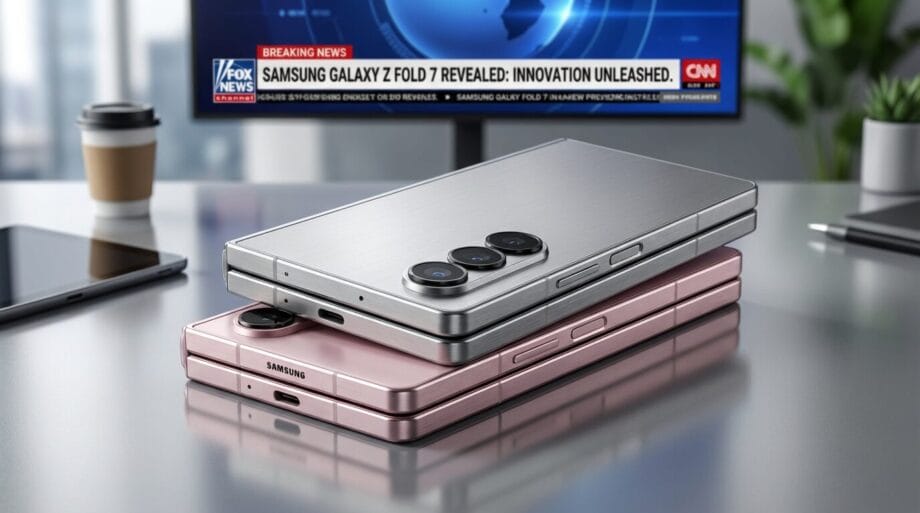
Innovations like Samsung’s Galaxy Z Fold 7 are gaining traction for productivity, while speculation abounds regarding a potential foldable iPhone from Apple later in 2026.
Critics assert that public appearances may not always mirror primary device usage; secure environments or assistants often manage phones.
Elon Musk’s pronounced stance on X exemplifies the ongoing platform rivalry, where Android provides greater flexibility for power users, while iOS caters to simplicity and privacy for many executives.
As AI agents and smart glasses, championed by Zuckerberg, become more prominent, some leaders cast doubt on the smartphone’s long-term relevance.
However, in 2026, both iPhone and Galaxy continue to hold significant importance. Enterprise preferences lean towards Samsung for managed fleets, whereas individual status often inclines towards Apple.
For aspiring leaders or consumers, these device choices exemplify trade-offs: iPhone for seamless integration and status, Galaxy for customization and business-centric functionalities like advanced multitasking.
With memory chip shortages straining prices, premium device selections carry increased financial implications.
In conclusion, regardless of whether it is an iPhone or Galaxy, the foremost U.S. CEOs select devices that optimize productivity in an era of rapid AI advancement. Their preferences reflect the broader competitive landscape, where Apple and Samsung persist in shaping the premium mobile experience.
Source link: Ibtimes.com.au.