Innovative Framework for Early Detection of Diabetes Unveiled
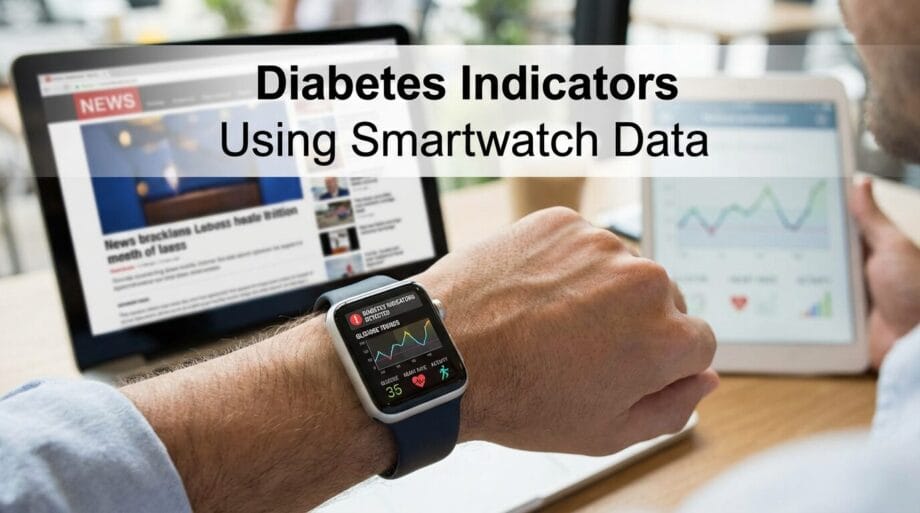
New Delhi: A recent investigation has introduced a pioneering and accessible methodology for analyzing data from wearable devices, such as smartwatches, to discern early indicators of diabetes.
Researchers from Google Research in the United States assessed insulin resistance in 1,165 participants, utilizing data harvested from smartwatches alongside demographic information and routine blood biomarkers, encompassing fasting glucose levels and lipid profiles.
The study’s authors noted that individuals exhibiting insulin resistance face an elevated risk of developing diabetes, cardiovascular diseases, hyperlipidemia, and hypertension, as documented in their publication in the esteemed journal, Nature.
Results indicated that fasting glucose alone cannot adequately estimate insulin resistance. This underscores the significance of lifestyle factors, they asserted.
“In this study, we present a method for predicting insulin resistance using signals derived from consumer smartwatches, demographic data, and routinely measured blood biomarkers,” the authors explicated.
“This method has the potential to be scaled up to millions, facilitating widespread identification of insulin resistance.”
They also compiled a substantial cohort (n=1,165) that integrated data from wearable technology, demographic variables, and blood biomarkers, along with a direct assessment of insulin resistance.
Furthermore, the researchers created an advanced language model, termed the ‘IR agent,’ which amalgamates the assessment model’s findings with lifestyle and biomarker information to provide comprehensive insights into metabolic health and diabetes risk, whilst offering personalized recommendations.
According to the authors, “This work establishes a scalable and accessible framework for early identification of metabolic risk, potentially enabling timely lifestyle interventions to avert the advancement of type-2 diabetes.”
In a related commentary in the Nature journal, Christopher M. Hartshorn from the National Institutes of Health (NIH), who was not involved in this study, remarked that this research offers “something akin to a ‘movie’ of one’s metabolic health” rather than a mere snapshot.
He emphasized that the continuous data collection facilitated by smartwatches can effectively capture fluctuations in activity, sleep, and heart function over time, reflecting the cumulative challenges of metabolic regulation.
“By leveraging continual signals from daily life, the authors’ approach unveils physiological stressors that are often obscured by episodic testing,” Hartshorn noted.
Identifying insulin resistance—a pivotal indicator of diabetes—could facilitate simpler interventions and ultimately mitigate the burden of metabolic disorders, he concluded.
Source link: Health.economictimes.indiatimes.com.