Significant Progress in Autonomous Aviation Technologies
On Thursday, the United States Air Force heralded a remarkable breakthrough in its initiative regarding Collaborative Combat Aircraft (CCAs).
The successful incorporation of government-developed autonomous software into prototype models was officially confirmed, signifying a crucial element of the Air Force’s strategy aimed at augmenting operational flexibility through a modular open systems architecture.
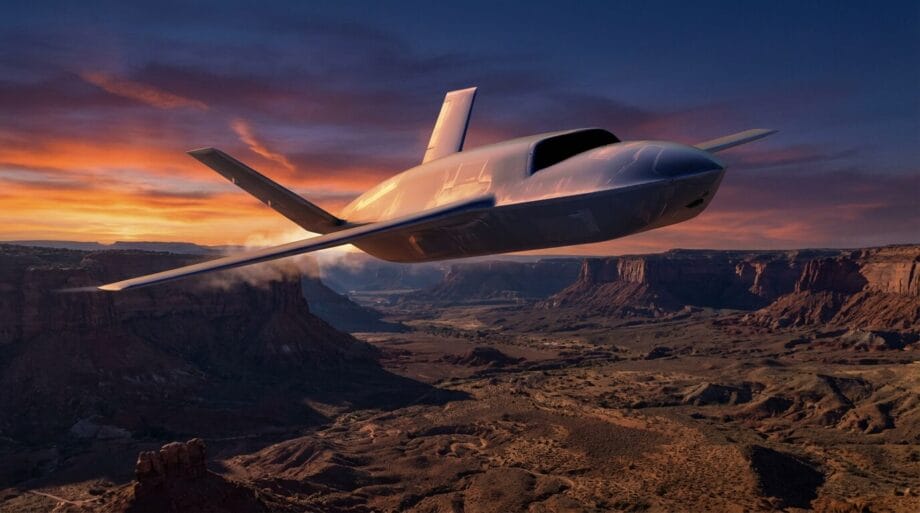
CCAs are designed to serve as drone wingmen, operating semiautonomously in tandem with advanced fighter jets, including the F-35A and the upcoming F-47.
The Air Force envisions deploying over 1,000 of these units across a multitude of configurations, enabling them to execute a diverse array of missions, which encompass:
- Strike Operations: Engaging enemy targets with precision.
- Reconnaissance Missions: Collecting critical intelligence and enhancing situational awareness.
- Electronic Warfare: Disrupting adversary communication and radar systems.
- Decoy Functions: Redirecting enemy fire away from manned aircraft.
Collaboration with Leading Industry Experts
In 2024, the Air Force forged a partnership with General Atomics and Anduril Industries to develop its first CCAs, identified as the YFQ-42A and YFQ-44A, respectively.
Initial ground trials for these models began in early 2025, with flight testing scheduled to occur later in the same year.
The integration process employed the Autonomy Government Reference Architecture (A-GRA), a framework that allows software to be decoupled from specific hardware platforms.
This architecture promotes a smoother interfacing of technologies across various systems, diminishing reliance on singular vendors and fostering a competitive milieu for software innovation.
Insight from Leadership
Colonel Timothy Helfrich, the Air Force’s portfolio acquisition executive, underscored the significance of A-GRA in the service’s acquisition blueprint.
“By validating A-GRA in collaboration with multiple partners, we ensure that we are not restricted to a solitary solution or vendor.
Instead, we cultivate an ecosystem where premier algorithms can be swiftly deployed to operational platforms, thereby enhancing adaptability and responsiveness,” he remarked.
Fostering Agile Solutions
The Air Force’s relentless commitment to avoiding “vendor lock” enables rapid implementation of new algorithms and software into CCAs. This agility allows the Force to maintain a responsive and flexible posture in the face of evolving global threats.
Both General Atomics and Anduril released statements highlighting the successful integration of software components.
General Atomics indicated that the incorporation of Sidekick Collaborative Mission Autonomy, developed by Collins Aerospace—a subsidiary of RTX—enabled the YFQ-42A to successfully complete its inaugural semiautonomous airborne mission, thus laying the groundwork for extensive flight evaluations.
Enhancing Operational Versatility
The software integrated seamlessly with the flight control systems of the YFQ-42A, allowing for robust data exchanges with mission systems. A human operator maintained direct command over the drone for over four hours, underscoring the reliability and efficacy of the integration.
David Alexander, president of General Atomics Aeronautical Systems Inc., commented on the collaboration with Collins, stating, “This integration exemplifies our commitment to innovation and operational excellence within unmanned technology.”
Advancements in Modular Design
Meanwhile, Jason Levin, Anduril’s senior vice president of engineering, reflected on the integration endeavors, labeling it a “critical advancement towards establishing genuine operational capacity by the end of the decade.”
The YFQ-44A, with modularity embedded in its design, boasts an open architecture that facilitates ease of reconfiguration for various mission profiles.
Levin mentioned that Anduril is actively collaborating with Shield AI to incorporate advanced autonomous capabilities. The anticipated prospect of deploying the YFQ-44A with this sophisticated software integration is expected shortly.
The successful integration of autonomous software into the Air Force’s CCAs represents a watershed moment in the progression of military aviation competencies.
As the service continues to innovate and collaborate with leading industry figures, the prospects for enhancing air combat effectiveness, adaptability, and operational synergy appear increasingly auspicious.
This initiative not only bolsters the U.S. military’s competitive advantage but also sets a precedent for forthcoming advancements in unmanned aerial systems.
Source link: News.defcros.com.