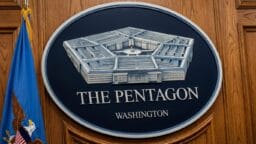
Pentagon Prohibits Military Personnel from Ivy League Institutions Amid Educational Policy Shift
In a significant policy shift that may alter the educational landscape for military officers, the United States Department of Defense has announced forthcoming restrictions on attendance at premier Ivy League and elite educational establishments. This change is set to take effect in the next academic year.
According to an original report from the Associated Press, Defense Secretary Pete Hegseth articulated that the Pentagon intends to sever its connections with institutions labeled as centers of “toxic indoctrination.”
Among the universities affected are Columbia University, Yale University, Brown University, Princeton University, and the Massachusetts Institute of Technology, along with others. This decision builds upon previous measures aimed at Harvard University.
The implications of this policy stimulate critical discussions surrounding military-funded education, international academic collaborations, and alternative paths for military careers.
Military Education: A Strategic Career Ascendance
For decades, U.S. military officers have leveraged advanced education at prestigious civilian institutions as a pivotal asset in their progression toward leadership roles in defense strategy, public policy, and international affairs.
The Pentagon’s Tuition Assistance program addresses full tuition for active-duty personnel, thus rendering elite universities financially feasible.
Data referenced by the Associated Press reveal that numerous service members participated in these educational programs as recently as 2023.
Beyond degree pursuits, officers have engaged in fellowships, certificate programs, and executive education specifically designed for defense professionals.
Such academic involvement has historically enriched officers’ capabilities in diplomacy, governance, technology, and management—skill sets increasingly pertinent in contemporary warfare and global security frameworks.
The Harvard Precedent
This latest decision is an extension of prior actions directed against Harvard University. Previous reports indicate that the initial measures sought to limit access to graduate-level professional military education, fellowships, and certificate courses.
Uncertainty remains regarding whether these restrictions encompass initiatives like the Reserve Officers’ Training Corps.
Notably, Harvard had initiated a specialized master’s program in public administration for active-duty personnel and veterans—demonstrating how universities have actively sought to attract military students as a unique academic demographic.
Political Context and Campus Discord
This development unfolds amid escalating tensions between the Trump administration and numerous Ivy League campuses.
As reported by the Associated Press, the White House has accused these elite institutions of harboring ideological biases, curtailed research funding, and instigated inquiries into campus conduct.
Some universities have reached agreements to regain federal funds, while others have pursued legal action against government measures. The Pentagon’s revised directive indicates that educational policy has metamorphosed into an element of this broader political confrontation.
Implications for Military Careers
For active-duty officers, the immediate consequence may involve a pivot towards alternatives such as military-operated war colleges or collaborations with other civilian universities not subjected to the ban.

From a career standpoint, engagement with internationally recognized academic networks typically augments post-service prospects in policy think tanks, international bodies, and corporate leadership.
Consequently, a protracted prohibition on access to elite campuses may significantly impact the long-term professional trajectories of U.S. military personnel.
For Indian students and defense aspirants observing from a distance, this situation illuminates a crucial lesson: pathways to higher education, particularly those linked to public service, are increasingly influenced by political, ideological, and institutional dynamics.
Today, career planning necessitates not only academic excellence but also a keen awareness of policy changes that can swiftly redefine the landscape of opportunities.
Source link: Timesofindia.indiatimes.com.