Meta’s Ambitious AI Strategy Under Beijing’s Watchful Eye
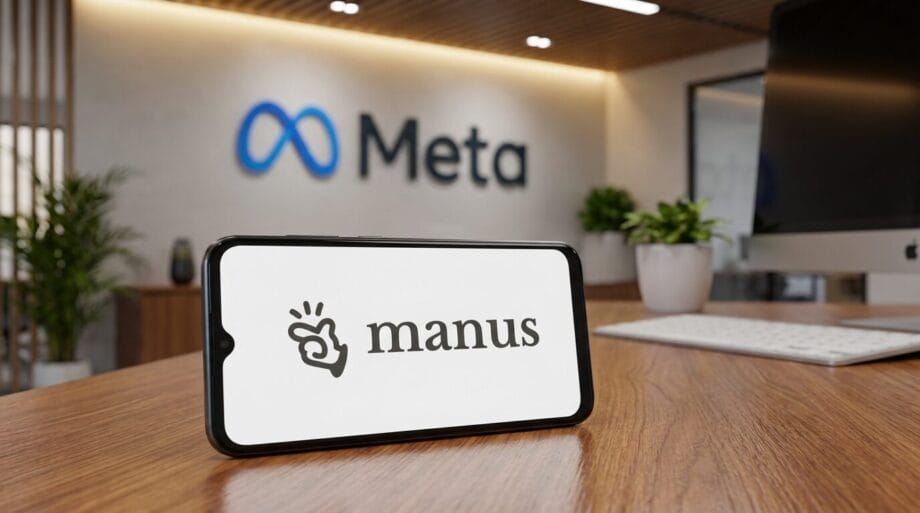
In the fiercely competitive realm of artificial intelligence, Meta Platforms Inc. has stirred the waters with its substantial acquisition of Manus, an AI startup rooted in Singapore yet intricately linked to China.
Valued at over $2 billion, this strategic move signifies Meta’s determination to enhance its AI capabilities at a time when rivals such as OpenAI and Google are also vying for dominance.
The acquisition, revealed late last year, paves the way for Meta to incorporate Manus’s innovative AI agent technology into its diverse portfolio, thereby transforming user interactions on platforms like Facebook and Instagram.
Founded by visionary entrepreneurs with Chinese connections, Manus excels in developing general-purpose AI agents that execute complex tasks with minimal human intervention.
This technology resonates with Meta CEO Mark Zuckerberg’s aspiration for an AI-enabled future that effortlessly facilitates everyday digital experiences.
Nevertheless, this acquisition has quickly attracted scrutiny from Chinese regulators, who are investigating its compliance with technology export regulations.
This increasing vigilance highlights the escalating tensions surrounding international technology transfers, particularly concerning sensitive AI advancements.
The unfolding narrative reveals that Manus had previously transitioned from China to Singapore, a strategic relocation that enabled it to entice Western investments while minimizing Beijing’s oversight.
Meta has asserted its intention to maintain Manus’s operations as an independent entity while embedding its technology into a wider array of products.
However, the rapid pace at which this deal was finalized—reportedly within merely 10 days—has raised eyebrows in both Washington and Beijing, signaling the geopolitical complexities entwined in the AI race.
Regulatory Challenges Loom Over International Tech Deals
Within hours of the announcement, Chinese authorities commenced a review focused on potential breaches of export directives. A report by Bloomberg suggests that this investigation could hinder the deal upon discovering any infractions, thus introducing uncertainty into Meta’s aspirations.
Such occurrences are not anomalies; instead, they exemplify Beijing’s broader strategy aimed at protecting domestic technologies amid intensifying U.S.-China competition within the tech arena.
The Financial Times has remarked on the uniqueness of this acquisition, as it represents a rare instance of a U.S. company securing an advanced AI entity with Chinese origins, a move likely to elicit responses on both sides of the Pacific.
Social media discussions, especially on X (formerly Twitter), resonate with users contemplating the implications for China’s AI landscape, suggesting that such transactions could expedite a talent and innovation exodus from the mainland.
Further complicating the landscape, Reuters has reported that China’s commerce ministry has formally acknowledged an investigation into the legitimacy of the acquisition concerning technology export regulations.
This development, arriving at the outset of 2026, underscores Beijing’s determination to regulate technologies developed by Chinese nationals, even when the entities relocate.
Meta has emphasized that Manus will entirely dissolve its ties and operations within China following the acquisition, a move applauded by certain American observers as a triumph for U.S. interests.
Examining Manus’s Journey and Meta’s Vision
The backstory of Manus enriches this narrative. Initially established in China, the startup rejected investment offers from local governmental bodies due to concerns about possible Western repercussions that could stymie global advancement.
This critical decision, outlined in a Wall Street Journal article shared across social platforms, facilitated its move to Singapore and eventual acquisition by Meta.
The AI agents developed by Manus, designed for various functions including automated customer interaction and data analysis, have already garnered over $100 million in revenue, enhancing their attractiveness as a target.
Meta’s extensive forays into AI are not unprecedented; in 2025, the company invested billions in similar initiatives in an endeavor to catch up with the burgeoning generative AI boom.
In acquiring Manus, Meta not only gains groundbreaking technology but also a cadre of experts adept in sophisticated AI models.
Industry insiders speculate that this acquisition could significantly enhance Meta’s Llama AI framework, paving the way for more advanced capabilities in its metaverse and social media ecosystems.
Nonetheless, the valuation of this deal—rumored to oscillate between $2 billion and $3 billion—has ignited discussions regarding potential overvaluation in a fluctuating market.
Some postings on X hint at even loftier figures, possibly reaching $5 billion, although formal statements maintain the lower estimate.
This financial consideration underscores Meta’s robust commitment to investing in AI, placing a bet on its future supremacy in a field where early advantages are invaluable.
Geoeconomic Currents in the AI Arms Race
The scrutiny from Chinese regulators transcends mere procedure; it encompasses overarching concerns regarding technology leakage.
Analysis by TechCrunch at TechCrunch articulates that Beijing perceives this acquisition as a potential erosion of its AI superiority, particularly given that Manus’s founders are of Chinese descent.
This sentiment finds resonance in discussions on X, where commentators—ranging from scholars to tech analysts—caution against an impending exodus of AI startups seeking more welcoming environments outside of China.
Responses from Washington have been ambivalent. Some voices celebrate the infusion of talent into American entities, while others express trepidation regarding national security ramifications associated with integrating foreign-developed AI.
CBC News has elucidated the significance of this deal in the context of U.S. tech giants’ quest for AI supremacy, designating Manus as a “darling” of the startup sphere.
This acquisition could potentially set precedents affecting future transactions, thereby influencing regulatory perspectives on both sides concerning cross-border tech mergers.
Moreover, the timing of this acquisition aligns with intensified U.S. limitations placed on Chinese technology, notably including export constraints on semiconductors essential for AI training.
Meta’s assurance to discontinue Manus’s Chinese operations aims to alleviate these risks, yet it has not entirely quelled concerns. As emphasized by a trade analyst on X, the deal introduces “negative sentiment” pertaining to Meta’s growth prospects in light of existing regulatory hurdles.
Sector Reactions and Potential Consequences
Responses within the technology sector have been varied. Yahoo Finance reported on the rarity of this acquisition as a U.S. firm’s venture into Asian technology, valuing Manus at over $2 billion and marking Zuckerberg’s latest foray into AI.
Insiders predict that the integration of Manus could expedite Meta’s development of autonomous agents, potentially disrupting rivals in realms such as virtual assistance and content generation.
Conversely, skeptics question the sustainability of Meta’s aggressive strategy. With substantial financial commitments directed toward AI infrastructure, including data centers and talent acquisition, the company faces considerable shareholder pressure to yield profitable results.
The BBC noted Meta’s ambition to cultivate AI tools for complex tasks, but the ongoing regulatory inquiry could impede integration timelines, complicating these goals.
Social media conversations from industry figures such as Rui Ma and Rohan Paul provide context on the deal’s swift negotiations and Manus’s revenue potential.
Their sentiments reflect optimism among AI proponents, viewing the acquisition as a catalyst for global innovation—albeit one that intensifies U.S.-China frictions.
Navigating the Future for Meta and Manus
As the investigation progresses, Meta must adeptly maneuver through diplomatic channels to secure the completion of the deal.
Sources indicate that Chinese regulators harbor particular concerns over Manus’s move to Singapore, interpreting it as a potential loophole for the exportation of sensitive technologies.
An article on TechRadar at the provided link, TechRadar, elaborates on how this scrutiny could pose challenges for Meta, illustrating Beijing’s influence within global AI transactions.
In comparison, historical deals—such as TikTok’s journey within the U.S.—offer insights on navigating geopolitical risks.
Meta might be compelled to make concessions, including reducing the sensitivity of its technology or bolstering data security measures to appease regulatory demands. Conversely, the founders at Manus could face personal implications, potentially attracting attention from authorities back home.
Prognostically, this scenario epitomizes the intricate interconnection of technology and international diplomacy.
For insiders, it serves as a prominent case study regarding the pitfalls of cross-border acquisitions in critical sectors such as AI.
Meta’s potential success in this endeavor could embolden similar undertakings, reshaping corporate strategies regarding global talent and innovation sourcing.
Economic and Innovative Impacts
Economically, the acquisition promises to inject significant capital into Singapore’s burgeoning tech landscape, positioning it as an epicenter for AI startups departing from stricter governance.
CNBC’s overview at CNBC frames this as part of a larger pattern of Meta’s investments in the AI sector, indicating a ripple effect on global markets. This could trigger additional relocations, diminishing China’s monopolistic hold on domestic innovation.
Innovation-wise, the synergy of Manus’s AI agents with Meta’s extensive data reserves holds the promise of revolutionary advancements in personalized AI.
Still, ethical quandaries—such as data privacy and AI bias—remain pervasive, exacerbated by the international context.
Regulators worldwide are closely observing these developments, potentially leading to standardized protocols for AI technology transfers.
Ultimately, as noted by figures like Henry Gao on X, this acquisition epitomizes a transformative shift where only firms dissociating from China can thrive in the global arena.
For Meta, surmounting Beijing’s reservations will challenge its strategic prowess in an epoch where AI transcends simple functionality to become a geopolitical commodity.
Contextualizing Global Tech Dynamics
Diving deeper, the Manus acquisition is part of an ongoing trend of U.S. corporations seeking overseas AI talent to fuel domestic growth.
A report from InvestingLive emphasizes the regulatory uncertainties accompanying cross-border tech transactions, accentuating the risks associated with Chinese export controls.
Such scrutiny could dissuade future agreements, compelling startups to align themselves with particular frameworks early on.
In Beijing, the response may involve further tightening of export regulations, potentially disrupting global supply networks.
Should any violations be confirmed, it might lead to punitive measures, including fines or blocks on future dealings, according to updates from Reuters regarding the commerce ministry’s position.
Experts posit that these tensions catalyze fragmentation within technological ecosystems, giving rise to parallel developments in Eastern and Western domains.
While audacious, Meta’s strategy exemplifies the precarious balance of pursuing innovation while ensuring compliance in a world increasingly characterized by division.
Strategic Insights for Technology Leaders
The saga of Meta and Manus yields critical lessons for tech executives. First, a thorough examination of geopolitical risks is essential; Manus’s Chinese lineage has been scrutinized for its legitimacy despite its shift in location.
Second, rapid deal-making, as demonstrated in this 10-day negotiation, may accelerate beyond regulatory timelines but fails to eliminate them entirely.
Finally, strategic communication is paramount. Meta’s commitments regarding severing its Chinese operations have received favorable reactions in the U.S., as reflected in positive sentiments on X.
However, in China, this narrative may stoke concerns regarding talent attrition, potentially jeopardizing Meta’s market foothold within the region.
As the situation evolves, with ongoing updates from prominent sources like the Financial Times and Bloomberg, this episode represents a defining moment in the global AI narrative, intertwining ambition, regulation, and rivalry.
Source link: Webpronews.com.