Advancements in Robotics: The Convergence of AI and Micro-Technology
In the ever-evolving realm of robotics, recent strides illustrate the pivotal role of artificial intelligence (AI) in reshaping the dimensions, capabilities, and applications of robotic systems.
Featured in The Rundown AI’s robotics update dated December 29, 2025, a standout report discusses the emergence of nearly invisible robots—a landmark achievement in micro-robotics.
These diminutive autonomous units, often measuring under a millimeter, employ sophisticated AI algorithms for navigation and task execution within environments unsuitable for larger machinery.
Research teams at esteemed institutions, such as Harvard University, have been pioneering developments in this arena since 2018.
By 2023, notable enhancements have emerged, showcasing AI-powered swarming behaviors tailored for medical applications, including precise drug delivery within the human body.
This advancement underscores a broader industry trend where AI is metamorphosing robotics from rigid, pre-programmed entities into adaptable systems that learn from their surroundings.
Another significant development is AgiBot’s innovative robot-for-hire platform, launched in late 2025. This cutting-edge service utilizes advanced AI to furnish on-demand robotic solutions for sectors such as logistics and manufacturing.
Businesses can now lease AI-driven robots capable of performing tasks independently, markedly diminishing the dependence on human labor.
Simultaneously, the U.S. has enacted a ban on foreign drones, a decision announced in 2025 that profoundly influences companies like DJI.
This policy, effective from October 2025, forbids the utilization of non-U.S.-manufactured drones in government operations, thereby stimulating domestic advancements in AI drone technology.
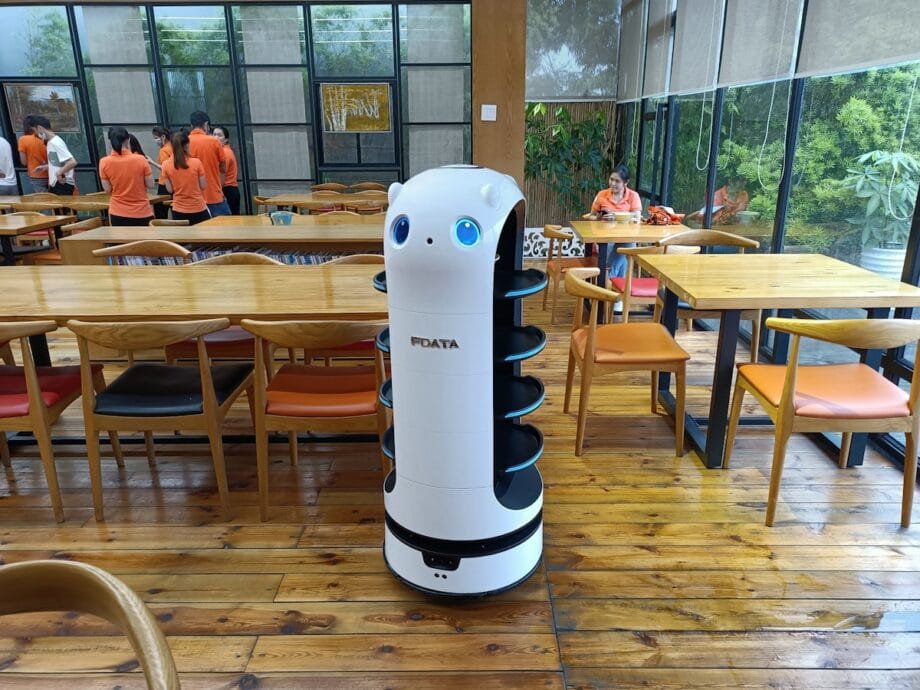
In a parallel development, LG has unveiled humanoid robots designed to assist with household chores, revealed at a tech conference in December 2025. These AI-enabled robots, intended for tasks like cleaning and cooking, build on prototypes introduced in 2024.
Together, these narratives reflect AI’s transformative impact on robotics, which is shifting toward miniaturization, accessibility, and domesticity.
Statista projects that the global robotics market will escalate to $210 billion by 2025, with updated forecasts in 2024 reflecting the integration of AI technologies.
Among rapid advancements are innovations in soft robotics for health care, where AI is enhancing material pliability, as discussed in the November 2025 issue of IEEE Spectrum.
From a commercial vantage point, these robotic advancements unveil considerable market prospects and monetization opportunities.
Micro-robots, for instance, could revolutionize the healthcare sector by enabling precision previously unattainable in traditional surgical methods, potentially claiming a substantial share of the projected $100 billion medical robotics industry by 2030, as estimated by McKinsey’s 2024 report.
Enterprises investing in this innovation might monetize through licensing AI software or collaborations with pharmaceutical companies to optimize drug delivery systems.
AgiBot’s subscription-based robot-for-hire model facilitates a payment approach reminiscent of cloud services. This model addresses challenges inherent to high initial costs associated with robotics adoption, tapping into the burgeoning gig economy for machines.
Projections from PwC’s 2025 analysis suggest that the market for robotic-as-a-service could soar to $50 billion by 2028.
Furthermore, the U.S. drone ban generates opportunities for American companies like Skydio, which leverage AI for autonomous flight, with forecasts indicating a rise in market share from 15% in 2024 to 30% by 2027, according to the December 2025 report from Drone Industry Insights.
Nevertheless, this ban presents hurdles for global supply chains, necessitating businesses to navigate compliance intricacies and diversify their supplier networks.
LG’s household humanoids have the potential to disrupt the consumer electronics sector, with AI-driven personalization enhancing sales, forecasted to contribute $20 billion in revenue to home automation by 2026, as per IDC’s 2024 analysis.
Ethical considerations emerge, particularly concerning data privacy in AI implementations, with best practices advocating for transparent algorithms to foster consumer trust.
Collectively, these developments signify a competitive environment dominated by established firms like Boston Dynamics and emerging startups, where adherence to regulatory measures, such as the EU’s AI Act from 2024, is essential to avoid punitive repercussions.
The technical foundation underlying these robotic innovations hinges on intricate AI frameworks. For example, micro-robots utilize reinforcement learning to adapt within dynamic settings, confronting implementation challenges around power efficiency—an issue being addressed through advancements in nanomaterials documented in the October 2025 publication of Nature Nanotechnology.
For AgiBot’s platform, edge AI computing facilitates real-time decision-making while minimizing latency to under 10 milliseconds, necessitating scalable cloud infrastructures capable of managing data from numerous units, a solution pioneered by AWS in their 2024 robotics toolkit.

The U.S. drone ban propels the evolution of secure AI models, enhancing resilience against cyber threats. Future prognostications foresee the emergence of hybrid AI-human systems by 2030, while LG’s humanoids incorporate natural language processing to enhance user engagement.
However, they face challenges in bipedal stability, addressed through generative AI simulations, as noted in MIT’s 2025 research.
Looking forward, these groundbreaking technologies may foster widespread AI-robot symbiosis, with Gartner’s 2025 forecasts indicating that 50% of households could utilize AI assistants by 2035, though ethical best practices must be established to mitigate job displacement risks through comprehensive reskilling initiatives.
Source link: Blockchain.news.