Trump’s Unexpected Remarks at Davos
President Donald Trump’s addresses are often rife with unpredictability. His recent speech at the World Economic Forum in Davos certainly exemplified this, delivering a jolt of surprise to many, particularly in Israel.
While enumerating his accomplishments, he stated, “Bibi, stop taking credit for the dome. That’s our technology, that’s our stuff,” a direct reference to Israeli Prime Minister Benjamin Netanyahu and the Iron Dome missile defense system.
Israeli Reaction: A Sense of Bewilderment
The reaction within Israel was a mix of astonishment and defensiveness. The Iron Dome, long celebrated as a hallmark of Israeli ingenuity, has played a pivotal role in safeguarding lives and is deeply ingrained in the Israeli national consciousness.
However, this raises an intriguing question: Should credit for its success truly extend to the United States? This article aims to contextualize the narrative surrounding this sophisticated defense technology.
The Origins of Iron Dome
The history of Iron Dome is chronicled in a 2009 report from the State Comptroller. In August 2005, Brigadier General Danny Gold, then head of the Directorate of Defense Research & Development within the Israeli Defense Ministry, initiated the program focusing on research, development, and a robust timeline.
Accelerating Development
By the following year, Defense Minister Amir Peretz deemed Iron Dome “the most crucial project” and urged its classification as an ’emergency program,’ advocating for its expedited development.
Consequently, the Israeli defense technology firm Rafael Advanced Defense Systems was commissioned to initiate full-scale development.
Amid calls for additional funding, Prime Minister Ehud Olmert emphasized the urgency, stating, “We can’t delay execution by even a day.” In April 2007, Rafael and the Defense Ministry formalized their agreement to advance Iron Dome.
Overcoming Financial Hurdles
As development unfolded, Chief of Staff Gabi Ashkenazi hesitated to approve the project until financial resources were allocated.
However, the newly appointed Defense Minister, Ehud Barak, green-lit the initiative, leading to cabinet endorsement in December 2007.
By 2009, Iron Dome was handed over to the Israel Defense Forces (IDF), culminating in its first operational interception in Ashkelon in April 2011.
The Credit Attribution Dilemma
Who Takes the Credit?
With this historical backdrop in mind, an essential question surfaces: Whose success is it? The primary developers—Rafael for the interceptor missile and launcher, along with Israel Aerospace Industries’ Elta unit for the radar, and MPrest Systems for the command and control—are all Israeli enterprises.
Yossi Druker, former VP at Rafael and a pivotal figure in the Iron Dome project, asserts, “Iron Dome was developed exclusively with Israeli funding, and the technology is entirely Israeli.” He emphasized that Rafael leveraged advanced air-to-air missiles for the Iron Dome’s technology.
America’s Role in the Project
When did American involvement emerge? “During a certain phase of development, a delegation of ten American experts assessed our progress as part of an evaluation of an Israeli request for American financial support,” recalled Druker.
Their initial report conveyed skepticism about meeting milestones, but a year later, they acknowledged that the system was indeed developed in three years—an undertaking that would typically span at least fifteen years in the United States.
U.S. Involvement Today
Presently, the U.S. firm Raytheon plays a significant role in the project, with the U.S. Missile Defense Agency contributing critical components for Iron Dome. The interceptor missiles are produced in both Israel and the U.S., emphasizing the transnational nature of this defense system.
The Complexity of Contributions
However, can this justify the assertion that Iron Dome belongs to the United States? Dr. Yehoshua Kalisky, a senior researcher at Tel Aviv University’s Institute for National Security Studies, contends, “While fabrication and missile systems may have American input, the integration of components and the overarching system architecture are distinctly Israeli innovations.”
Kalisky further elucidates that all technological advancements build upon prior knowledge, yet equating Iron Dome as merely a collaborative output would be misleading.
Funding Dynamics
It is imperative to clarify that while American participation is evident, it resides primarily in the critical domain of financial backing, rather than in technology.
Kalisky elaborates, “American military aid partially allocates funds to U.S. factories producing Iron Dome’s Tamir interceptor missile, a practice established long ago.” Such financial arrangements echo back to the 1980s, when initial collaborations began.
The Financial Flow
Since Iron Dome became operational in 2011, continuous U.S. funding has supported its functionality. Following its debut interception, an unfurling of discussions led to the U.S. committing $205 million to the program, escalating over the years.
By 2014, approximately $1 billion had been allocated, with missile batteries financed principally by the U.S. Estimates suggest that each Iron Dome battery costs between $50-60 million (adjusted to $70-80 million by 2025 standards).
Long-term Collaboration
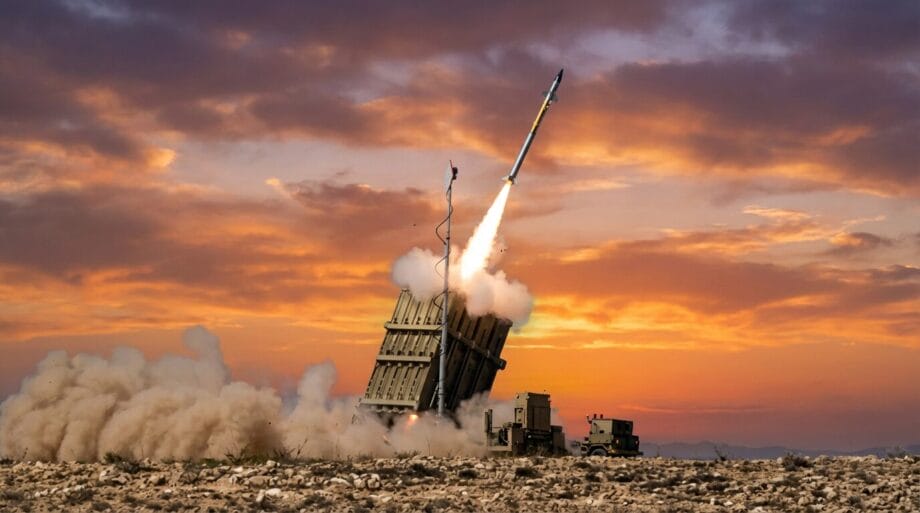
Since 2012, generous funding has bolstered both Iron Dome and other Israeli air defense initiatives—a collaborative endeavor wherein the U.S. contributes financially while Israel drives technological prowess.
Periodically, further funding packages emerge, as illustrated in 2022 when $1 billion was allocated, with a staggering $4 billion projected for 2024. This budget is aimed at fortifying Iron Dome and David’s Sling defense systems against aerial threats.
Acknowledging Contributions
Today, Druker acknowledges a significant American role: “While the development financing was wholly Israeli, production is predominantly U.S. financed.” This interdependence encapsulates the complex tapestry of collaboration woven between the two nations.
Source link: Jpost.com.