While Apple’s inaugural foray into foldable technology remains shrouded in secrecy, recent credible leaks suggest that the anticipated iPhone Fold may outshine Samsung in a critical domain: battery endurance.
A reputable informant on Weibo has reported that Apple is evaluating a battery capacity approaching 5,500mAh, a notable improvement over the 4,400mAh cell that Samsung has utilized since the Galaxy Z Fold 3.
If these specifications prove accurate, the iPhone Fold could potentially surpass the Galaxy Z Fold 7 in practical battery life before any direct comparisons are conducted.
Bigger Cell Rumor and the Numbers That Matter
This assertion comes from Fixed Focus Digital, a leaker recognized for disclosing early hardware specifics from East Asia.
A target of 5,500mAh signifies a 25% increase over Samsung’s existing capacity—a substantial improvement within a category where power demands are exacerbated by two sizable displays and a complex hinge system.
Additionally, a different Korean blogger had previously noted a projected capacity range of 5,400–5,800mAh for Apple’s trials, further corroborating this emerging rumor.
In a comparative framework, this places Apple in a competitive position. Numerous Chinese foldables currently boast battery capacities between 5,000 and 5,500mAh, with some notable exceptions exceeding those figures.
For instance, the vivo X Fold 5 is rumored to achieve 6,000mAh, while the global HONOR Magic V5 reportedly stands at 5,820mAh, and Google’s Pixel 10 Pro Fold hovers around 5,015mAh.
A 5,500mAh iPhone Fold may not set unprecedented records, but it directly confronts a prevalent concern among foldable users: battery anxiety.
Why Battery Capacity is Only Half of the Story
Merely possessing high milliamp-hour ratings does not inherently translate to superior battery longevity. Apple’s advantage has consistently stemmed from its emphasis on efficiency.
Recent iterations of iPhones, even with smaller batteries, frequently feature prominently in endurance rankings curated by established outlets such as Tom’s Guide and PhoneArena, owing to meticulous hardware-software integration, the prowess of their A-series silicon, and sophisticated power management techniques that optimize everything from modem consumption to display refresh rates in real-time.
Adapting these efficiencies to a foldable device could be transformative. Anticipate Apple to incorporate LTPO panels, offering dynamic ProMotion range capabilities from 1 to 120Hz, alongside adaptive resolution adjustments between the cover and main displays.
Coupled with a 5,500mAh battery, these innovations could enable the iPhone Fold to outlast competitors that technically wield greater watt-hour capacities.
Design Choices That Enable a Larger Battery
Speculations suggest a ‘squat’ aspect ratio for Apple’s foldable, resembling a compact tablet rather than the elongated design favored by Samsung.
This configuration could provide additional internal space for a larger dual-cell battery while simultaneously improving thermal management—both vital for sustained performance and longevity.
Apple’s history of efficiently layered logic boards and L-shaped batteries in conventional iPhones indicates its intent to optimize every centimeter within the device’s hinge and spine.
In parallel, other manufacturers have increased battery capacity through the adoption of high-silicon chemistry, thinner separators, and laser-stacked configurations. Chinese brands, in particular, have aggressively explored these avenues, balancing energy density with heat dissipation and cycle longevity.
While Apple doesn’t engage in a numbers contest for its own sake, it has consistently deployed refined technologies once proven durable and safe—an approach that may elucidate the company’s cautious progression towards substantial advances in foldable batteries.
What a Bigger iPhone Fold Battery Could Mean for Samsung
Samsung has maintained a constant 4,400mAh battery through multiple iterations of its Fold lineup, prioritizing slimness and weight reduction. Consequently, this strategy often necessitates midday recharges for heavy users.
Should Apple successfully introduce a considerably larger battery without sacrificing thickness, it will compel Samsung to reassess its internal engineering, investigate newer battery technologies, or even both.
The competitive implications are significant: research institutions like Counterpoint highlight that battery life remains a principal factor in purchasing decisions within the premium market, where foldables amplify these concerns.
It is essential to acknowledge that Samsung retains an advantage in terms of durability and water resistance standards for foldable devices, often outpacing Apple in charging speeds. However, with the rumored figures, Apple may capture the narrative surrounding endurance, and its efficiency could transform that promise into a tangible reality for consumers.
What to Watch Next as Apple’s First Foldable Nears
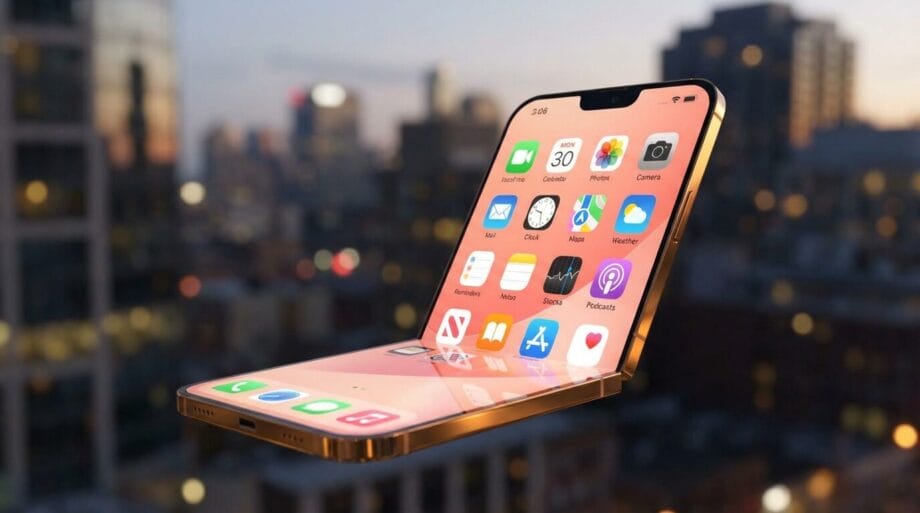
As is customary with pre-launch disclosures, specifics remain subject to alteration. The actual battery performance will depend on factors such as screen dimensions, software calibration, modem efficiency, and how aggressively Apple manages brightness and refresh rates.
Additionally, charging capabilities—and whether Apple will finally adopt faster wired standards—will considerably influence the user experience, notwithstanding a larger battery capacity.
Nevertheless, if the 5,500mAh figure approaches finality, Apple’s first foldable could debut with the enhancement that resonates most with prospective users: an assurance of lasting performance. This could position the iPhone Fold as a significant competitor, potentially rendering the Galaxy Z Fold 7 somewhat obsolete from its inception.
Source link: Findarticles.com.