Apple Redefines Budget Smartphones with the iPhone 17e
In March 2026, Apple’s product launch was not solely focused on the “Neo” MacBook era; it also revolutionized the concept of a “budget” smartphone.
The recent debut of the iPhone 17e has unveiled a series of Geekbench 6 benchmarks that are both remarkable and illuminating.
Priced at $599, this model boasts flagship-grade A19 silicon; yet, as is customary with the “e” series, a well-calibrated caveat exists to preserve the allure of the Pro variants.
Astonishingly, initial benchmark results indicate that the iPhone 17e’s raw processing capabilities closely parallel those of the standard iPhone 17.
Both devices leverage the A19 chip, meticulously crafted using TSMC’s advanced 3nm process, which incorporates a 6-core CPU configuration, combining 2 performance cores with 4 efficiency cores.
According to the leaked Geekbench 6 data, the iPhone 17e registered an impressive multi-core score of 9,241. For context, the standard iPhone 17 averages a slightly higher score of approximately 9,249.
This negligible 0.08% difference falls within thermal fluctuation margins, affirming that for everyday tasks—such as app launching, multitasking, and web browsing—the $599 variant matches the performance of its $799 counterpart.
Geekbench 6 Multi-Core Comparison
- iPhone 17 Pro (A19 Pro): 9,805
- iPhone 17 (A19): 9,249
- iPhone 17e (A19): 9,241
- iPhone 16 Pro (A18 Pro): 8,625
- iPhone 16e (A18): 7,977
For users transitioning from an iPhone 11 or 12, this represents a remarkable twofold increase in speed, positioning the 17e as one of the most “future-proof” entry-level devices Apple has ever introduced.
The Subtle Caveat: GPU Binning and Graphics Performance
While the CPU metrics are nearly indistinguishable, the “e” in 17e denotes a particular brand of efficiency—specifically, economic efficiency for Apple. Benchmarks reveal that the A19 chip within the 17e has undergone binned processing.
In contrast to the standard iPhone 17, which features a 5-core GPU, the 17e is limited to a 4-core GPU, resulting in a discernible, albeit not detrimental, decline in graphical performance. The 17e hit Metal scores ranging between 31,000 and 31,500, while the standard model hovers around 37,000.
This translates to a scenario where the iPhone 17e can adeptly manage AAA titles and support hardware-accelerated ray tracing; however, it may not maintain the sustained frame-rate stability experienced with the pricier models during extensive gaming sessions.
For casual users perusing TikTok or crafting 4K videos for Instagram, this caveat will likely remain undetected.
8GB of RAM: The Benchmark for Apple Intelligence
Through Apple’s developer tool Xcode, confirmation suggests that the iPhone 17e is equipped with 8GB of RAM.
Although ardent aficionados had anticipated an upgrade to 12GB to align with the M5 MacBook Pro architecture, the 8GB threshold remains Apple’s “golden number” in 2026.
This RAM allocation stands as the foundational requirement for Apple Intelligence. By incorporating 8GB, Apple guarantees that the iPhone 17e can effectively handle on-device generative models, utilizing features like “Clean Up” in Photos and a more conversational Siri, without necessitating a dependency on cloud processing.
This decision clearly articulates that entry-level users are not relegated to a secondary status within the realm of artificial intelligence.
Connectivity: The C1X Modem Enhancement
A pivotal upgrade lies in the integration of the Apple C1X modem, which represents the company’s second-generation in-house 5G chip. This modem showcases remarkable efficiency, with benchmarks indicating a speed that is nearly double that of the C1 modem utilized in the preceding 16e.
Moreover, the C1X exhibits a 30% increase in energy efficiency relative to earlier Qualcomm-sourced modems. This remarkable advancement enables Apple to uphold an impressive 26-hour video playback battery life despite the more powerful A19 chip.
Nonetheless, it is worth noting that the 17e’s modem does not support mmWave technology, remaining confined to the conventional Sub-6GHz 5G bands—a trade-off that is likely inconsequential for users outside major urban locales.
The Value Proposition: 256GB and Reintroduction of MagSafe
Apple has officially removed the 128GB base storage tier from its budget smartphone lineup. The iPhone 17e now boasts 256GB at a price point of $599, effectively doubling the value compared to its predecessor.
Additionally, the introduction of 15W MagSafe charging—an innovation for the “e” series—reinforces that the 17e transcends mere compromise and instead represents a strategic evolution.
The design remains consistent, featuring a 6.1-inch 60Hz display and classic notch, yet the internal “Ceramic Shield 2” enhances scratch resistance by threefold, ensuring that this so-called “budget” phone can endure the rigors associated with a three-to-five-year life cycle.
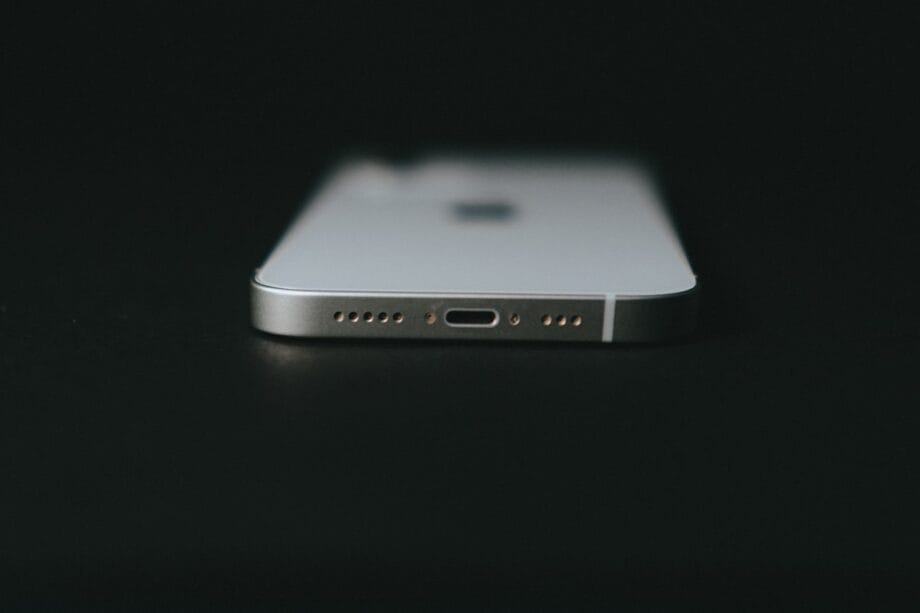
The iPhone 17e exemplifies a masterclass in product segmentation. By equipping the device with the A19 CPU while eliminating a single GPU core, Apple has crafted a smartphone that feels akin to flagship models in hand, while strategically preserving key “pro” features to justify the presence of its higher-end variants.
Source link: Techstory.in.