Catholic Schools Embrace Smartphone Ban Amid Rising Mental Health Concerns
(OSV News) ─ The term “ban” often evokes images of authoritarian measures eliciting backlash, particularly when applied to something as ingrained in daily life as smartphones and social media for students in Catholic schools.
Visualize a scenario where such a prohibition is instituted: uproar from administrators struggling to uphold the rules, while students rebel against imposed restrictions.
Yet, contrary to expectations, a surprising consensus may emerge—both students and parents expressing approval.
“The initiative has garnered remarkable support—students have revelled in it, engaging in genuine conversations again,” remarked Jesuit Father John Belmonte, the superintendent for Catholic education in the Diocese of Venice, Florida.
This comes in light of the recent enactment of a smartphone ban across all 15 diocesan Catholic schools at the inception of the 2025-2026 academic calendar.
“They have rekindled the essence of social interaction, setting aside the artificiality of social media,” he continued, noting instances where students even formed an UNO card game club during lunch—activities that had receded while they were preoccupied with their devices.
A pilot program for this initiative was implemented at select diocesan institutions one year prior. The idea was sparked during a broadcast by a Chicago associate discussing cellphone prohibitions in schools.
“I listened to the show and thought, ‘I’ll give this a shot,'” Father Belmonte recounted. Inspired by similar efforts in other districts, he orchestrated the transition.
With a scope affecting over 6,500 students, the newly uniform policy mandates that all non-school-issued electronic devices be secured in Yondr bags—lockable pouches that students carry until the end of the school day, at which point they can access their devices through a designated unlocking station.
In a lighthearted anecdote, Father Belmonte mentioned a fourth-grade boy eager to partake in the program who approached the principal requesting a Yondr bag, humorously reflecting the enthusiasm of younger students toward the initiative. “He wanted to self-enforce a ban on his cellphone,” he chuckled.
Furthermore, there has been a notable enhancement in student attentiveness. “In terms of academic engagement,” Father Belmonte elaborated, “it is essential for students to concentrate on their teachers and lessons. Distractions from phones and covert texting can severely disrupt the learning environment.”
Nationally, 26 states have mandated absolute bans on smartphones in K-12 public schools, with others implementing usage restrictions.
As reported by Education Week, “31 states currently impose limitations or outright bans on personal device usage during school hours or intend to introduce such measures for the 2025-26 or 2026-27 academic years.”
What underlies this rapid shift? In concise terms: mental health.
The U.S. surgeon general issued a 2023 advisory underscoring the increased risk of mental health issues—such as depression and anxiety—faced by children and adolescents spending over three hours daily on social media.
A study published in the December 2025 edition of the American Academy of Pediatrics, scrutinizing over 10,500 children, revealed that those receiving smartphones at 12 years of age were over 60% more susceptible to poor sleep and more than 40% at heightened risk of obesity.
Long before these cautions gained traction, Calvert Hall College High School—a private Catholic boys’ institution near Baltimore—established its own ban. Starting in 2006, students could possess cellphones but were required to store them in lockers.
By 2010, cell phone usage was restricted to designated outdoor locations, evolving in 2015 to any location outside across the expansive 32-acre campus. Consequently, violations of this policy continue to incur a six-day detention.
“We perceive this initiative as fostering direct personal interaction, rather than the multitasking often emblematic of adults and students alike,” Danielle Hladky, the Director of Communications and Marketing, conveyed to OSV News.
In contrast, institutions lacking similar policies frequently witness conversations marred by incessant device distractions.
However, Hladky emphasizes that Calvert Hall is not opposed to technology, even after 180 years of operation.
“We aren’t eschewing phones or smart devices; rather, we aim to harness them in ways that bolster our community and facilitate student growth—it’s the direction society is heading,” she articulated, recognizing the necessity of discerning appropriate contexts for device usage.
In a manner akin to the Diocese of Venice, the focus among students at Calvert Hall has intensified markedly.
“Feedback from fellow educators in both public and private sectors often reveals a contrasting experience concerning classroom engagement and authenticity, overshadowed by technological multitasking,” Hladky lamented.
According to a 2023 report by Common Sense Research, an astounding 43% of children aged 8 to 12 and 88%-95% of 13-18-year-olds own smartphones, with half of U.S. children obtaining their first device by age 11.
Christina Mehaffey, principal of Faustina Academy—an independent K-12 Catholic institution with 220 students in Irving, Texas—echoed similar concerns regarding student engagement and a waning appreciation for authentic experiences.
“We are witnessing pervasive digital dependence and addiction, with children struggling to remain attentive and engaged,” she asserted. “This incessant entertainment overshadows their values and interests in the good, the true, and the beautiful.”
Coming to terms with the detrimental aspects of social media, Mehaffey made a bold decision: Faustina Academy would impose a complete prohibition not only on smartphones during school hours but also on social media altogether. The initiative commenced with a verbal pledge in 2018 and evolved into formal writing in 2022.
“Should a student enroll with us, they must forgo all active social media accounts until graduation or departure from the institution,” she stated firmly.
“This includes all breaks—not even summers or holiday seasons. The rationale is simple: Social media messages often detract from reality.”
Mehaffey further highlights the inherent risks of unchecked electronic access to inappropriate material.
“If our mission is to center on faith and aspire for heaven—our ultimate goal—why are we providing unrestricted access to inappropriate content?” she questioned, emphasizing the responsibility of parents in this context.
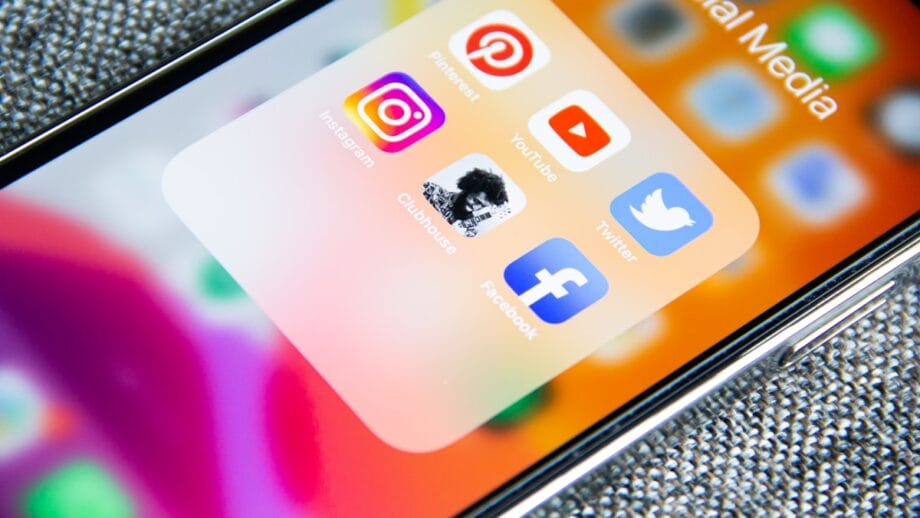
An April 2025 Pew Research Center survey noted that while most teenagers feel more connected through social media, approximately one in five report negative mental health implications stemming from these platforms, with an increasing number believing they adversely impact their peers.
While 74% of teens acknowledge social media’s benefits for connection building, 45% concede they devote excessive time to its use.
Mehaffey aspires for other educational institutions to adopt similar models and has devised a framework to assist them in establishing a social media-free environment.
“School leadership must be resolute,” she advised. “Furthermore, prospective families should receive clear communication about our policies and values from the outset.”
“Ultimately, what drives parents to choose a Catholic school over adjacent charter or public alternatives?”
Mehaffey queried. “It’s the education in the Catholic faith, aimed at guiding students toward heaven. If our intent aligns with that mission, then implementing such restrictions becomes a natural decision.”
Source link: Detroitcatholic.com.