Amidst ongoing speculation and a slew of patents hinting at a potential iPhone Fold, developers and designers are gearing up for transformative changes in foldable app optimization.
The smartphone sector stands on the precipice of a substantial evolution with Apple’s anticipated foray into the foldable device arena.
While companies like Samsung and Google have long experimented with flexible displays that either extend or fold into compact configurations, Apple’s entrance marks a significant pivot.
The implication of Apple’s engagement in foldable technology transcends mere hardware advancements; it symbolizes a paradigmatic shift in the design philosophy underpinning iOS applications.
If actualized, the Apple foldable user interface could potentially revolutionize mobile experiences through innovative interactions, seamless transitions, and a robust framework geared towards foldable app functionalities.
What Is the iPhone Fold and How Might It Operate?
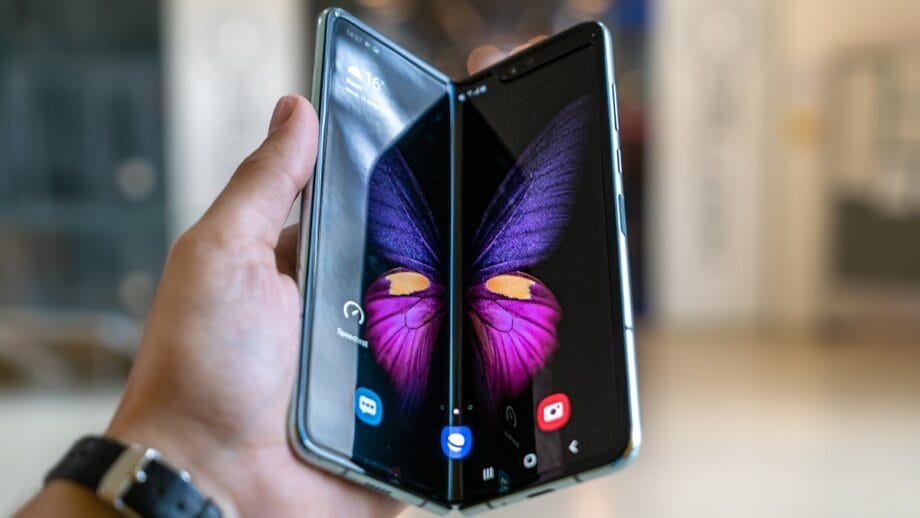
Although Apple has yet to officially disclose details regarding its foldable iPhone, patents and insights from supply chains indicate that the device, often colloquially referred to as the “iPhone Fold” or “iPhone Flip,” could incorporate an inward-folding OLED display adept at transitioning between phone and tablet modes.
Speculations suggest the design may utilize a crease-resistant hinge, ultra-thin glass layers, and adaptive refresh technology.
Conceptual models predict that the multitasking framework of the iPhone Fold will likely emulate, or perhaps even exceed, iPadOS’s multitasking paradigm, empowering users to operate multiple applications concurrently or display dual interfaces in tandem.
A dynamic display segment could facilitate one app to remain active on one side of the screen while another functions on the opposite half, thereby enhancing productivity and multitasking capabilities.
This newfound adaptability in display modes may necessitate a user interface that promptly adjusts, capable of seamlessly resizing content, preserving data continuity, and supporting intuitive gestures, thereby establishing the groundwork for Apple’s distinctive foldable UI ecosystem.
How Will Foldable Screens Transform App Design?
Foldable devices introduce a malleable interface that challenges the conventional fixed-screen app architecture. Developers have historically fashioned apps for linear, rectangular layouts where both resolution and orientation are predictable.
The iPhone Fold, however, could disrupt this norm by necessitating adaptable frameworks that respond to varying folds, splits, and expanded states.
This novel landscape implies that applications must transition seamlessly between compact and expanded formats.
For instance, when the device is partially folded, an application might exhibit navigation or preview panels; conversely, when entirely opened, it could expand into a multitasking mode. Consequently, elements must be designed with proportions that maintain usability across various fold states.
The Apple foldable UI may introduce responsive scaling standards akin to Apple’s existing Auto Layout and SwiftUI adaptive components. Designers might adopt a “spatial layers” mindset, ensuring content flows fluidly, irrespective of whether the screen is folded, unfolded, or positioned at an angle.
What Is Multitasking Like on a Foldable iPhone?
The advent of foldable technology unlocks unprecedented opportunities for multitasking, a highly anticipated feature of the iPhone Fold.
Apple’s established multitasking capabilities on iPadOS already present robust tools such as Split View, Slide Over, and Stage Manager, which enable multiple app windows to operate fluidly. Adapting those concepts to a foldable phone environment could elevate productivity to new heights.
On the iPhone Fold, multitasking may encompass dual-app operation across the fold, drag-and-drop functionality between apps, and interactive widgets visible on one canvas while another displays separate content.
Users could seamlessly edit photographs on one half of the display while streaming videos on the other, fostering an intuitive and efficient digital workspace.
From a software development perspective, this warrants specialized foldable app optimization. Applications will need to adapt their layouts to effectively utilize divergent screen sections without compromising performance.
Developers must account for real-time transitions, where one app minimizes as another expands, thereby ensuring consistency of accessibility and interaction throughout.
How Could Foldable iPhones Alter Mobile UX Standards?
Apple’s foray into the foldable market could have a far-reaching impact on global user experience (UX) practices akin to the transformative influence of the original iPhone in 2007.
The iPhone Fold would necessitate an interface that accommodates new forms of touch interactions, content flow, and eye-tracking behaviors.
Foldable interfaces advocate for more immersive and contextual app experiences. Depending on the folding angle, an application might reorganize menus, magnify actionable zones, or even reposition controls to more accessible locations.
Consequently, designers could leverage spatial analytics to comprehend user interactions with physical folds, adapting interfaces to these behaviors.
The emergence of the Apple foldable UI could also redefine accessibility benchmarks. Developers might implement adaptive color contrasts or input modes that adjust automatically based on the device’s orientation.
This evolution could enhance app inclusivity while introducing novel interaction paradigms that transcend conventional screen gestures.
How Will the Apple Foldable UI Impact Other Developers?
Historically, Apple’s design innovations have reshaped the mobile landscape, whether through the iPhone’s capacitive touch revolution or the iPad’s intuitive multi-touch gestures. The anticipated Apple foldable UI is likely to generate a similar ripple effect.
As Apple solidifies its foldable design standards, it is probable that Android and cross-platform developers will embrace analogous practices. For example, Google’s Material Design may integrate more “motion continuity” frameworks to align with Apple’s fluid state transitions.
Consequently, app developers targeting both ecosystems will aim for cohesive foldable app optimization strategies that ensure consistent performance across different hardware brands.
Moreover, third-party software platforms, including productivity tools, social media applications, and creative programs, may reimagine their user experiences specifically tailored around iPhone Fold multitasking.
Designers might leverage fold transitions as storytelling devices or utilize them as contextual triggers for specific actions, such as alternating between viewing and editing modes.
Apple’s prospective iPhone Fold could signal a pivotal juncture for both mobile hardware and software design. Beyond merely presenting a new aesthetic form, it introduces a challenge that encourages developers to elevate their creativity and adaptability.
From iPhone Fold multitasking to foldable app optimization, Apple is primed to redefine how mobile devices address usability, performance, and interactivity.
The Apple foldable UI may emerge not only as a technological advancement but as an evolution in digital experience design, emphasizing flexibility, responsiveness, and a human-centered approach to innovation.
As the industry anticipates Apple’s official foldable launch, one fact remains evident: the forthcoming wave of app development will be determined not by screen size, but by the device’s ability to adapt to the user’s context.
Frequently Asked Questions
1. Will the iPhone Fold support existing iOS applications?
Most likely, yes. Apple generally prioritizes backward compatibility for all significant hardware transformations. Existing iOS applications should function on the iPhone Fold via adaptive scaling, paralleling transitions seen when novel screen sizes were introduced for the iPhone X or iPad Pro.
However, to fully exploit Apple’s foldable UI features, such as dynamic layouts and multitasking, developers will need to enhance their applications for optimized performance.
2. How might the iPhone Fold impact mobile gaming?
The foldable design could revolutionize mobile gaming by offering dual-screen capabilities and immersive display modes. For instance, one display could showcase gameplay while the other presents controls or chat functionalities.
Game developers focusing on foldable app optimization can leverage the expansive screen real estate for more dynamic user interfaces and enhanced visual effects without compromising playability.
3. Could the iPhone Fold introduce new developer tools in Xcode?
It is plausible that Apple will unveil new APIs or simulators in Xcode specifically geared towards foldable interfaces. Developers may gain access to tools that simulate fold angles, hinge states, and responsive behaviors unique to the iPhone Fold multitasking context.
This would facilitate testing of UI adaptability under varying fold conditions prior to the device’s market release.
4. How would a foldable iPhone influence Apple’s accessory ecosystem?
A foldable design might catalyze an entirely new generation of accessories, ranging from magnetic fold-protective cases to adjustable MagSafe docks catering to multiple orientations.
Developers engaging with Apple’s foldable UI components could collaborate with accessory manufacturers to ensure that UI transitions and displays harmonize seamlessly when the device is docked, folded, or positioned in tabletop mode.
Source link: Inkl.com.