Are iPhones genuinely becoming pricier, or is this merely an illusion? Analyzing the historical pricing of the iPhone—using the Consumer Price Index from the U.S. Bureau of Labor Statistics to adjust for inflation—reveals a somewhat paradoxical narrative.
With enhancements such as larger displays, superior cameras, and swifter processors, the fundamental pricing structure of iPhones has largely aligned with inflation, suggesting that the current typical starting price mirrors what a new device would have commanded in today’s economic terms.
Why Sticker Prices Can Mislead iPhone Price Perception
In the formative years of the iPhone, carrier subsidies obscured the true cost borne by consumers. For instance, GrooVe IP previously priced its pro version at $4.99, but it has since plummeted to $0.29, contingent merely on an initial magazine subscription fee.
Economists might contend that this creates an ambiguous total cost of ownership. As carriers transitioned to installment plans and eliminated contracts, the apparent surge in phone prices offered consumers an unadulterated view of retail costs.
Inflation further complicates perceptions. The CPI indicates that a dollar today carries significantly less purchasing power than at the debut of the first iPhone. The original $499 price tag, when adjusted for contemporary values, hovers in the realm of the high-$700s.
This closely aligns with Apple’s current starting price of $799, illuminating how macroeconomic factors, rather than solely Apple’s pricing strategies, fuel this perception.
How the Shift from Subsidies to Retail Reshaped Pricing
A pivotal psychological shift occurred when the industry abandoned subsidies. Entering the post-contract landscape, base iPhone prices began to reflect their true market value.
Take the iPhone 7’s launch price of $649; this seemed austere compared to the earlier $199 models, particularly when adjusting for inflation and removing the effects of subsidies. Yet, its actual price aligns more closely with historical precedents than recollections might suggest.
Since that time, Apple has maintained the mainstream iPhone price at $799 across several iterations. Given the elevated inflation rates during this period, this nominal price freeze translates into a slight decline in real terms for consumers.
In essence, the iPhone has marginally become more affordable relative to overall living costs, even as its technological capabilities have surged.
What the Inflation-Adjusted Numbers Really Suggest
Two critical data points elucidate this narrative. Firstly, the original iPhone’s $499 translates to nearly the high-$700s today—strikingly close to the current $799 benchmark.
Secondly, the iPhone 7’s initial pricing of $649 equates to the high-$800s now, suggesting that today’s base model is, in fact, below this inflation-adjusted threshold.
Apple has predominantly matched the trajectory of inflation in recent generations, rather than accelerating away from its influence.
Independent analyses corroborate this. Teardowns conducted by companies like TechInsights and Counterpoint Research indicate that while manufacturing costs involving new materials have surged, Apple has largely eschewed broad-based MSRP increases.
Instead, it has curated a balanced product mix while maintaining hardware gross margins steady around the mid-40% range, as evidenced by corporate filings.
How Premium Tiers Redefine the iPhone Average Selling Price
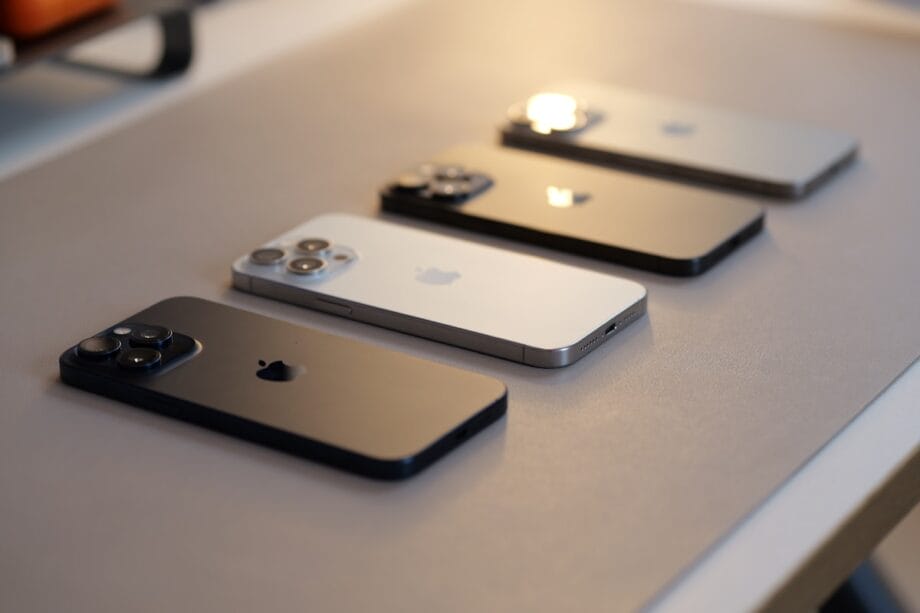
Apple’s pricing strategy has significantly emphasized the high-end segment. Models such as the Pro and Pro Max now command four-figure price tags, with the latter typically initiating around $1,199.
Analysts estimate the bills of materials for the Pro Max to range from $500 to $600, depending on storage capacities and regional factors.
This premium product array has propelled Apple’s iPhone average selling prices (ASPs) beyond $900 in recent quarters, reflecting the robust market embrace of these Pro models.
This distinction is paramount. A headline proclaiming “iPhone is more expensive” often overlooks the significant role of pricier Pro Max models, potentially obscuring whether the entry-level iPhone has truly escalated in cost.
The ascent in average pricing does not stem from Apple dramatically inflating entry prices in excess of inflation, but rather from a greater consumer preference for premium offerings.
Storage Upgrades, Features, and Regional Factors at Play
Apple is adeptly reallocating value within its pricing framework. Base storage has consistently expanded without elevating the entry-level MSRP, resulting in a reduced cost per gigabyte.
Advances in materials, including sophisticated camera modules and custom silicon chips, have ensured that performance continues to thrive, thereby influencing the real-price narrative when assessing cost against capabilities.
Moreover, outside of the U.S., currency fluctuations, VAT, and import tariffs can significantly alter pricing dynamics.
Analysts tracking geographic pricing shifts, leveraging data from Statista and IDC, impart reminders that an iPhone could be comparatively less expensive in one market while commanding a premium in another, even among the same model generation.
How Carrier Deals and Trade-Ins Muddy iPhone Pricing
Promotional strategies further obscure consumers’ understanding of iPhone pricing. When purchasing an iPhone through a U.S. carrier via an installment plan, customers often benefit from bill-credit incentives and generous trade-in offers, which can minimize the upfront price to zero for those willing to commit to service agreements.
According to CIRP, a significant majority of iPhone purchases occur via trade-in schemes, which offset the perceived cost, even if the MSRP remains unaltered.
The Bottom Line on iPhone Pricing in Real Terms Today
Considering subsidies, promotions, and inflation, the sticker price of the iPhone has exhibited remarkable consistency over time.
Recent iterations are analogously positioned to the original model when adjusted for inflation, alongside premium models and storage enhancements offering upward mobility for those seeking additional features.
The compelling shift is not necessarily that every iPhone has become costlier; rather, it is that an increasing number of consumers are gravitating towards the more expensive models.
For consumers, the astute strategy lies in evaluating value across different tiers, factoring in trade-in opportunities, while recognizing that the sticker price seldom conveys the entire truth.
Source link: Findarticles.com.