Ford Engages Geely in Potential Strategic Alliance
Ford Motor Company is currently in negotiations with China’s Geely, according to eight individuals familiar with the discussions. The automotive giants are exploring a partnership as global manufacturers seek avenues to alleviate escalating technology and production costs.
Reports indicate that the collaboration may involve Geely utilizing Ford’s European production facilities to assemble vehicles tailored for the local market.
Preliminary talks have also included discussions on a framework for joint vehicle technologies, specifically in the realm of automated driving, as per insights from two respected sources.
These conversations concerning European manufacturing appear to be progressing more rapidly than others. Recent developments include a Ford delegation visiting China this week to advance these discussions, which coincided with meetings held in Michigan between high-ranking executives from both companies.
According to five unnamed sources, negotiations have been ongoing for several months. Yet, it remains uncertain whether these talks will culminate in a formal agreement, including any ramifications for the U.S. market.
Geely has opted not to comment on the situation. Ford responded by stating, “We have discussions with numerous companies routinely covering a variety of subjects. Occasionally, these dialogues translate into tangible agreements; other times, they do not.”
Trade Barriers for Chinese Automakers in the U.S.
Chinese automotive manufacturers have faced significant barriers in accessing the U.S. market, primarily due to tariffs and restrictions enacted during the Biden administration.
These measures were justified on the grounds of national security concerns regarding data collection and vehicular software integrity.
Any prospective deal aimed at introducing advanced Chinese technologies into the U.S. marketplace could attract considerable scrutiny from both the Trump administration and several legislators.
Such a partnership could strategically position Ford to enhance its competitive stance against international rivals, particularly in the domains of connectivity and autonomy—key pursuits for both Tesla and various Chinese automakers.
Ford CEO Jim Farley has openly expressed the imperative for his firm to bridge the existing competitive divide with China.
During an interview at last year’s Aspen Ideas Festival, Farley articulated his perception of China’s dominance in electric vehicle and connected technology sectors, characterizing it as “the most humbling thing I have ever encountered.”
When questioned about the potential ramifications of a joint venture with a Chinese automaker, given the current political landscape, Farley expressed optimism.
“I don’t believe so,” he stated. “As long as the right safeguards are in place, there appears to be receptiveness at the governmental level, acknowledging that such collaborations are essential.”
Utilizing Ford’s European production facilities could enable Geely to circumvent the European Union’s tariffs imposed on Chinese electric vehicles.
In 2024, provisional tariffs reaching as high as 37.6 percent on imported Chinese EVs were introduced, highlighting concerns over a potential influx of unfairly subsidized vehicles.
The Valencia plant in Spain is likely to be the manufacturing site involved in these discussions, according to a reliable source.
Several Chinese manufacturers have initiated efforts to establish production capabilities in Europe. Notably, Leapmotor vehicles will be produced at a Stellantis facility in Spain as part of a strategic alliance.
In parallel, manufacturers such as Guangzhou Automobile Group and Xpeng are collaborating with Magna International to produce an electric model in Austria.
Geely has also engaged in partnerships with Renault in South Korea and Brazil, aimed at jointly producing vehicles that leverage Geely’s technologies while utilizing Renault’s manufacturing and distribution frameworks.
This strategy has yielded positive results, as Renault-branded vehicles sold outside Europe increased by 11 percent in 2025 compared to the previous year, contrasting with a modest decline of 0.6 percent in 2024.
Strategic Partnerships and Regulatory Scrutiny
Farley has emphasized the significance of partnerships, and Ford has recently formalized an electric vehicle production agreement with Renault in Europe.
A potential collaborative endeavor with Geely focused on the U.S. market would likely encounter heightened scrutiny from American lawmakers. This concern stems from Ford’s previous decision to license electric vehicle battery technologies from CATL, a Chinese battery manufacturer, for a facility in Michigan.
Under proposed regulations from the Biden administration, the U.S. Department of Commerce has instituted a ban on the utilization of communications technology and services from China and other “adversary” nations in connected vehicles marketed in the United States, citing national security concerns.
Recently, the Trump administration dismissed Elizabeth “Liz” Cannon, a Commerce Department official pivotal in efforts to restrict Chinese automotive technologies in the U.S. market, according to reports from January.
These restrictive measures remain in effect, and the Trump administration has not indicated any intent to alter them. Last month, Trump reiterated his position, welcoming the prospect of a Chinese automaker establishing production in the U.S. if it includes investments and job creation.
Geely Auto, which encompasses brands such as Zeekr and Lynk & Co, reported a remarkable 39 percent surge in sales in 2025, surpassing three million vehicles.
With its array of affiliate brands, including Volvo Cars and Lotus, Geely ranks as the second-largest Chinese automotive manufacturer, trailing only BYD.
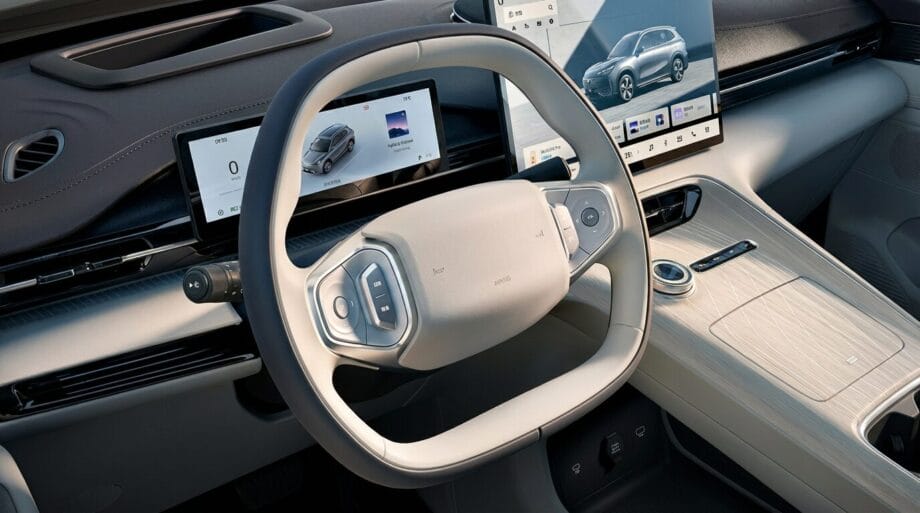
Under the leadership of founder Li Shufu, Geely has been proactive in pursuing international partnerships, including the acquisition of Volvo from Ford in 2010 for $1.8 billion.
The Financial Times recently reported that Ford and Xiaomi were in negotiations regarding a partnership that would enable Xiaomi to produce electric vehicles on U.S. soil. However, both companies have since stated that the report is inaccurate.
Source link: Republicworld.com.