Recent investigations and technical explanations have incited inquiries regarding the influence of potent magnetic fields on the camera components of smartphones.
Users have reported that magnetic objects situated in proximity to the rear camera module of the iPhone 18 Pro and iPhone 18 Pro Max can instigate alterations in the mechanisms governing the camera’s aperture.
A video circulated on X has brought to the fore the purported interactions between external magnetic fields and the intrinsic components of the camera module.
Nevertheless, these claims have yet to undergo independent verification, leaving ambiguity as to whether the observed behavior stems from the camera’s architecture or signifies a potential malfunction.
This dialogue has also rekindled focus on Apple’s previous alerts regarding magnetic interference with iPhone camera systems.
What Apple conveyed about magnetic interference
Apple has earlier conceded that formidable magnetic fields emanating from specific accessories might disrupt the optical image stabilization (OIS) and closed-loop autofocus (AF) systems prevalent in various iPhone models.
In 2024, Apple elucidated that certain iPhone cameras employ OIS to mitigate image blurring induced by unintended movement, while closed-loop AF adeptly preserves sharp focus by compensating for gravitational effects and vibrations.
Both mechanisms rely upon sensors that govern the movement and alignment of camera lenses.
Implications of magnets on iPhone cameras
Apple asserts that lens-position sensors may react to magnetic fields. The introduction of a robust magnet in proximity to these sensors can potentially disrupt or temporarily incapacitate them, thereby affecting their precision and constraining the range of movement accessible to the lenses.
In such scenarios, the camera may still capture images utilizing alternative stabilization methods, albeit devoid of the comprehensive benefits provided by OIS and closed-loop AF.
Apple has also issued a caution that certain third-party accessories leverage potent magnets or magnetizable metal plates adjacent to the rear camera. These encompass folio covers, detachable cases, and mounts, including those utilized in vehicles.
For optimal functionality of the camera, Apple advocates for the avoidance of accessories that position magnets or magnetic metals near the rear camera.
Which iPhone models are susceptible?
Apple’s advisement states that OIS is incorporated in the iPhone 6 Plus, iPhone 6s Plus, iPhone 7 and subsequent models, inclusive of the second- and third-generation iPhone SE.
Conversely, closed-loop autofocus is available starting from the iPhone XS and all models thereafter, including the second- and third-generation iPhone SE.
Apple has yet to ascertain whether the reported magnetic interactions associated with the iPhone 18 Pro and iPhone 18 Pro Max correlate with these camera systems.
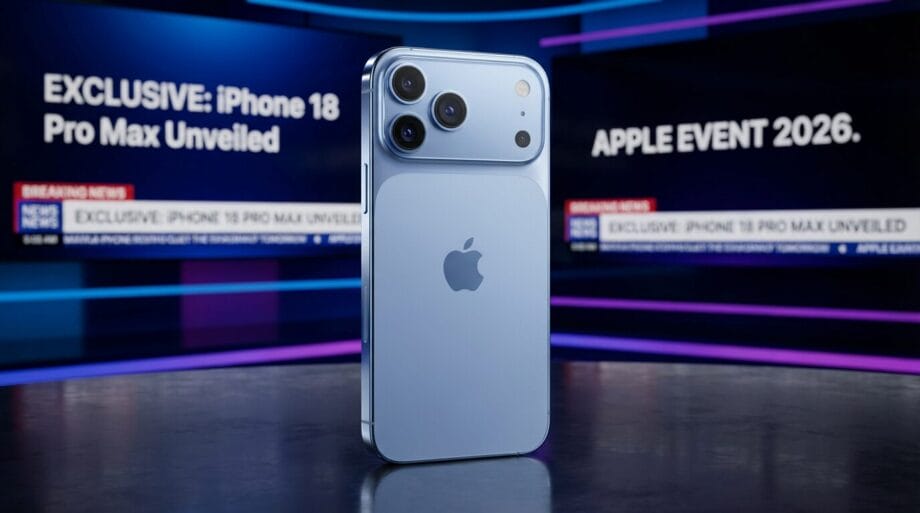
Users encountering camera-related anomalies are encouraged to detach magnetic accessories and determine whether the issue persists.
Source link: English.mathrubhumi.com.


