China’s Technological Supremacy in the Modern Era
At present, China stands unrivaled in every facet of technology that characterizes contemporary civilization.
A recent report, the 2025 Strategic Technology Tracker from the Australian Strategic Policy Institute, reveals that China claims dominance in seven of eight artificial intelligence categories, all thirteen advanced materials and manufacturing technologies, the entirety of seven defense, space, robotics, and transportation domains, nine out of ten energy and environment categories, and five out of nine biotechnology, genes, and vaccines categories.
Despite China’s overwhelming technological prominence, it boasts only half the number of billionaires compared to the United States, with its billionaire count increasing this year by a mere fifty percent. What accounts for this paradox?
Moreover, China’s status as a Marxist-Leninist regime raises intriguing questions. The founder of this ideology, Karl Marx, expressed skepticism towards technological advancements, suggesting that “the instrument of labor, when it takes the form of a machine, immediately becomes a competitor of the worker himself” in his seminal work, *Wage, Labour and Capital* (1847). A Unitree Robotics humanoid robot showcased during the inaugural World Humanoid Robot Games in Beijing earlier this year. (Reuters: Tingshu Wang)
Can the West Keep Pace?
In stark contrast to the anxieties of the Chinese Communist Party, which oversees a nation grappling with a declining workforce, the party appears unperturbed.
Unlike the United States, where billionaires lead the technological narrative, autonomous Chinese entrepreneurs exist only at the behest of the party’s interests.
This ascendance in technology was starkly illustrated at the 27th Hi-Tech Fair held in Shenzhen last month.
Spanning an impressive 400,000 square meters—equivalent to approximately twenty cricket fields—the exhibition presented a plethora of advanced technologies (verified via online sources).
Among the highlights were humanoid robots, including two engaging in a boxing match, and an entire section dedicated to electric vertical take-off and landing (eVOTL) vehicles.
As Faustine Delasalle, the executive of Industrial Transition Accelerator, poignantly states, “There’s an acceleration occurring in China that is not paralleled elsewhere in the globe.”
China has transitioned from a nation striving to catch up with the West, specifically the United States, to one that has surpassed its competitors, leaving the West in its wake.
The West’s attempts to bridge this gap may well prove futile.
Numerous engineering wonders abound beyond what was showcased at Shenzhen last month.
Here is a selection of remarkable innovations observed recently:
- A drone the size of a mosquito designed for surveillance purposes.
- A mountain in Guizhou entirely adorned with solar panels.
- Breakthrough cancer therapies that mimic pork, prompting the immune system to combat tumors.
- An open-source AI model that surpasses the best human performance in mathematical competitions.
- The initial large-scale delivery of humanoid robots to industrial clients.
- A robot engineered for sanitizing hotel rooms and bathrooms.
- 48,000 kilometers of fast rail boasting speeds up to 350 km/h, including the Shanghai Maglev that exceeds 400 km/h.
- The world’s tallest bridge, the Huajiang Canyon Bridge.
China’s Innovative Paradigm Shift
Analyst Dan Wang elucidates this phenomenon in his book, *Breakneck: China’s Quest to Engineer the Future*.
He posits that China is an engineering-centric state, perpetually driven to build, whereas the United States operates within a legalistic framework that hinders growth. “The U.S. has a government of lawyers, by lawyers, and for lawyers,” he notes, suggesting it blocks progressive initiatives, although regulatory reforms are currently underway.
“As the United States grew disenchanted with engineering, China wholeheartedly embraced it,” Wang asserts. An aerial view showcasing over 60,000 solar photovoltaic panels installed on a desolate mountain in Jinhua, Zhejiang Province, China.
The Chinese government invests hundreds of billions into what it terms a “whole-of-nation” industrial strategy, originating from the “Made in China 2025” initiative launched a decade ago, and evolving into a $1.4 trillion commitment in its 14th five-year plan to foster new infrastructure, including advanced 5G networks and smart cities.
Blogger Noah Smith outlined the essence of this “whole of nation” strategy, indicating a departure from the conventional innovation model whereby governments, academia, corporations, and financiers operate in silos. Instead, China harmonizes these sectors towards a unified ambition from inception to fruition.
This innovative methodology entails defining a technological goal—such as self-sufficiency in robotics—and systematically backtracking to ascertain the requisite breakthroughs needed to achieve that goal, funding the foundational and applied research, assisting companies in product development, and supporting commercialization and scaling efforts.
The government not only identifies goals but also directly influences the trajectory of research and funding to drive product creation and market implementation.
Such an industry-centric policy elucidates China’s technological hegemony. Participants experience augmented reality glasses during the World Artificial Intelligence Conference in Shanghai earlier this year. (Reuters: Go Nakamura)
Australia’s ‘National AI Plan’ Falls Short
This strategic approach has afforded China a monopoly over critical minerals and rare earth elements essential for cutting-edge technology, thereby augmenting its geopolitical influence.
However, this dominance has also led to overcapacity, compelling the government to mitigate what is termed “involution”—characterized by fierce competition yielding diminishing returns and market saturation.
In comparison, Australia appears less favorably positioned when juxtaposed with China’s success, illustrating the disparity in technological progress.
Recently, the Australian government unveiled its “National AI Plan,” which seems more akin to a promotional brochure than a substantive strategy.
National AI Plan Eliminates ‘Mandatory Guardrails’ for AI
The long-anticipated National AI Plan aims to accelerate artificial intelligence development in Australia and largely relies on existing legislation to mitigate potential risks.
The focal point appears to be the omission of the “ten guardrails” previously highlighted by Ed Husic, the former science and industry minister.
In lieu of robust safeguards, a budget of $30 million has been allocated for an AI safety institute—an initiative that may fall short, especially in light of pressing concerns outlined in *If Anyone Builds It, Everyone Dies*, a striking publication by Eliezer Yudkowsky and Nate Soares.
The alarming premise suggested within that narrative implies that $30 million may be insufficient to avert catastrophic outcomes.
Moreover, the Australian National AI Plan incorporates existing funding, totaling $460 million, already earmarked for AI and related ventures—not a novel allocation.
In stark contrast, the Chinese government is projected to invest $56 billion directly in AI development in 2025 alone.
The Emergence of China’s Global Importance
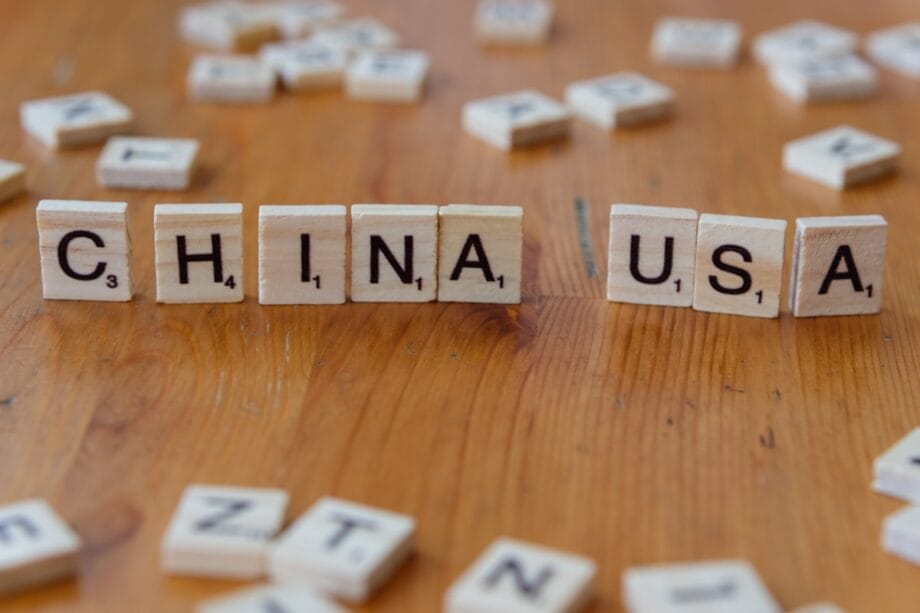
Consequently, China is in the process of overshadowing American hegemony, leading to the characterization of the US-China dynamic as “G2.”
This shift indicates a U.S. pivot away from a policy of aggressive containment towards a more cooperative co-management, potentially resulting in a bifurcated global order favoring China in the Asia-Pacific region.
The U.S. recognizes that China possesses too much power to be disregarded and increasingly holds a pivotal role in shaping the modern world.
In many respects, the current scenario mirrors that of democratic America in 1944, during the Bretton Woods conference that solidified its global preeminence.
China may soon integrate Taiwan into its fold, possibly without any confrontation, prompting an outcry from America and the global community, yet resulting in little actionable response, thereby solidifying a new international hierarchy.
Despite numerous challenges within China, the implications for Australia are evident: In a G2 landscape, a strategic pivot is essential.
Source link: Abc.net.au.