Innovative Health Technology Impresses at CES 2026
LAS VEGAS – The Consumer Electronics Show 2026 showcased an impressive array of innovations, ranging from intelligent rings and AI-integrated massage chairs to robots designed to provide companionship for the elderly.
Hosted recently in Las Vegas, this premier tech exposition emphasized digital health advancements over its expansive four-day span, covering an astounding 2.6 million square feet—a footprint comparable to several large convention centers and hotels.
Sarah Koh, a technology reporter for the Straits Times, highlights five digital health innovations that could soon play a pivotal role in personal healthcare.
The 1.6 Kg exoskeleton by Dnsys enhances mobility, facilitating easier movement while alleviating stress on joints.
Among the numerous exhibits, Dnsys’s X1 exoskeleton attracted throngs eager to experience its streamlined design, notably less cumbersome than competing models. This lightweight device, weighing just 1.6 kg, employs a system of straps and curved carbon rods to enable comfortable knee movement.
Equipped with a control device that detects a user’s gait and intentions in real time, the exoskeleton enhances mobility by assisting leg motions. This innovative tool aspires to reduce joint pressure and improve energy conservation by as much as 50% during physical activities.
Since its inception in 2021, over 10,000 units of the X1 have been sold globally at approximately US$1,000 (S$1,280) each.
The company has raised upwards of US$3 million via two crowdfunding campaigns, contributing to ongoing development and production costs, as stated by company representative Li Xiangyu.
Initially targeting hospitals and medical facilities, Dnsys pivoted to consumer markets following a poignant incident involving a young patient who regained mobility post-brain surgery while using their exoskeleton. “He was reluctant to return it,” Ms. Li recalled.
While primarily designed to ease mobility, the technology offers the added benefit of enabling user rehabilitation through muscle strengthening via adjustable resistance levels.
Allergen Alert is being developed to test for the “big nine” allergens, with an initial focus on gluten and lactose.
Benedicte Astier’s daughter’s severe allergic reaction prompted him to invent Allergen Alert, a handheld device designed for rapid food allergen testing.
Using a straightforward method, users drop a small food sample into a single-use pouch, which is subsequently inserted into the device. The analysis reveals the presence of gluten or lactose within moments.
Described as a “portable mini laboratory,” the device incorporates patented technology from bioMérieux, a pioneer in diagnostic solutions. The development team miniaturized the testing process, streamlining sample preparation and protein extraction.
With food allergies affecting approximately 220 million individuals globally, according to the Food and Agriculture Organization, such innovations are critical, noted marketing representative Stephane Laurain.
The device is set to debut in France in late 2026, following tests in Lyon’s restaurants where chefs utilize it to ensure menu safety.
Although currently only capable of testing for two allergens, plans are underway to include the “big nine”—comprising wheat, soy, fish, shellfish, eggs, sesame, peanuts, and tree nuts, responsible for the majority of allergic responses.
In addition, the company aims to expand testing to allergens found in cosmetic products, according to Mr. Laurain.
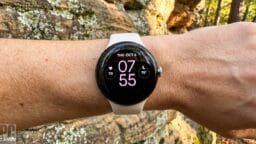
The upcoming smartwatch from Sensura employs optical technology to provide non-invasive glucose monitoring.
Traditional methods for blood glucose monitoring involve finger pricks, yet Singaporean company Sensura is set to introduce a smartwatch that enables non-invasive monitoring.
Utilizing optical sensing technology, it measures glucose levels by analyzing light reflections within the veins of the wrist through artificial intelligence processing.
Early clinical trials in a hospital in China have yielded promising results, according to Sensura co-founder Rick Liang, who mentioned efforts to validate accuracy across Southeast Asian populations.
“Skin tone doesn’t appear to affect device efficacy,” Mr. Liang remarked. “However, multiracial studies are essential for gaining regulatory approvals, including from the US Food and Drug Administration (FDA) and Singapore’s Health Sciences Authority.”
This seamless glucose monitoring method equips patients with continuous tracking capabilities, positioning it as a preferable alternative to invasive techniques.
While continuous glucose monitors (CGMs) offer minimal invasiveness, they require bi-weekly replacements, with typical costs around $150 per set.
In a demonstration, Mr. Liang’s smartwatch displayed a glucose level of 5.9 millimoles per liter, compared to the 6.1 millimoles per liter recorded by his CGM.
The Sensura team aims to launch a handheld glucose monitoring device shortly, while collaborating with local hospitals for trials.
Operating from the Temasek Life Sciences Laboratory at the National University of Singapore, the team plans to launch the smartwatch in late 2026, pending further clinical validation.
While Mr. Liang did not disclose pricing, he assured that it would be competitively priced compared to existing monitoring solutions.
Additionally, a handheld version of the technology is planned for launch within the next three years, with ongoing discussions underway with hospitals for potential trials.
The Longevity Mirror by NuraLogix provides users with valuable health insight through facial analysis.
Another eagerly anticipated exhibit was NuraLogix’s Longevity Mirror, which can assess various health markers merely by observing the user’s face.
Equipped with a built-in camera and illuminated by side lighting, it captures a 30-second video of the user’s face, analyzing alterations in blood flow across key facial regions, including the chin and forehead.
The outcome provides insights into blood pressure, heart rate, stress levels, skin condition, and predictive measures for cardiovascular disease and stroke risk.
Users receive a longevity score based on their unique metrics.
During setup, individuals must provide personal details, enabling the mirror to adjust assessments for variables like weight loss over time.
As for pricing, the mirror retails for US$899 with a US$99 annual subscription, escalating to US$399 yearly for additional connectivity with health professionals.
OhmBody’s device aims to provide relief to women undergoing menstrual discomfort with electrical stimulation.
For women experiencing severe menstrual symptoms, OhmBody’s innovative device offers a tantalizing solution through low electrical pulses directed at the appropriate nerves.
Priced at US$599, the wearable device alleviates heavy bleeding, discomfort from cramps, and overall menstrual duration through hydrogel patches positioned on nerves around the ear.
Both the vagus nerve and the trigeminal nerve are targeted, contributing to modifications in mood and pain regulation. Users are encouraged to utilize the device for two hours daily during their periods, with adjustable pulse levels.
Results from a peer-reviewed clinical trial involving sixteen participants revealed significant improvements, including a 50% reduction in blood loss and a 20% decrease in menstrual duration.
The FDA has yet to approve the device, categorized instead as a wellness tool. Further validation will take place in a larger study in February, aiming for 80 participants.
Currently only available in the United States, there are plans for international expansion in 2027.
The current landscape reveals both established enterprises and ambitious start-ups focusing on unobtrusive health products to satisfy consumers’ needs.
This evolution starkly contrasts the limited presence of digital health tech observed in 2022, as noted by Steve Hummel, director of market research for the Consumer Technology Association.
“The proliferation of devices that monitor health metrics and relay data to practitioners in real-time signifies the democratization of health,” Mr. Hummel stated, anticipating a continued trajectory of growth in this domain.
Notably, advancements in agentic AI that comprehend user needs and routines may lead to the emergence of assistive robotic caretakers—an essential evolution amid the challenges posed by aging populations globally.
Source link: Straitstimes.com.