Can Smartwatches Detect Cannabis Intoxication?
Smartwatches are increasingly sophisticated tools that monitor vital metrics such as heart rate, sleep quality, stress levels, and physical activity. Some advanced models even provide estimates of body temperature and blood oxygen saturation.
As the realm of wearable technology evolves, a pivotal question arises—particularly for cannabis users: can these devices accurately discern whether one is under the influence of cannabis?
Researchers have delved into this inquiry for years, not to impose restrictions on cannabis use, but to exploit wearables as a means to better understand how various substances impact our physiology in everyday settings.
The preliminary findings are multifaceted, suggesting that, under specific conditions, data derived from wearables and smartphones can indeed infer behaviors indicative of cannabis intoxication.
Understanding the Metrics
Of significance is the fact that wearables do not directly detect THC concentrations. These devices do not analyze blood, saliva, or metabolic byproducts. Instead, researchers focus on indirect indicators such as heart rate variations, movement patterns, reaction times, disruptions in sleep, and smartphone usage behaviors.
A pivotal 2021 study elucidated how data from smartphone sensors, including motion and location analytics, can effectively differentiate between states of cannabis intoxication and sobriety. The discovery revolved not around a singular metric but rather an amalgamation of behavioral signals observed over time.
Further research has expanded on this notion. A study published on arXiv employed machine-learning algorithms to amalgamate data from wearable sensors and smartphones to successfully identify cannabis intoxication in natural, real-life settings.
By correlating self-reported cannabis use with various physiological and behavioral data, researchers achieved commendable accuracy in participant classifications.
These findings propose that cannabis intoxication can create an identifiable signature across various bodily systems, even if no single measure encapsulates the entire narrative.
The Interaction of Cannabis and Wearable Technology
THC’s influence extends into several physiological systems that wearables routinely monitor.
Cannabis is known to affect heart rate, often prompting a transient elevation shortly post-consumption. It may interfere with motor coordination and reaction times, discernible as subtle alterations in physical movement or smartphone interaction patterns.
Additionally, cannabis may disrupt sleep architecture, concentration, and subjective time perception.
When these physiological effects coalesce, particularly in consistent patterns, algorithms can be trained to recognize them. However, this does not imply definitive conclusions; it signifies that the signals become more discernible when assessed in contextual frameworks.
Patterns versus Definitive Proof
An essential takeaway from this research is its focus on group-level data rather than acting as an unequivocal detection tool. The models yield reliable results when analyzing repeated observations from individual subjects but falter when generalized across diverse physiological responses, tolerances, and consumption habits.
Two individuals can experience markedly different reactions to cannabis. For instance, one person’s heart rate may spike, while another remains unchanged; one may become inactive, whereas another may exhibit restlessness. Wearables capture variability but not absolute certainties.
Consequently, researchers underscore that such tools are more adept at identifying trends, facilitating behavioral research, or potentially recognizing risks in specialized contexts rather than making absolute declarations about intoxication.
The Researcher’s Motivation
This investigative endeavor is largely driven by public health and safety considerations. Conventional methods for gauging cannabis intoxication heavily rely on self-reporting or laboratory analysis, both of which exhibit limitations.
Wearable technology presents an innovative avenue to observe the effects of cannabis in unregulated, real-world environments.
Such data holds the potential to enlighten researchers about impairment levels, tolerance variances, and interactions with mental health conditions and sleep cycles. Furthermore, it could bolster harm-reduction initiatives, aiding in discerning when someone might be unfit to operate a vehicle without resorting to invasive testing methods.
However, it is crucial to note that many researchers reiterate that these tools remain inoperative for consumer or enforcement purposes.
Implications for the Average User
For the general cannabis consumer, the straightforward takeaway is that current smartwatches do not monitor or report cannabis consumption.
Consumer devices do not utilize research models, and the data gathered is not interpreted in that manner outside academic settings. Even in research contexts, participants willingly consent to data collection and self-report regarding their cannabis use.
The essence of this research revolves less around oversight and more around comprehending the extensive interplay between cannabis and bodily systems. The ramifications are not solely psychological; they reverberate through physiological systems that technology is progressively learning to monitor.
Looking Ahead
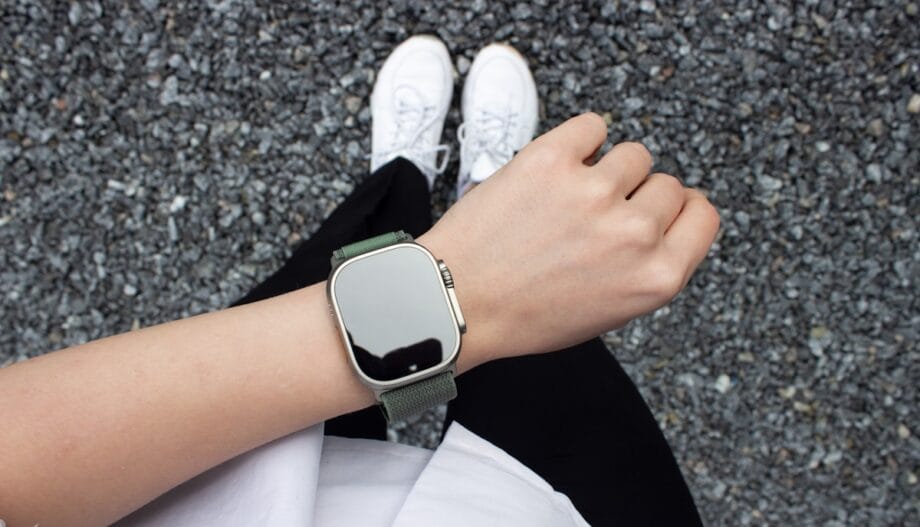
As wearable technology progresses, it is expected to unveil patterns that were previously unmeasured; cannabis is merely one of the myriad factors that may impact these patterns.
The crucial question moving forward is not merely whether technology can detect intoxication under certain circumstances, but rather how such capabilities will be applied, regulated, and contextualized.
For now, the science remains exploratory, the tools are in development, and your smartwatch is primarily tailored for counting steps rather than evaluating altered states of consciousness.
However, this ongoing research hints at a future where understanding substance impacts may pivot from speculation to data-driven insights employed with care, ethics, and responsibility.
Source link: Greenstate.com.