White House Concludes Investigation into Semiconductor Dependence
WASHINGTON (TNND) — The White House has finalized a protracted inquiry concerning America’s dependence on foreign semiconductor manufacturers, introducing a newly delineated set of tariffs that diverge from earlier, more sweeping proposals.
These tariffs specifically target semiconductors utilized in artificial intelligence, allowing the government to benefit from sales.
Confronting the issue of reliance on international sources for advanced microchips has presented a complex challenge for the Trump administration, which has positioned artificial intelligence as a cornerstone of its economic strategy.
In an executive order signed on Wednesday, President Trump enacted a 25% tariff on a “very narrow category of semiconductors.” This measure permits the U.S. to claim a share of sales from advanced AI chips exported to China.
The tariff will apply exclusively to AI chips produced abroad that are imported into the United States and subsequently distributed to other nations. It excludes chips intended for domestic data centers and consumer products.
The order also reserves the right for broader tariffs on semiconductor imports if companies fail to enhance domestic production.
U.S. Trade Representative Jamieson Greer and Commerce Secretary Howard Lutnick have been tasked with negotiating adjustments to semiconductor imports with international producers, with a progress report due in 90 days.
President Trump indicated that he could implement “significant tariffs” exceeding the current 25%, contingent on the outcomes of these discussions.
Strengthening domestic semiconductor manufacturing has been a primary focus since the Biden administration, particularly in light of disruptions caused by the pandemic that underscored vulnerabilities in the global supply chain.
The Biden administration has sought to attract chip manufacturers through lucrative subsidies, exemplified by the bipartisan Chips and Science Act, which has faced criticism from the Trump administration.
Conversely, Trump has leveraged tariffs and trade agreements to incentivize companies to expand production within the U.S.
“It’s premature to assess whether this action will tangibly bolster domestic production capacity,” remarked Emily Benson, head of strategy at Minerva Technology Futures, a geopolitical and policy intelligence firm.
“We’re witnessing considerable momentum around critical supply chain components, but the pivotal question remains: Are we prepared to undertake enforceable measures that would compel companies to allocate resources domestically? Many of these answers will surface in the forthcoming 90 days.”
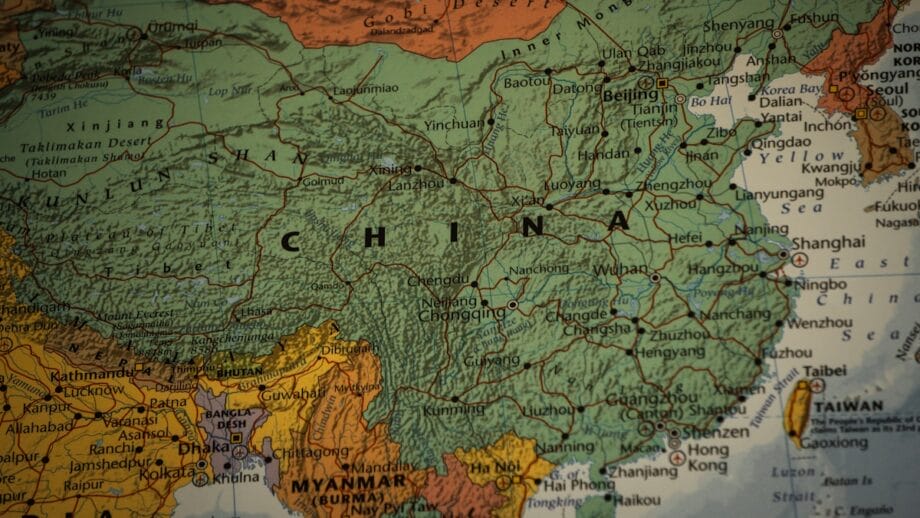
The majority of chip manufacturers operate out of Taiwan and other Asian regions, presenting a significant risk, especially with China’s claims over Taiwan, potentially leading to its annexation.
This new tariff coincides with reports of the U.S. nearing a trade agreement with Taiwan, which would lower tariffs on Taiwanese exports while committing Taiwan Semiconductor Manufacturing Corporation to a substantial $100 billion investment in U.S. facilities.
Initially, Trump had threatened to impose a staggering 100% tariff on foreign semiconductors unless companies committed to expanding production capabilities Stateside.
Since his return to office, major chip producers and tech firms have unveiled investment plans totaling approximately $1 trillion, leveraging tariffs to circumvent hefty tax burdens.
Wednesday’s directive also includes a wide-ranging exemption to the 25% tariff, aiming to “support the establishment” of a robust U.S. supply chain and “strengthen domestic manufacturing capacities.” However, the specific criteria for exemption remain ambiguous.
“What constitutes ‘support’ for this initiative? What financial thresholds must companies meet? What type of facilities are required?
Is there a need for actual physical construction? These queries remain largely unanswered following the executive order,” Benson noted.
A more comprehensive tariff strategy on semiconductors presents potential risks of escalating prices across myriad consumer goods, as semiconductors are intrinsic to nearly all products featuring an on-off mechanism.
The administration is tasked with navigating a precarious balance between semiconductor policy and the ambition of advancing the U.S. artificial intelligence sector, particularly in competition with China.
Access to advanced semiconductor technology, crucial for AI applications, has been a persistent contention point in delicate trade negotiations between Washington and Beijing.
China dominates the supply chain for lower-grade chips utilized in consumer electronics and military applications while controlling a substantial portion of essential raw materials required for semiconductor fabrication.
Major manufacturers have implemented strict constraints on exports to China due to apprehensions that these technologies may bolster Beijing’s military capabilities or artificial intelligence endeavors utilizing U.S. technology.
A recent regulation, published on Tuesday, permits Nvidia to sell its H200 chip to Chinese clients post-safety evaluations when the U.S. maintains a sufficient supply, entailing a 25% government share of sales.
Source link: Thenationaldesk.com.