Apple is reportedly on the verge of one of its most significant iPhone chip advancements in years, with the forthcoming A20 Pro processor poised to drive the anticipated iPhone 18 Pro and iPhone Ultra models later this year.
Recent sources indicate that this next-generation chip may unveil two pivotal enhancements targeting speed, energy efficiency, and artificial intelligence performance.
The foremost anticipated improvement entails Apple’s strategic pivot to a 2-nanometer chip fabrication process in collaboration with TSMC.
Presently, Apple’s iPhone chips utilize a 3nm framework; transitioning to a 2nm process would enable the corporation to encase greater power and efficiency within a comparably sized chip.
Historically, seminal advancements in chip manufacturing have engendered appreciable gains in smartphone performance and battery longevity.
Apple has persistently engaged years in advance to secure access to TSMC’s most cutting-edge manufacturing technologies for its array of devices, including iPhones, iPads, and Macs.
While the company has yet to disclose specific performance metrics, the shift to 2nm is anticipated to furnish Apple with enhanced capabilities to bolster processing power and energy regulation.
In addition to the 2nm transition, the A20 Pro is expected to herald a novel packaging technique termed Wafer-Level Multi-Chip Module, or WMCM.
What is WMCM?
WMCM facilitates the integration of multiple chip components—including the System on Chip (SoC) and DRAM memory—directly at the wafer level prior to their segmentation into individual chips.
This approach purportedly augments thermal efficiency and signal fidelity, while concurrently minimizing the distance between the processor and the embedded memory.
Consequently, the A20 Pro could enable expedited inter-component communication, reduced energy consumption, and enhanced overall performance for resource-intensive tasks.
Focus on AI and gaming
The new architecture is projected to especially advantage AI-oriented processing and high-fidelity mobile gaming.
Indications suggest that Apple is devoting considerable resources toward AI-enabled functionalities for the anticipated iOS 27 update, rendering the advances of the A20 Pro particularly vital for forthcoming on-device AI capabilities.
The enhanced chip may also bolster multitasking, graphic performance, and overall system responsiveness in Apple’s upcoming flagship smartphones.
Apple continues its push for chip leadership
Apple has cultivated a robust reputation for its bespoke silicon strategy, leveraging in-house chip development to achieve tighter integration between hardware and software.
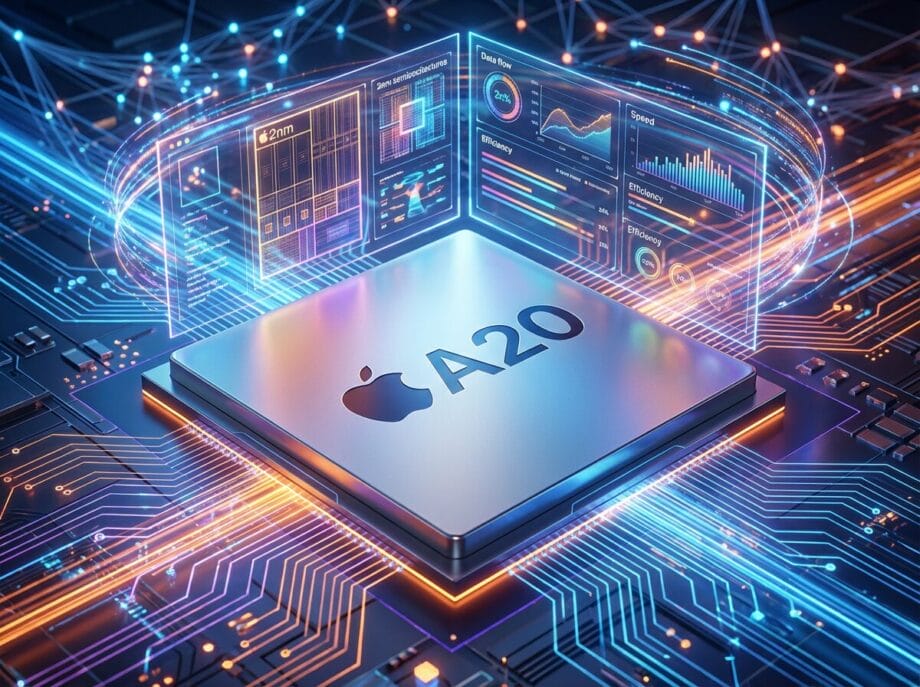
The A20 Pro appears set to perpetuate this philosophy, combining advanced manufacturing with next-generation chip packaging innovations.
If the rumors hold true, the chip could emerge as one of the most consequential hardware enhancements introduced in recent iPhone iterations.
Source link: Samaa.tv.