The Ascendant Popularity of Foldable Smartphones in China
A visit to China nowadays may evoke the feeling of being somewhat out of touch, particularly with the overwhelming enthusiasm surrounding foldable smartphones.
This year has proven advantageous for Samsung, which has achieved considerable acclaim with its Galaxy Z Fold8, well-regarded for its compact and wide, passport-style design.
Rumors suggest that Apple is poised to enter the foldable market imminently. Nonetheless, foldable devices are already experiencing a significant moment in China, where the vast population renders the importance of this category undeniable; no company can afford to overlook its potential or presume the competition to be straightforward.
The Chinese foldable smartphone sector has exhibited consistent expansion over recent years, driven by advancements in flexible-screen technologies and innovative design elements.
However, a paradox exists: foldables constituted a mere 1.6 percent of the total smartphone market in 2025, as reported by Counterpoint Research.
This figure appears minuscule at first glance. On the flip side, insights from Sigmaintell Consulting indicate that shipments of foldable screens in China may escalate from approximately 10 million units in 2025 to an estimated 12 million units this year.
Although part of this uptick can be attributed to Apple’s forthcoming entry—yet to be officially confirmed—10 million is a noteworthy figure.
Mark Gurman, in his report for Bloomberg, underscores that Chinese consumers acquired more foldable devices than the rest of the globe combined.
In urban China, it seems nearly every individual is showcasing a foldable device. Given the nation’s vibrant social media landscape, a thriving film industry, and a robust gaming community, smartphones have become indispensable.
The Chinese populace’s insatiable appetite for technology further solidifies the smartphone’s dominion.
Several factors contribute to these burgeoning statistics. Despite the challenges posed by US sanctions, Huawei continues to launch an array of successful foldables, including the recent Pura X View, a traditional slab smartphone featuring an unconventional 16:9.5 aspect-ratio display.
As for foldables, the Pura X Max has reportedly addressed the pervasive issue of screen creasing effectively, while Oppo’s Find N6 nearly eliminates the crease altogether—though “nearly” remains the operative term. Numerous other brands are also vying for attention in this competitive arena.
Historically, Samsung has enjoyed a commanding presence in the global market. The arrival of Apple promises not only to inject competition but also to cultivate a broader acceptance of the foldable format among consumers.
The introduction of an Apple foldable may entice more users to explore the Android ecosystem. The Pixel 11 Pro Fold is present in the marketplace; however, Samsung often excels in various facets.
Apple’s proficiency in camera technologies suggests that its foldable may offer a plethora of innovative photographic options, capitalizing on the device’s capabilities as a productivity tool and advanced camera viewfinder.
Even in light of the persistent global memory shortages, any new Apple offering galvanizes consumer interest, attributed largely to astute engineering and sophisticated software development.
Forecasts indicate that the foldable smartphone market is poised to expand by more than 20 percent annually until 2028, with shipments projected to reach 36 million units, according to Omdia’s Smartphone Feature Forecast.
According to Zaker Li, principal analyst, “In a year characterized by supply chain challenges and market volatility, foldable smartphones emerge as the industry’s most compelling growth narrative.
Huawei laid the groundwork for this innovative wide-format design with the Pura X Max debuting in May 2026, subsequently followed by Samsung’s Galaxy Z Fold 8 in August.
As other leading manufacturers prepare to launch similar products imminently, this burgeoning category is catalyzing a fresh wave of growth in the arena of foldable smartphones.”
This evolution raises intriguing questions about the future of flip phones, particularly as consumers appear increasingly willing to invest in larger screen sizes.
Furthermore, the excitement surrounding book-style foldable devices is amplified by the rapidly evolving AI landscape, with an array of new features being introduced—many of which are optimally experienced on expansive displays.
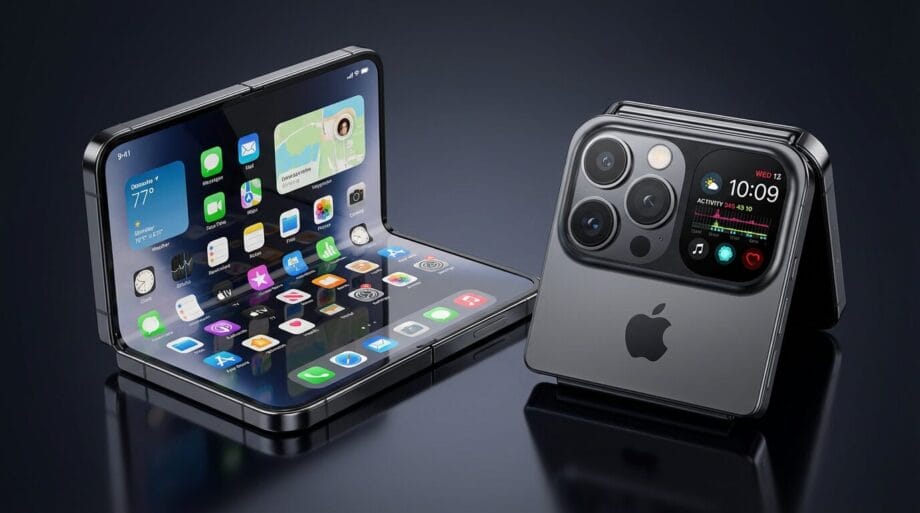
There remains considerable potential for hardware research in this niche category, an opportunity that Apple recognizes.
If the global memory crunch can be navigated adeptly, the foldable smartphone sector may well signify a lucrative venture for Apple. The forthcoming month of September is likely to shed light on this evolving narrative.
Source link: T2online.in.