Apple to Initiate Mass Production of Foldable iPhone This July
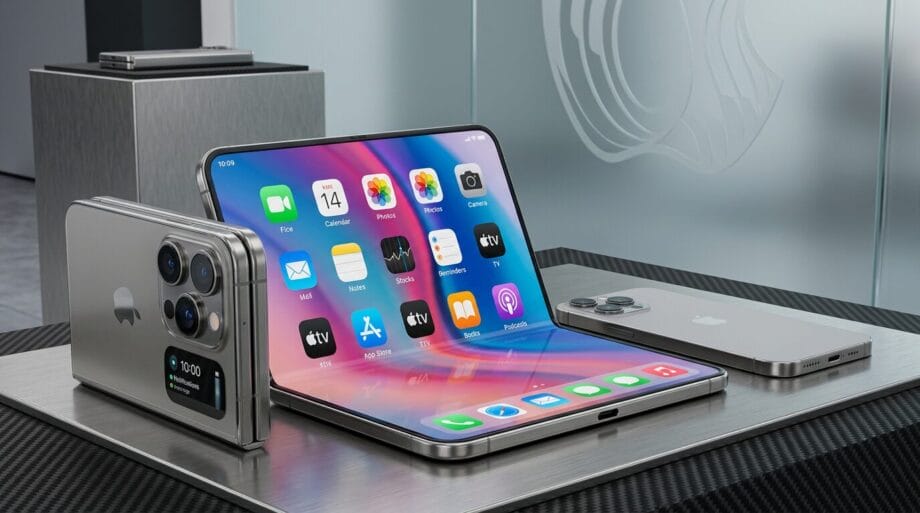
Apple is poised to commence the mass production of its inaugural foldable iPhone by late July, as a troublesome hinge issue—once the catalyst for speculation regarding delays—appears to be predominantly resolved.
This development bodes well for a potential unveiling scheduled for September, according to a report from The Elec, which cited sources within Apple’s supply chain in South Korea and Taiwan.
While the timeline serves as a headline, the pivotal revelation lies in one critical phrase: the hinge is largely resolved.
Apple has historically been cautious with the foldable market, refraining from release until the vital component that defines the viability of this category meets its stringent standards.
The rectification of the hinge problem unlocks several downstream processes, including the onset of July production, a September reveal, an altered fall lineup, and what is anticipated to be a record-setting price point.
Confirmed Specifications for the Foldable Device
Apple has established the essential specifications of the foldable device—including its display, casing, and mechanical components—and has entered a phase of preparatory mass production, with Foxconn managing the initial production runs following a trial in April.
Samsung Display has been tasked with supplying the foldable OLED panel and has just received Apple’s nod to initiate the shipment of initial modules from its facility in Vietnam.
This signifies the completion of the module stage, where the driver circuit, flexible printed circuit board, and protective elements are assembled.
Reports from Korean media indicate a three-year exclusive supply agreement, with an initial manufacturing order of approximately three million panels, suggesting a deliberate, premium-tier introduction rather than a rush to mass production.
The Crucial Role of the Hinge
The very essence of a conventional smartphone is its rigidity, whereas a foldable must withstand hundreds of thousands of bends of a composite glass and OLED assembly throughout its lifespan without compromising the screen’s integrity, risking looseness, or forming unsightly creases.
The hinge is the quintessence of this mechanism. It dictates the curvature of the folding display, influences the flushness of the closed device, governs the bend radius—thereby affecting the visibility of any crease—and absorbs the mechanical stress accompanying each opening and closing action to protect the panel. Thus, complications with the hinge pose an existential threat rather than merely a superficial concern.
The hinge, sourced from Taiwan’s Shin Zu Shing and U.S.-based Amphenol via 3D-printed modules, delineates the overall feel, crease, and robustness of the foldable device.
An insider from Taiwan has revealed that durability tests involving millions of fold cycles have resulted in minor hinge noise, with variances in assembly tolerances that exceeded expectations, thereby elevating the defect rate—issues that previously bedeviled initial Android foldables.
However, this source stated, “Most of these issues are now resolved,” indicating that Apple has successfully mitigated the defects sufficiently to commit to large-scale production.
Remarkably, this advancement in the timeline is striking. Just days prior, the same supply chain had characterized the hinge as an unresolved variable, predicting delays of two weeks to a month, while Apple was still grappling with stabilization of the module—even as Samsung Display asserted no complications with its panels.
Current reports, however, are shifting focus toward production. Nonetheless, a caveat is pertinent: Should Apple increase scrutiny over each hinge, it may still impede the acceleration and limit available stock, notwithstanding the scheduled September announcement.
Impact on Apple’s Fall Strategy
Speculation had abounded that Apple might reveal the phone in September yet defer actual sales, enforcing rigorous quality regulations on its first foldable device; however, recent updates indicate that production is moving ahead.
This launch is expected to transform Apple’s autumn strategy. With the foldable iPhone included, the September event is anticipated to highlight the Pro, Pro Max, and foldable variants—rumored to carry “Ultra” branding, although Apple has not officially confirmed this—and a reliable supply-chain source has indicated that the standard iPhone 18 could be unveiled separately, potentially as late as spring next year.
Market analysts project that the foldable device’s introductory price will hover around $1,999, rendering it the costliest iPhone to date.
This figure aligns with the limited initial order of three million panels and reflects a premium positioning for this first-generation offering.
Entering a market that Samsung has predominantly occupied for several years, Apple recognizes the necessity of excellence, especially with such a critical hinge component.
When will the foldable iPhone launch?
As reported by The Elec on June 24, Apple is set to initiate mass production of its first foldable iPhone by late July 2026, aiming for a September unveiling during the company’s prominent event, alongside the iPhone 18 Pro and Pro Max.
However, a potential gap may exist between announcement and availability, contingent upon Apple’s final preparations, particularly regarding the hinge, which was a significant source of delay speculation.
The timeline is based on supply-chain insights, as Apple has yet to make an official announcement regarding the device.
Why is the hinge critical for foldable phones?
The hinge represents a cornerstone component in foldable phones, facilitating the flexible display during each fold, influencing the device’s flat closure, and determining how tightly the bend radius is configured, which ultimately affects crease visibility.
Additionally, it absorbs mechanical stress from continuous folding, thus preventing screen damage or degradation over time.
A subpar hinge can result in noise, looseness, creasing, or complete malfunction—issues that plagued numerous early models. Therefore, the resolution of reported hinge problems is integral to on-schedule shipment for the device.
What will be the cost of the foldable iPhone?
Forecasts indicate that the foldable iPhone will begin at approximately $1,999, making it Apple’s priciest model ever introduced.
This pricing is consistent with its designation as an ultra-premium, first-generation product, bolstered by a limited initial production order of around three million display panels—reinforcing its classification as a premium offering rather than a mainstream launch. This price remains unverified by Apple and is subject to adjustment.
Which company supplies the display for the foldable iPhone?
Samsung Display holds exclusivity as the supplier of the foldable OLED panel under a reported three-year agreement, preventing any competing panel manufacturer from providing displays for this device during that timeframe.
Samsung Display recently obtained Apple’s approval to commence module production, having exceeded yield thresholds established by Apple and begun processes at its facility in Vietnam.
The hinge, a separate entity, is reportedly provided by Shin Zu Shing of Taiwan and Amphenol from the United States.
Source link: Techtimes.com.