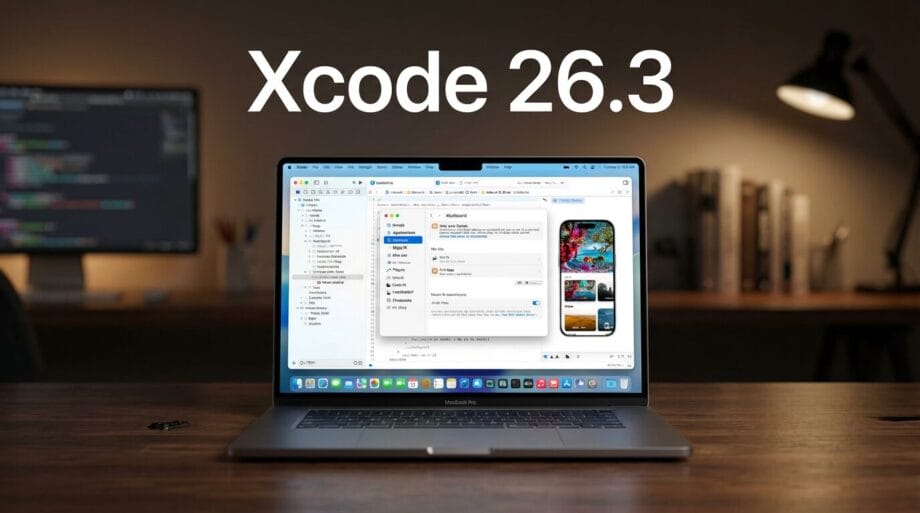
Apple has officially unveiled agentic coding capabilities within its Xcode platform. On Tuesday, the tech giant announced the release of Xcode 26.3 RC, facilitating developers to access agent-coding tools directly in its development environment. Notable integrations include Anthropic’s Claude Agent and OpenAI’s Codex.
Xcode 26.3 RC can currently be accessed by all developers via the Apple Developer website and is set to be available in the App Store shortly.
The Essence of Agentic Coding in Xcode
This iteration continues the trajectory initiated with Xcode 26, which first enabled developers to interact with ChatGPT and Claude within Apple’s ecosystem, aimed at building applications for the iPhone, iPad, Mac, Apple Watch, and other devices.
The incorporation of agentic coding instruments empowers artificial intelligence models to harness a broader range of Xcode’s functionalities, thereby augmenting task automation and process efficiency.
Mechanics of Integration in Xcode 26.3 RC
These models will benefit from access to the latest Apple developer documentation, ensuring the application of contemporary APIs and adherence to best practices throughout the development lifecycle.
Upon initiation, agents can assist developers in navigating the project, comprehending its architecture and metadata, assembling components, and executing tests to identify and rectify any errors.
Technical Framework and Collaboration with Anthropic and OpenAI
In preparation for this launch, Apple collaborated closely with both Anthropic and OpenAI to cultivate a refined user experience. The primary emphasis was on optimizing token usage and optimizing tool calls to ensure agents could function adeptly within Xcode.
Xcode employs the Model Context Protocol (MCP) to endow agents with capabilities and facilitate interaction with tools.
This framework enables Xcode to engage with any external agent compatible with MCP for functions such as project access, modifications, file management, previews and snippets, as well as accessing the latest documentation.
Guidelines for Developers to Experiment with Agentic Coding
Developers eager to explore this novel feature should first download the requisite agents from the Xcode settings.
Additionally, they can link their accounts to AI service providers by signing in or inputting an API key. Within the application’s dropdown menu, developers may select the desired model version (e.g., GPT-5.2-codex or GPT-5.1-mini).
A prompt field appears on the left side of the interface, enabling users to articulate precisely what project to create or alter, utilizing natural language.
For instance, developers can instruct Xcode to integrate a feature into an app using one of Apple’s frameworks, along with a description of its appearance and functionality.
As the agent operates, tasks are systematically divided into manageable steps, allowing users to monitor progress and observe code modifications.
The agent will also retrieve necessary documentation prior to commencement. Code alterations are highlighted for clarity, and a project transcript provides insights into the underlying processes.
Emphasizing Transparency, Learning, and Version Control
Apple underscores that this transparency is particularly advantageous for novices in programming. An online “code-along” masterclass is scheduled for Thursday on the developers site, allowing users to engage with materials and practice agent coding using their copy of Xcode.
After each step, the agent can assess whether the code functions as intended. Should test outcomes necessitate further refinement, the agent is capable of correcting errors or addressing additional tasks. It is also noted that meticulous pre-coding planning enhances the overall efficiency of the process.
If developers find the outcomes unsatisfactory, they can revert changes to previous states, as Xcode generates checkpoints every time the agent implements adjustments.
The advent of agentic coding in Xcode heralds a new paradigm for developers, fostering enhanced collaboration between artificial intelligence and Apple’s tools.
This innovation represents a significant stride towards a future of integrated development, where AI not only aids in coding but evolves into a pivotal partner in the software creation journey.
Source link: Mezha.net.