Apple Watch’s Hypertension Feature: Limitations and Risks
Recent research underscores the inadequacy of relying solely on the Apple Watch to identify changes in blood pressure, emphasizing that it should not supplant traditional screening methods.
Experts warn that over-reliance on this technology may lead to “false reassurance,” thereby necessitating regular blood pressure assessments utilizing a cuff.
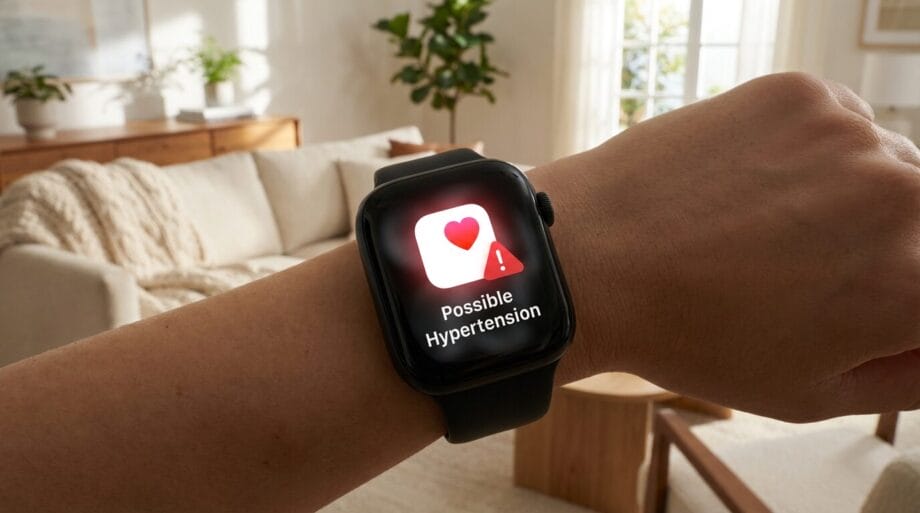
The Apple Watch incorporates a “hypertension notifications feature,” which the company clarifies is not designed for diagnosing or managing hypertension and other related conditions, including blood clots, strokes, atrial fibrillation, congestive heart failure, or high cholesterol.
Importantly, it has been stated that not every individual with hypertension will receive a notification through the device, and the Apple Watch is not equipped to detect heart attacks.
This feature aims to discern patterns of chronic high blood pressure, employing a heart sensor and conducting assessments over a 30-day period.
A study conducted by researchers at the University of Utah Health and the University of Pennsylvania indicates that the U.S. Food and Drug Administration granted approval for this hypertension feature last year.
Publishing their findings in the Journal of the American Medical Association, the researchers scrutinized Apple’s internal data to evaluate the feature’s real-world implications.
“According to Apple’s reported test performance, 41.2% of individuals with undiagnosed hypertension would receive an alert indicating potential hypertension, while 58.8% would not,” the researchers revealed.
“Conversely, among those without hypertension, 92.3% would remain unalerted, while 7.7% could receive an erroneous alert.”
These findings suggest “moderate evidence to rule in hypertension” and “weak evidence to rule out hypertension,” according to the team.
Real-world analysis indicated that the absence of an alert offers greater reassurance to younger adults but is significantly less comforting to older adults, who are at a higher risk for hypertension.
The researchers concluded: “With over 200 million Apple Watch users globally, the hypertension notification feature fosters new avenues to detect adults with undiagnosed hypertension, while also posing the risk of hypertension misclassification.”
- A substantial number of individuals who are unaware of their high blood pressure may become informed.
- However, an even larger proportion of those with undiagnosed hypertension may not receive any alerts.
- Apple maintains that this feature is not meant for diagnosing and is intended to encourage users to seek clinical evaluation if hypertension is suspected.
Nevertheless, the potential for false reassurance may deter some individuals from pursuing essential screenings, thereby leading to missed chances for early diagnosis and treatment.
Limitations of the study included the reliance on Apple’s sensitivity and specificity estimates, which “may not fully capture device performance”.
In a concurrent editorial, experts, including those from the Harvard School of Public Health, expressed concerns: “The major caveat is that 59% of individuals with undiagnosed hypertension while using the Apple Watch will not receive alerts.”
They observed, “As screening tests are expected to be effective at ruling out conditions, the absence of notifications can foster false reassurance, deferred care, and delayed diagnoses.”
“Thus, the current performance of the hypertension notification feature is not suitable for large-scale, reliable screening for hypertension.”
Apple has been contacted for its response to these findings.
Professor Bryan Williams, Chief Scientific and Medical Officer at the British Heart Foundation, remarked: “High blood pressure is deemed the silent killer for valid reasons, as it typically presents no symptoms.”
“Untreated high blood pressure results in tens of thousands of preventable heart attacks and strokes annually in the UK.”
“Research estimates suggest that up to five million individuals in the UK may live with undisclosed high blood pressure.”
“It is imperative that we provide more accessible opportunities for blood pressure checks to avert additional preventable cardiovascular incidents.”
“While smart technologies can offer insights into health metrics, they should not replace formal assessments.”
“The potential to alert users concerning possible hypertension may motivate them to seek formal evaluations.”
“However, this analysis underscores that reliance on such technology should be approached with caution, as a majority of individuals with undiagnosed hypertension would not receive alerts.”
“Understanding that technology cannot substitute traditional cuff-based assessments is crucial.”
Source link: Examinerlive.co.uk.