Quick Summary:
Image to Video AI is a model-agnostic aggregator that puts top engines like Sora 2 (physics-accurate motion) and Veo 3 (cinematic, high-resolution filmmaking) – plus creative wildcards – behind one unified dashboard. Creators can switch engines by intent, use a built-in prompt-translation layer to optimize requests for each model, compare outputs side-by-side, and pay with a single flexible credit system – democratizing access to studio-grade video generation and keeping users always up to date with the latest models.
Introduction
We are living through a Cambrian explosion of artificial intelligence. Every week, it seems a new “revolutionary” model drops. You hear about Google’s latest breakthrough, then OpenAI’s stunning update, then a new contender from an obscure research lab that blows everyone away.
For a creator, this is both a golden age and a nightmare.
You want the best quality. You want the hyper-realism of one model, the cinematic motion of another, and the surreal creativity of a third. But accessing them is a logistical headache. You have to sign up for waitlists, manage five different subscriptions, learn five different interfaces, and jump between tabs like a frantic stock trader.
Your creativity shouldn’t be fragmented by logins and paywalls. You shouldn’t have to choose between the best tools; you should have them all at your fingertips.
This is where the game changes. Imagine a command center that doesn’t just offer an AI but integrates the AIs. A platform that acts as a universal adapter for the most powerful visual engines on the planet.
Image to Video AI (The Super-Aggregator): All Your Weapons in One Armory
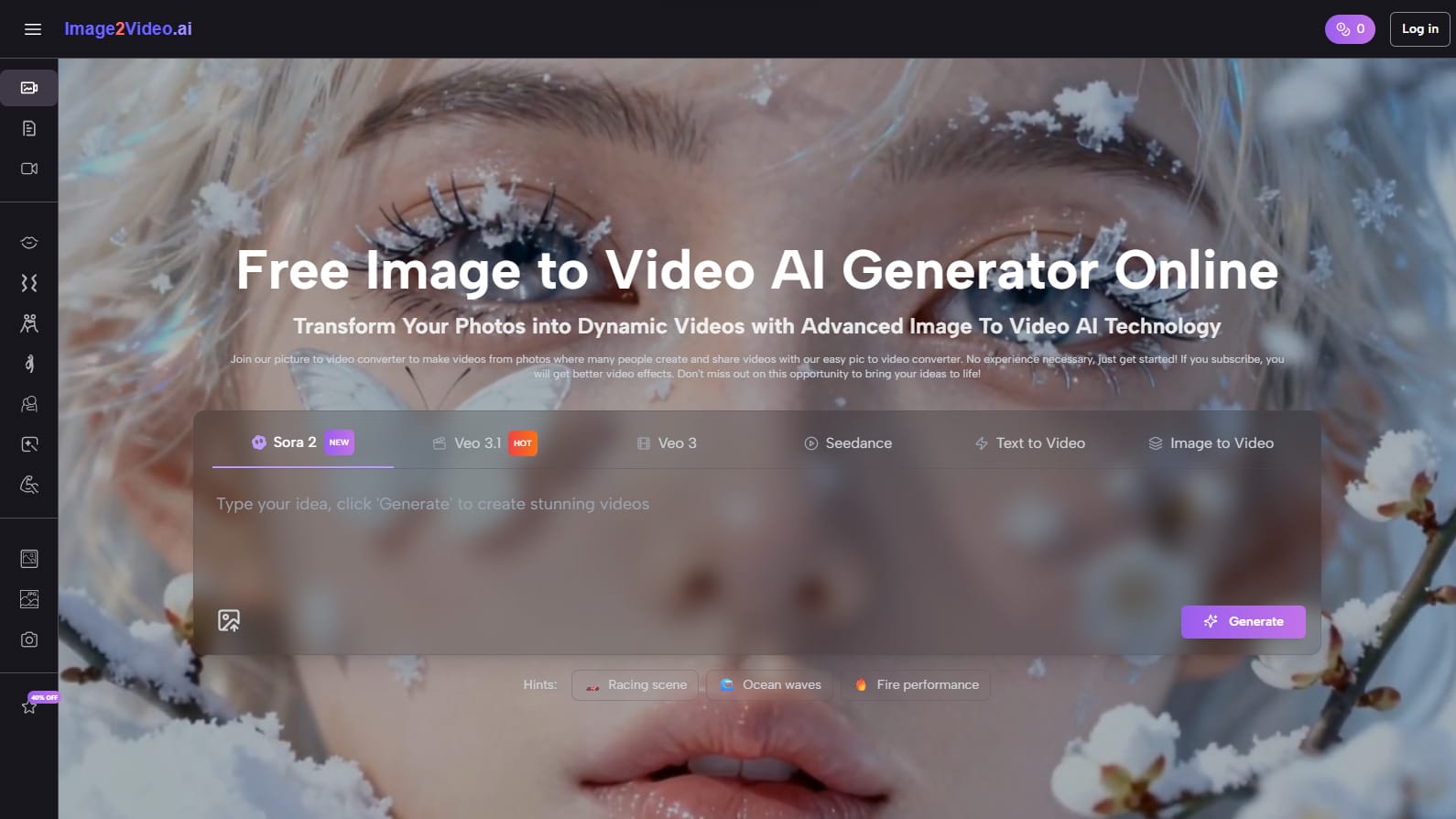
Image to Video AI has evolved beyond being a single tool. It has become a gateway. By integrating the APIs of the world’s leading video generation models – including the industry-shaking Veo 3 and the legendary Sora 2 – it offers a unique proposition: Model Agnosticism.
You don’t need to bet on which tech giant will win the AI race. You just need the best result for your specific image.
Why does this matter? Because different models have different “personalities.” Just as you wouldn’t use a hammer to tighten a screw, you shouldn’t use a model designed for surrealism to generate a corporate product demo. Having access to all of them allows you to match the engine to the *intent*.
Meet the Titans: Understanding the Engines Under the Hood
To truly appreciate the power at your disposal, we need to look at the specific strengths of the heavy hitters integrated into the platform.
1. Sora 2: The Physics Simulator
When OpenAI released the original Sora, the world gasped. Sora 2 takes that foundation and perfects it.
- The Superpower: Absolute Physical Coherence.
- Best For: Complex interactions and object permanence. If you need a video where a character walks behind a tree and re-emerges correctly, or where water splashes with accurate fluid dynamics, Sora 2 is the king. It “understands” the 3D world better than any other model. It doesn’t just animate pixels; it simulates reality.
2. Veo 3: The Cinematic Auteur
Google’s DeepMind created Veo with a focus on high-definition, long-form consistency.
- The Superpower: 1080p+ Resolution and Cinematic Language.
- Best For: Filmmakers and advertisers. Veo 3 excels at understanding cinematic terms like “timelapse,” “aerial shot,” or “dolly zoom.” It maintains consistent lighting and texture over longer clips (up to a minute), preventing the “morphing” glitches common in older models. It treats your image like a film set.
3. Kling & Hailuo: The Creative Wildcards
Often underestimated, these models (often integrated alongside the giants) offer unique stylistic flares.
- The Superpower: Stylized Motion and Artistic Interpretation.
- Best For: Music videos, abstract art, and social media content that needs to “pop.” They are often faster and more willing to take creative risks with color and form than the more rigid “realistic” models.
The Comparative Advantage of Image to Video AI: Why Integration Beats Isolation
Let’s break down why using Image to Video AI is superior to hunting down these models individually.
| Feature | Individual Subscriptions (Sora/Veo direct) | Image to Video AI Platform |
| Access | Often Waitlisted / Invite Only | Immediate Access |
| Cost | Multiple high-tier monthly fees ($100+) | Single, flexible credit system |
| Workflow | Disconnected interfaces | Unified Dashboard |
| Model Choice | Locked into one provider | Switch models with one click |
| Prompting | Varies by platform | Standardized Prompt Assist |
| Comparison | Hard to compare results side-by-side | Generate variations from different models instantly |
A Workflow That Adapts to You
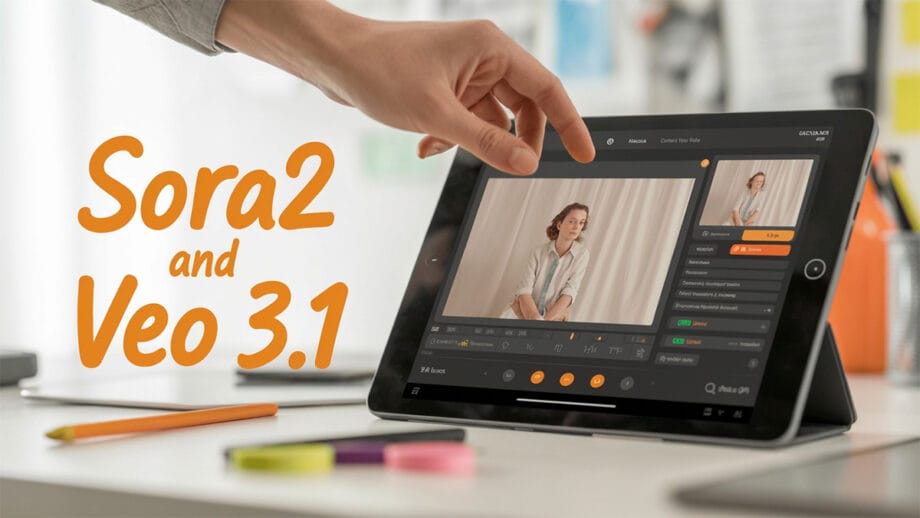
Let’s walk through a real-world scenario. You are a luxury real estate marketer. You have a stunning photo of a penthouse balcony at sunset.
Scenario A: The “Sora” Approach
You want to show the wind gently blowing the curtains and the city lights turning on. You select the Sora 2 engine within the dashboard. You prompt for “physics-accurate cloth movement.” The result is hyper-realistic. The curtains move exactly as they would in the real world.
Scenario B: The “Veo” Approach
Now, you want a dramatic opening shot for your YouTube video. You want the camera to swoop down from the sky and land on the balcony. You switch the toggle to Veo 3. You prompt for “Cinematic drone shot, descending, 4k.” The result is a breathtaking, high-fidelity establishing shot that looks like a Hollywood production.
The Result
You didn’t have to log out. You didn’t have to change your payment method. You just switched the engine and got the perfect tool for the specific shot you needed.
The “Prompt-to-Model” Translation Layer
One of the hidden struggles of AI is that every model speaks a different language. Sora might prefer detailed paragraphs. Veo might prefer technical camera terminology.
The Image to Video AI platform solves this with an intelligent middle layer. When you type your request, the system optimizes your prompt for the specific model you have chosen. It acts as a translator, ensuring that your vision is communicated effectively to the AI, regardless of which engine is running the calculation. This “Prompt Engineering as a Service” saves you hours of trial and error.
Democratizing the Cutting Edge
Historically, access to the absolute best technology – like Veo 3 or Sora 2 – has been reserved for enterprise clients or select beta testers. By aggregating these APIs, Image to Video AI democratizes access.
It allows a freelancer in a coffee shop to wield the same computational power as a major studio in Los Angeles. It levels the playing field. The barrier to entry is no longer access; it is simply imagination.
The Future-Proof Promise
The AI landscape changes fast. Next month, there might be a “Sora 3” or a “Veo 4.” If you are subscribed directly to a single service, you are stuck with its update cycle.
By using the Image to Video AI aggregator platform, you are future-proofed. As soon as a new top-tier model releases an API, it gets integrated. You are always riding the crest of the wave, never stuck in the trough. You don’t have to worry about FOMO (Fear Of Missing Out) because your toolkit is constantly evolving to include the latest breakthroughs.
Conclusion: The Conductor of the Orchestra
You don’t need to be an AI researcher to create a stunning video. You just need to be the conductor.
You have the orchestra in front of you. Sora 2 is your percussion, grounding the rhythm in reality. Veo 3 is your strings section, soaring with cinematic beauty. The platform is your baton.
Stop limiting yourself to one instrument. Step up to the podium, access the full power of the world’s best generative models, and start conducting a masterpiece. The technology is finally ready. Are you?