Quick Summary
By 2026, digital sovereignty is no longer optional – it’s essential. As life and work become fully intertwined with technology, individuals and businesses are embracing software-defined, borderless connectivity to stay mobile, secure, and resilient.
Modern living is increasingly modular, powered by cloud tools, virtual communication, and flexible digital identities that eliminate single points of failure. At the same time, digital hygiene – strong authentication, smart information filtering, and privacy-first practices – has become a cornerstone of personal and professional health.
Businesses are evolving into “micro-global” enterprises, leveraging always-on, secure, platform-agnostic tools to compete worldwide from anywhere. Sustainability and asset-light living are also reshaping priorities, replacing physical infrastructure with virtual solutions and intellectual capital.
Success in 2026 belongs to those who build a strong digital foundation – prioritizing privacy, mastering virtual tools, and using AI to amplify creativity – while keeping human intention at the center of technology.
Introduction
By 2026, the digital space is ceasing to be the fringe of our life; it is now the backbone around which the life of the modern age surrounds itself. The need to have fluid and non-specific connectivity borders has not only ceased to be a luxury, but has gained the status of a necessity as the borders between physical presence and virtual participation continue to break down. To find their path in this hyper-connected world, people and businesses are shifting to software-defined solutions, providing freedom from years-old telecommunications limits.
The prevalence of technology shows the transformation of this, whereby a gateway is delivered with global networks without the logistical hustle of tangible hardware. Through linking to digital-first connectivity, users are regaining their mobility, whether one is transiting international boundaries or transiting a decentralized business; their connection to the global information stream will never be compromised.
The Architecture of Autonomy: Find Your Way in Hybrid Reality
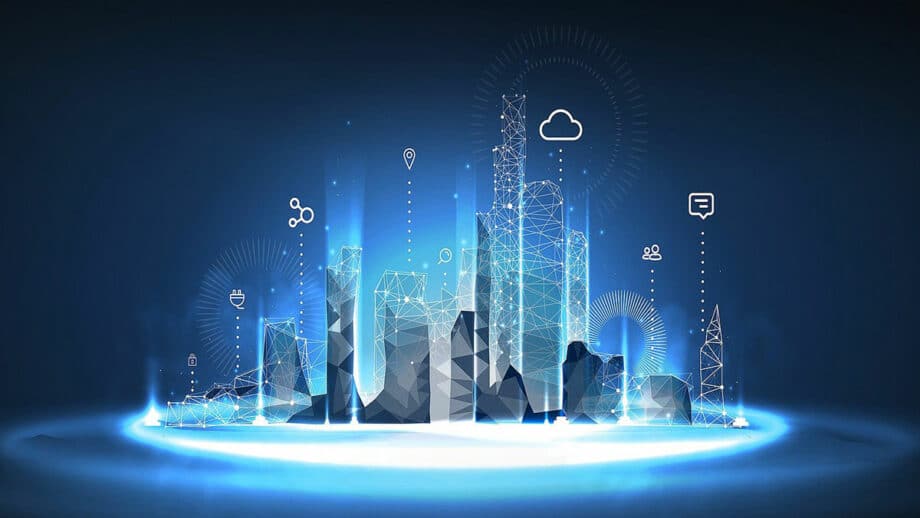
“The office is now a network, and the commute is a click. To navigate it, build routines as strong as your Wi‑Fi.”WeWork
The development of the category of the general lifestyle has shifted to an advanced composition of tech-savvy, digital hygiene, and business agility. The world has already become a place in which the phrase location independent is applicable not only to a particular illustrious circle of digital nomads but also to the entire world of the global workforce. This shift requires new tools and a mentality, which is based on resilience and flexibility.
The Movement towards Modular Living
Modern life is becoming more characterised by modularity. We do not depend upon one fixed system to run our day-to-day needs. Rather, we put together a stacking of services, including cloud-based productivity suites, virtualized methods of communication, which can be repatriated with notice.
This modularity gives a safety net against the dynamism of the physical world. In case of the failure of the local network or a physical border becomes closed, the modular individual will still be running. Being able to alternate between different digital identities and even networks of connectivity means that the personal operating system one has does not have a single point of failure.
Digital Hygiene as a Pioneer Pillar
Every time we devote an increasing portion of our lives to the virtual world, the notion of the so-called digital hygiene has become an essential part of general health. Nowadays, it is not enough to be online, but to be safe and on purpose:
- Identity orchestration. There is a need to personally maintain strict authentication and privacy when it comes to operating multiple digital identities. Virtual identifiers and encrypted tunnels have become an accepted method of ensuring that personal information is not victimized by the all-encompassing danger of algorithmic yielding.
- Information curation. In a world where there is data overload, sorting signal and noise is the final competitive advantage. This means researching the notification settings, deploying AI to summarize content, and selecting platforms that focus more on user intent and less on measures of engagement.
- Privacy sovereignty. Metadata is again going into the control of users. End-to-end encryption and localized data storage, both greatly preferred by the services, are indicators of an increasingly realized fact that privacy is a precondition to genuine digital expression.
Economics of a Borderless Workspace
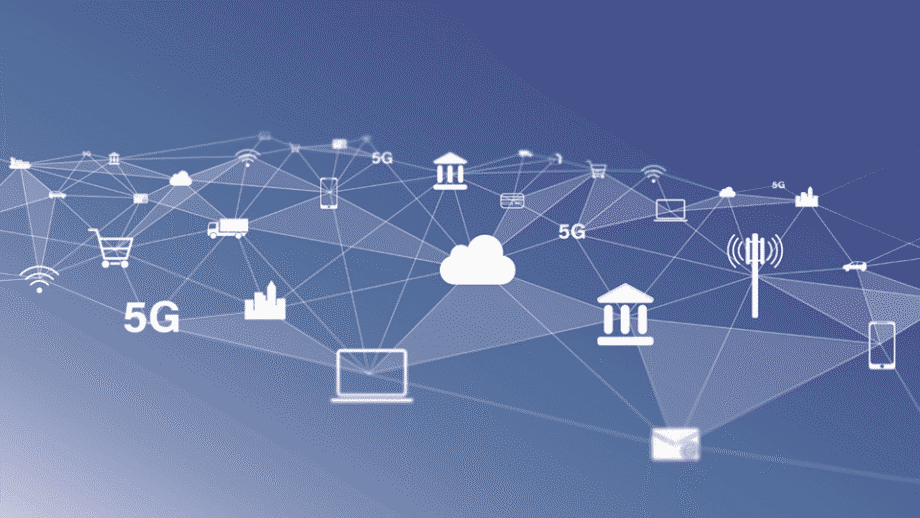
“Time zones used to slow deals; now they extend the day. In a borderless workspace, the best idea wins, not the biggest office.”eSIM Plus
Business-wise, the general category has now gone to incorporate the democratization of international trade. Now, small businesses and individual entrepreneurs can enjoy the logistical and communication services as large corporations.
The Emergence of the “Micro-Global” Enterprise
The micro-global enterprise is a company that is globally operated at first sight. Through cloud infrastructure and virtualized presence, these organizations will be able to overcome the traditional “Go-to-Market” barriers. A programmer in Tallinn can work with a customer in San Francisco, but with a virtualized communication stack based in the US, professional equality can be achieved.
This is a decentralisation of business which results in a stronger economy worldwide. When talent becomes universalized in terms of its origin and delivery can occur everywhere on a service, the geography of opportunity becomes global indeed. This is, however, dependent on the consistency of the digital tools that one uses. The stack needs to be always-on, secure, and platform agnostic.
The Future of Mobility and Sustainable Innovation
Sustainability is not a niche anymore, but is being incorporated in all facets of general technology and lifestyle. The virtualization trend is essentially a green initiative. We will create a more sustainable future by slowing and ultimately avoiding our use of physical plastics (such as traditional SIM cards), encouraging less international business travel through high-fidelity virtual presence, and having our energy consumption optimized through integration with smart homes.
“Sustainability isn’t a side project; it’s the roadmap. It now shapes how we move, meet, and power our lives.”World Resources Institute
The “Asset-Light” Lifestyle
The attitude towards an asset-light living is gaining ground. We are leaving the possession of tangible property in favor of the usage of digital services. It can be seen in both the so-called Software-as-a-Service and the so-called sharing economy in cities. Physical properties are not considered the most valuable assets to the contemporary professional; however, intellectual capital and a highly functional digital network are.
This mode of living demands a high technical flair. Another way to say that you are asset-light is to say that you are tech-heavy. To really succeed in this environment of decentralization, one needs to comprehend the subtleties of cloud security, the dynamics of the digital identity, and the process of optimizing virtual operations.
Developing a Strong Digital Skeleton
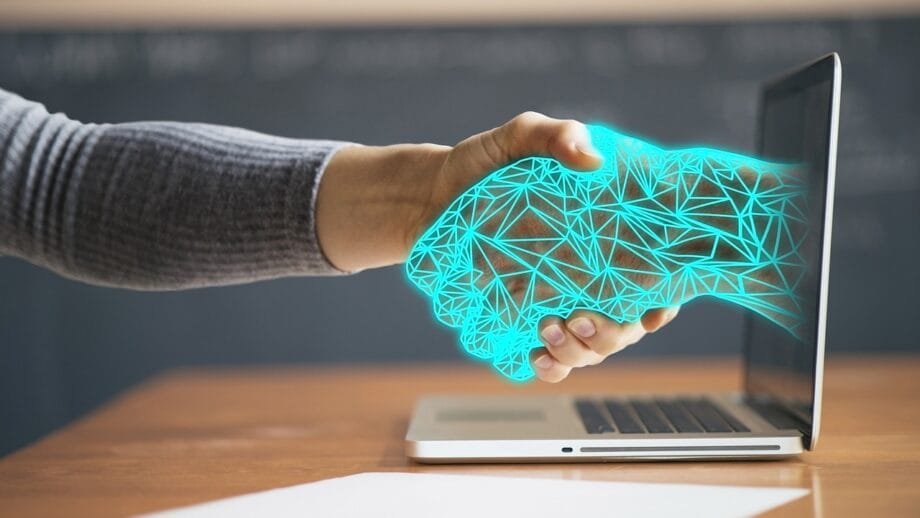
The future of contemporary life is in the hands of people who do not perceive technology as a distractor but as the continuation of human intentions. Through the adoption of the technologies of virtualization, putting in place the necessary focus on digital hygiene, and leveraging AI to enhance our creative power, we will be able to find our way out of the hypercomplicatedness of the 2026 reality without issues.
It is aimed at establishing a high-performance and high-integrity lifestyle. It implies the use of services that recognize user sovereignty, the security protocols that keep our digital legacy intact, and the approach of having a human focus in the relationships that technology is supposed to foster.