Imagine this scenario: You have just finished editing the perfect video. The visuals are crisp, the story is compelling, and the pacing is tight. You are ready to hit “upload,” but there is one glaring problem – the silence.
You dive into the abyss of stock music libraries. You spend hours scrolling through tracks that sound generic, soulless, or just plain wrong. You find one that is “okay,” but then you see the price tag: hundreds of dollars for a single license. Or worse, you risk using a track that seems free, only to wake up to a copyright strike that demonetizes your hard work instantly.
This is the creative bottleneck that stifles millions of storytellers, podcasters, and dreamers. The gap between the melody in your head and the file on your computer has always been bridged by two things: years of musical training or a massive budget.
But what if that bridge could be built with a single sentence?
Breaking the Sound Barrier: A New Era of Creation
We are witnessing a paradigm shift in how art is created. Just as photography moved from darkrooms to digital sensors, music is moving from complex studio rigs to intuitive AI interfaces.
I recently watched a demonstration that fundamentally changed my perspective on music production. The video showcased a fluid, almost magical process where abstract ideas were transmuted into audio waves in real-time. It wasn’t just about generating noise; it was about capturing an *emotion*.
This isn’t about replacing the musician; it is about empowering the storyteller. It is the difference between needing to hire a full orchestra to hum a tune and being able to conduct that orchestra with your words.
My Personal Journey with AI Song
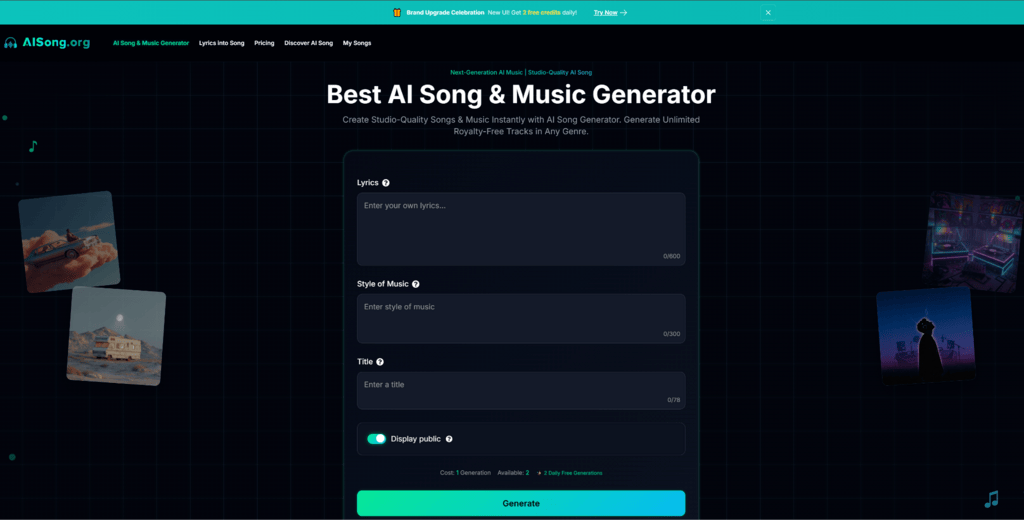
Intrigued by the video analysis, I decided to test the AI Song platform myself. I visited the tool that is quietly revolutionizing this space. I wanted to see if the hype matched the reality.
My request was specific and somewhat abstract: “An upbeat, synth-wave track evoking a neon-lit drive through Tokyo at midnight, with a driving bassline.”
In the traditional world, explaining this to a composer would take meetings, drafts, and revisions. On this platform, I simply typed it in.
The result was startling. Within moments, I wasn’t just hearing music; I was hearing my idea. The bass was punchy, the synths were nostalgic yet modern, and the production quality sounded like it came from a professional studio in Los Angeles, not a browser tab.
The Narrative Engine: From Text to Texture
The core magic of this technology lies in its ability to understand context. This is what we call the “Text-to-Audio Bridge.”
The Before and After
Let’s look at the transformation in workflow:
- The Old Way (Before): You need a background track. You learn music theory, buy a DAW (Digital Audio Workstation), purchase VST plugins, learn mixing and mastering, and spend weeks tweaking EQ knobs. Or, you hire a freelancer and wait days for a delivery that might not fit.
- The New Way (After): You log in. You describe the mood, the genre, and the instruments. You hit generate. You download a royalty-free masterpiece.
It functions less like a tool and more like a creative partner. It is the difference between painting by numbers and painting with pure imagination.
Analyzing the Features: More Than Just Beeps and Boops
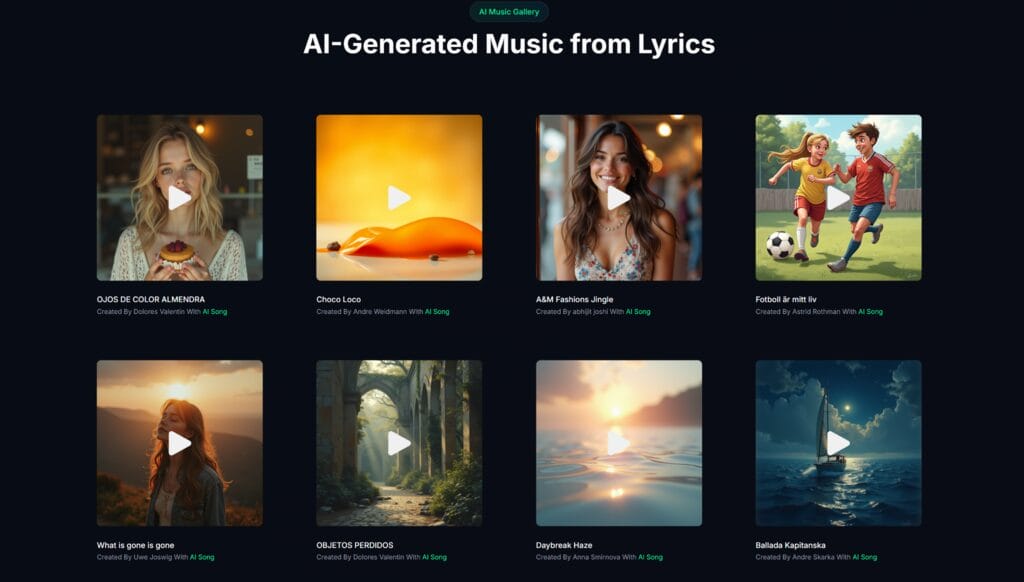
During my deep dive into AI Song, I discovered that this isn’t just a random melody generator. It is a comprehensive audio suite designed for serious creators.
1. The Lyricist in the Machine
One of the most daunting tasks for songwriters is “writer’s block.” The AI Lyrics Generator acts as a co-writer that never runs out of ideas. Whether you need a melancholic verse for a ballad or a catchy hook for a pop song, the system understands rhyme schemes and emotional depth. It doesn’t just rhyme “cat” with “hat”; it weaves narratives.
2. Genre Fluidity
Most tools are good at one thing – usually electronic beats. However, this engine supports over 30 genres. From the complex improvisational feel of Jazz to the raw energy of Rock, and the structured elegance of Classical, the versatility is impressive. It allows you to experiment with styles you would never have the budget to produce traditionally.
3. The Copyright Freedom
This is perhaps the most critical feature for YouTubers and commercial creators. Every track generated comes with full commercial rights. This peace of mind is invaluable. You own the soundscape of your brand, free from the fear of DMCA takedowns.
Visualizing the Advantage of AI Song
To truly understand the value proposition, we need to look at the numbers. Here is how this AI Song stacks up against traditional music acquisition methods.
| Feature | Traditional Stock Music | Hiring a Composer | AI Song |
| Cost | $20 – $200 per track | $500 – $5,000+ | Free / Low Subscription |
| Time to Result | Hours of searching | Weeks of production | Seconds |
| Originality | Low (Used by many) | High | High (Unique generation) |
| Ownership | Licensed (Not owned) | Varies by contract | Full Commercial Rights |
| Customizability | None (Static file) | High (but slow) | Infinite (Regenerate instantly) |
| Skill Required | Editing skills | Communication skills | Basic typing |
The Technical Symphony: How It Works
You might be wondering about the “how.” Without getting too bogged down in the technical weeds, think of the AI as a chef who has tasted every song in history.
When you provide a prompt, the AI doesn’t just splice together pre-recorded loops. It composes note-by-note, instrument-by-instrument, based on the patterns it has learned. It understands that a “sad” song usually requires a slower tempo and minor keys, while an “energetic” track needs a faster BPM and major progressions.
Instrumental Mode vs. Full Song
The flexibility to choose between a purely instrumental track (perfect for background music in videos) and a full song with vocals is a game-changer. The vocal synthesis technology is rapidly approaching a point where it is indistinguishable from human recording, allowing for the creation of demos that sound like final masters.
Why This Matters for Your Brand
In the digital age, audio branding is just as important as visual branding. The “Netflix Ta-Dum” or the “McDonald’s I’m Lovin’ It” jingle are prime examples of sonic identity.
Previously, having a unique sonic identity was a luxury reserved for Fortune 500 companies. Now, a solo entrepreneur starting a podcast can generate a unique intro theme that belongs solely to them. You are no longer renting your brand’s voice; you are creating it.
Step-by-Step: Your First Creation
If you are ready to stop searching and start creating, the process is incredibly streamlined with AI Song:
- Vision: Close your eyes and hear the song in your head. Is it a piano ballad? A dubstep drop?
- Description: Type that vision into the text box. Be descriptive. Instead of “rock music,” try “gritty 90s grunge rock with distorted guitars and heavy drums.”
- Generation: Let the AI process the request.
- Refinement: If it’s not perfect, tweak your prompt. Add “more reverb” or “slower tempo.”
- Download: Get your high-quality audio file and drop it into your project.
Conclusion: The Future is Unwritten (and Uncomposed)

We are standing at the precipice of a new golden age of creativity. The barriers to entry – cost, skill, and time – are crumbling. The video I analyzed and the tools I explored prove that the power of music creation is being democratized.
You no longer have to compromise your vision because you can’t play the piano or afford a session musician. Your ideas are valid, and now, they can be heard.
Don’t let the silence kill your story. Visit the AI Song website, type in your dream, and listen to what your imagination sounds like. The orchestra is waiting for your command.