Quick Summary
AI in UI/UX design is enabling deeper user insights, automation, and personalization. It helps teams analyze behavior, predict user needs, speed up prototyping, and make data-driven design decisions. Tools like Figma AI, Adobe Sensei, Uizard, and Maze streamline workflows and improve collaboration between designers and technology.
For businesses, AI-driven design unlocks opportunities such as hyper-personalized experiences, faster design iterations, reduced user friction, and improved conversions. However, organizations must also address challenges like overreliance on automation, data privacy concerns, and algorithmic bias.
The most effective approach combines AI capabilities with human creativity and oversight. When implemented strategically and responsibly, AI-powered UI/UX design can significantly enhance user experiences, accelerate innovation, and deliver stronger business outcomes.
Introduction
Today, an organization needs to work on UI/UX design to build a successful digital product. This creative element is the face of your modern web and mobile applications.
It not only shapes how users experience your website in real-time but also influences user satisfaction, engagement, trust, and retention.
That being said, artificial intelligence plays a pivotal role in refining UI/UX today, which helps in delivering better user experiences. Here, AI enables an automated, deeper user understanding through aspects like behavioral data analysis, intent prediction, and real-time adaptation.
For users, this change means better apps with simplistic navigation, easy-to-use platforms, speed, and personalization.
- For enterprises, intelligently working on design changes has a positive impact on both the workflows and output. Here, AI in UI/UX plays a prominent role in speeding up the prototyping process.
- By integrating user feedback, teams can refine the design based on the real-world environment.
- This further reduces the stress and uncertainty that a design may not work (because it is already market tested).
- Moreover, it also helps teams explore an array of creative ideas in less time.
Hence, this technology significantly improves design workflows. And it also helps teams creatively work on UX, which boosts their ROI.
With this perspective, this article examines the facets of modern mobile app design driven by AI. Mainly, it focuses on design opportunities, the latest AI tools in use, and challenges that enterprises face while improving their designs.
Understanding AI in UI/UX
With a focus on innovating UI/UX design, leaders must now be curious about how AI is the solution. Well, for better understanding, this section explores AI in UI/UX design for modern enterprises in 2026.
AI in UI/UX design refers to the use of technology in design workflows. In this context, what is important is its short-term and long-term impact.
Here, intelligence is being used in design to enhance how users experience your website. In fact, it changes how design is researched, created, tested, and personalized.
But this does not mean that it can replace your design team. Rather, it acts as a complementary resource that augments decision-making by intelligently sharing user behavior insights. And accordingly, technology enables adaptive interfaces that respond to user needs in real time.
Mainly, it focuses on the following elements:
- User Behavior Analysis: Here, AI helps in identifying user behavior patterns, including why they drop off, and their overall engagement trends.
- Personalization: As we know, design can be adapted today as per users’ needs, which includes changes in content, layouts, and personalized recommendations.
- Predictive Interactions: It also focuses on anticipating user needs through predictive analytics, which supports design personalization.
- Automated Testing: As part of the workflows, AI can help detect performance gaps that can be improved in real-time by teams.
Overall, design thinking also intersects with AI to improve user experiences. Here, the process focuses on understanding human-centric design needs, generating smart and effective creative solutions, and refining them through feedback.
This is how AI transforms the design function from being a static one to being more adaptive, dynamic, and user-focused. That being said, there are various design tools that professional AI solution providers use to deliver these changes. These include:
- Figma AI: It is designed to accelerate the design workflow while automating repetitive tasks. This can be done by translating complex ideas into simple diagrams and assisting in layout generation, content suggestions, and more.
- Adobe Sensei: This is a creative design solution that facilitates AI-powered content generation while also allowing anomaly detection and predictive analytics. Further, it also offers smart design variation through editing in Photoshop and After Effects tools.
- Uizard: This tool uses Gen AI to make design creation faster and more intuitive. Simply, this works by converting sketches into wireframes using AI recognition, and its drag-and-drop features help in transforming editable mockups.
- Maze: Maze is a research-focused tool that helps design teams gain real-time market feedback during the design process. It also helps them smartly integrate various tools in the workflows to speed up the prototyping process.
Overall, these tools ensure a successful collaboration of human skills and AI in the design space. In this manner, organizations can use technology to their advantage to ensure a pleasing UI/UX design that is also adaptive, efficient, and user-focused.
Business Opportunities and Challenges in AI-Driven UI/UX Design
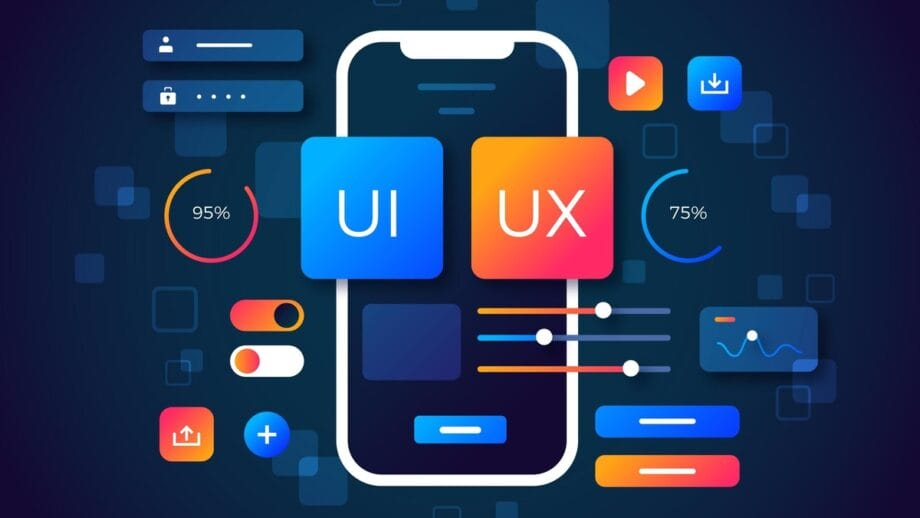
As we know, AI is drastically reshaping modern design practices today. However, this technology also brings in some new risks and emerging opportunities for businesses.
And from a leadership viewpoint, this set of knowledge is essential as it will help them in moving forward in the right direction (with a focus on measurable results).
With this perspective, this section delves into the business opportunities and risks (along with solutions) that enterprises can adopt to successfully transition into the realm of AI-driven, fruitful design variations.
Business Opportunities Introduced By AI-Driven Design Changes
Moving ahead, let us first explore how AI in UI/UX is a game-changing element that is an absolute essential for businesses today. That being said, these opportunities mean aspects like improved user experiences, adaptive layouts, reduced user friction, and more, which are a direct outcome of this transformation.
So, here are some of the key opportunities that you can derive from incorporating AI in the mobile app design workflows.
Hyper Personalization of User Experiences
There is no doubt that AI can help systems dynamically adapt based on user needs. This includes presenting layout, content, and other element variations in a webpage based on aspects like user behavior patterns and their history of interactions.
Other than that, personalized recommendations are a byproduct of this change as well.
For enterprises, this significantly ensures:
- Better user engagement across multiple channels.
- More suitable content that improves the user satisfaction and retention metrics.
- Higher chances of conversions among users.
Hence, companies can dynamically adjust their layout and web content by leveraging AI smartly in their design workflows.
Data-Driven Design Decisions
While traditional design changes were mostly guided by the teams’ assumptions, modern AI-driven design changes are strongly backed by data. This means that teams have actual visibility into what drives a user to keep surfing and why they drop off.
Mainly, this insight helps them to achieve the following:
- Identifying user friction points.
- Aligning design changes with results directly.
- Detecting issues and rectifying them accordingly.
Hence, this saves the company’s time and resources on redesign, while improving business performance in real-time.
Faster Design Iteration Cycles
Usually, when business operations focus on integrating AI, efficiency, along with better speed, is a plausible outcome. And, in the case of teams relying on tech-driven tools, what can be achieved is faster design cycles.
But how is it possible?
AI accelerates design experimentation and assists teams in smartly developing prototypes. This helps businesses achieve outcomes such as:
- Enabling a shorter time-to-market.
- Ensuring that more designs are tested in less time using technology.
- Allowing faster validation of design ideas.
Furthermore, speed is a competitive advantage in the digital landscape because it enables meeting user expectations at scale in real-time.
Reduced Friction and Drop-Offs
Finally, understanding user behavior patterns through AI systems helps in detecting their friction points accurately.
Technically, this highlights drop-offs by focusing on aspects like:
- Complex steps and fields that have unclear instructions.
- Features that are less used and likely difficult to access.
- Consistent performance-related concerns, such as slow loading time or user experience issues.
This data serves as a foundation for design iterations and helps teams improve conversions and overall user satisfaction. Hence, by targeting friction points in the design roadmap, AI targets the root cause and helps bring a positive change that is expected by teams.
Risks and Solutions in AI-Driven UI/UX Changes
While AI is a beneficial tool that needs to be introduced for design teams to improve their performance, this technology also leads to some loopholes and business risks for organizations.
Here are the key challenges, followed by their most effective solutions in this context.
Risk #1
Teams sometimes rely on AI excessively, which leads to their design being more mechanical and less connected to the users.
Solution
Ensuring human collaboration with AI is a necessary move to avoid this risk. Here, human oversight along with technology can be trusted to deliver the most exceptional positive user experiences.
Risk #2
Data privacy is another key business concern that is linked with regulations and legal risks.
Solution
Implementing transparent data policies is a must to ensure that the company aligns with its regulations at all times. Additionally, following the privacy-by-design framework adds to the secure posture associated with the designs.
Risk #3
Algorithmic bias sometimes arises in design variations due to AI models being trained on unskewed data.
Solution
To ensure fairness, companies can work on using diverse datasets to train AI models. Moreover, audits and performance monitoring can detect issues and rectify biased aspects for design teams, ensuring consistency in results.
Final Thoughts

Wrapping up, we can say that design teams can consider partnering with AI tools as a strategic business move. Not only will this help you tie your design changes to the results, but there will be more room to test creative design variations, which will also be done in less time.
The key to success here is to plan a design strategy based on your digital transformation goals. This will help ensure that the features and changes integrated are actually needed by your users, and they do not add to the users’ confusion. Further, this clarity can be gained by connecting with AI solution providers. These professionals are trained to deal with business challenges and risks in this segment, and help ensure that design optimization is up to mark.
Hence, the path of design innovation balances user behavior patterns and personalization with privacy laws, and innovation with governance for a long-term digital (design-driven) success.