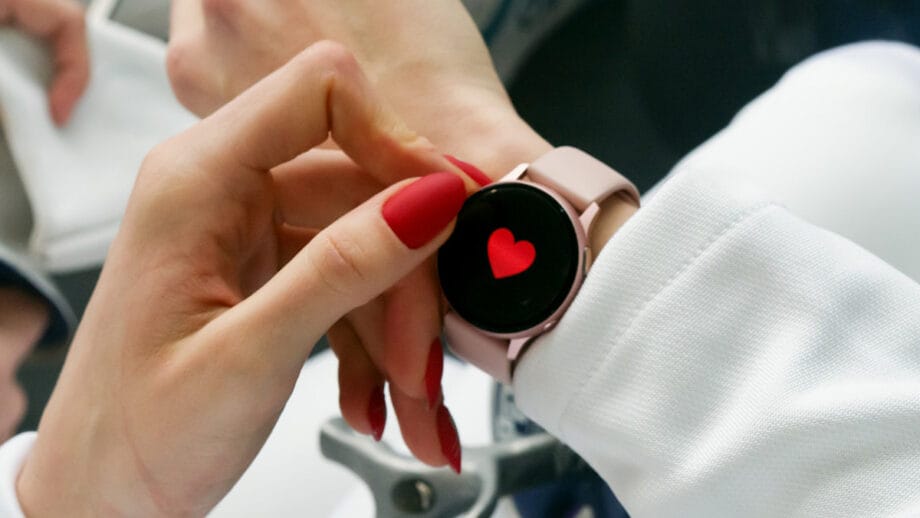
In September 2025, the U.S. Food and Drug Administration granted approval for the Apple Watch’s Hypertension Notifications Feature, an innovative cuffless mechanism that utilizes the device’s optical sensors to analyze blood flow patterns.
This alerts users to potential hypertension indicators. While not intended as a diagnostic tool for high blood pressure, it marks a significant advancement toward the integration of wearable technology in population-level health screening.
A comprehensive analysis led by researchers from the University of Utah and the University of Pennsylvania—published in the Journal of the American Medical Association—investigated the ramifications of implementing this technology on a large scale across the adult demographic in the United States.
“High blood pressure is often referred to as a silent killer,” stated Adam Bress, Pharm.D., M.S., the lead investigator at the Spencer Fox Eccles School of Medicine, University of Utah. “It frequently goes unnoticed as it is largely asymptomatic, yet it remains the foremost modifiable contributor to heart disease.”
Mechanisms of Detection: Potential and Limitations
Findings from Apple’s prior validation study indicated that nearly 59% of individuals with undiagnosed hypertension would not receive a notification, while about 8% of those without hypertension could be misled by a false alert.
Established guidelines advocate for the use of both office-based and out-of-office measurements via cuffed devices to accurately confirm a hypertension diagnosis, as blood pressure can significantly fluctuate between clinical settings and home environments.
Employing data from a representative national survey of U.S. adults, Bress and his team projected how hypertension alerts from the Apple Watch might alter the likelihood of various adult populations, particularly those unaware of their hypertension status, actually having the condition. The analysis focused on non-pregnant adults aged 22 and older.
The results unveiled critical disparities: for younger adults below 30, an alert elevates the probability of having hypertension from 14% (per NHANES data) to 47%, while a lack of an alert diminishes it to just 10%.
Conversely, among individuals aged 60 and over—a demographic with naturally higher hypertension rates—an alert boosts the probability from 45% to an alarming 81%, whereas non-receipt of an alert lowers it to only 34%.
This data underscores a vital realization: as the prevalence of undiagnosed hypertension escalates, the significance of an alert in indicating true hypertension likewise amplifies.
In contrast, the absence of an alert becomes less reassuring, especially in older adults and higher-prevalence groups, while it remains more comforting for younger constituents.
Additionally, the study identified crucial variances across racial and ethnic demographics. For instance, among non-Hispanic Black adults, receiving an alert enhances the likelihood of hypertension from 36% to 75%, whereas its absence lowers this probability to 26%.
Comparatively, Hispanic adults see an increase from 24% to 63% with an alert, while its absence drops the likelihood to 17%. These disparities highlight known complications in cardiovascular health, significantly influenced by social determinants, as noted by Bress.
Evaluating the Utility of the Smartwatch’s Hypertension Alert
With an approximate 30 million Apple Watch users domestically and 200 million globally, the researchers caution that while this notification function serves as a valuable public health innovation, it should enhance rather than supplant traditional screening methods that utilize validated cuff-based devices.
“If it encourages individuals to engage with healthcare systems for proper hypertension diagnosis and management through standard cuff measurements, that is a commendable outcome,” remarked Bress.
Current guidelines suggest blood pressure evaluations every three to five years for adults under 40 without additional risk factors and annual assessments for those aged 40 and above.
The researchers warn that misplaced reassurance from not receiving an alert may deter individuals from pursuing appropriate cuff evaluation, leading to missed opportunities for early diagnosis and intervention.
Bress advocates that in cases where patients display an Apple Watch hypertension notification, clinicians should conduct a thorough cuff-based office measurement. This should be complemented by out-of-office evaluations, such as home or ambulatory blood pressure monitoring, to substantiate the diagnosis.
Future research endeavors are underway to ascertain the actual numbers of U.S. adults experiencing false positives and negatives, segmented by region, income, education, and other demographic elements.
The findings were published in JAMA in an article titled “Impact of a Smartwatch Hypertension Notification Feature for Population Screening.”
The study received support from the National Heart, Lung, and Blood Institute (R01HL153646) and included contributions from the University of Utah, the University of Pennsylvania, the University of Sydney, the University of Tasmania, and Columbia University.
The content reflects the views of the authors and does not necessarily convey the official stance of the National Institutes of Health.
This article was originally published by the University of Utah Health Newsroom and is republished here with permission; the Research Communication team has confirmed that no AI tools were employed in crafting this content.
Source link: Digitalinformationworld.com.