Apple Poised to Enter the Foldable Smartphone Arena
Apple’s foray into the foldable smartphone domain is seemingly imminent, as a cadre of analysts and technology insiders project a launch window for its inaugural foldable device, often referred to as the iPhone Fold, around late 2026.
This forthcoming device is being heralded not merely as a niche offering but as a premier flagship product.
Amidst the burgeoning enthusiasm surrounding this impending revelation, it is crucial to underscore that Apple has not yet released any official specifications or details.
Given the company’s legacy of meticulously refining its products prior to launch, adjustments to features or timelines are conceivable. However, recent disclosures are coalescing around a more defined conception of what the iPhone Fold may encompass.
Speculations regarding a foldable iPhone have circulated since as far back as 2017. Recent reports provide a more coherent timeline, indicating a potential release synchronized with Apple’s iPhone 18 series in the fall of 2026.
Prominent analysts, including Mark Gurman, have recalibrated their expectations; initially forecasting an early 2026 rollout, Gurman now anticipates a launch by year’s end, with substantial sales expected in 2027. Analyst Ming-Chi Kuo corroborates this viewpoint, earmarking the latter half of 2026 as the target timeline.
Design considerations suggest that the iPhone Fold will favor a book-style format, akin to Samsung’s Galaxy Z Fold series, rather than a clamshell style.
When fully extended, the device is predicted to resemble a compact tablet—potentially similar to the iPad mini—with an internal display measuring approximately 7.7 to 7.8 inches.
In its closed state, it will function as a conventional smartphone, featuring an external display in the range of 5.5 inches. Leaked CAD designs hint at a more rectilinear profile to better accommodate the aspect ratio of the inner display.
The anticipated thickness could range between 4.5 and 5.6mm when unfolded, and 9 to 11mm when folded, dependent on hinge construction and internal layers.
One of the significant technological challenges for foldable devices lies in the display. Reports suggest that Apple is devoting considerable resources to this facet.
It appears that the company is in collaboration with Samsung Display to implement a newly conceived crease-less OLED panel. This revolutionary technology aims to minimize visible creasing when the device is folded—an imperative criterion for Apple prior to launching its foldable smartphone.
Initial rumors regarding the camera setup point to an advanced quartet of cameras: two rear cameras—one main and one ultra-wide—each around 48MP, a punch-hole camera for the exterior display, and an under-display camera for the interior screen.
Curiously, the device might eschew Face ID in favor of Touch ID, integrated within the power button, reflecting features seen in recent iPad models.
The hinge architecture is a pivotal aspect where Apple may set itself apart from competitors. It is reported that the iPhone Fold might utilize Liquidmetal, an innovative and lightweight metallic glass alloy, enhancing durability and minimizing display wear.
Furthermore, indications point to a metal plate potentially embedded beneath the display, working in unison with the hinge to further mitigate creasing.
Battery longevity is another central focus for the iPhone Fold. Sources indicate that Apple is exploring high-capacity battery cells, with estimates ranging from 5,000 to 5,800mAh, which would constitute the largest battery ever in an iPhone, positioning it comparably or even superior to current Android foldables.
Additionally, it is expected to integrate an advanced A-series chip along with an in-house modem for enhanced performance.
Regarding pricing, projections indicate that the iPhone Fold is poised to become Apple’s most expensive iPhone model to date, with estimates ranging from $2,000 to $2,500 in the U.S.
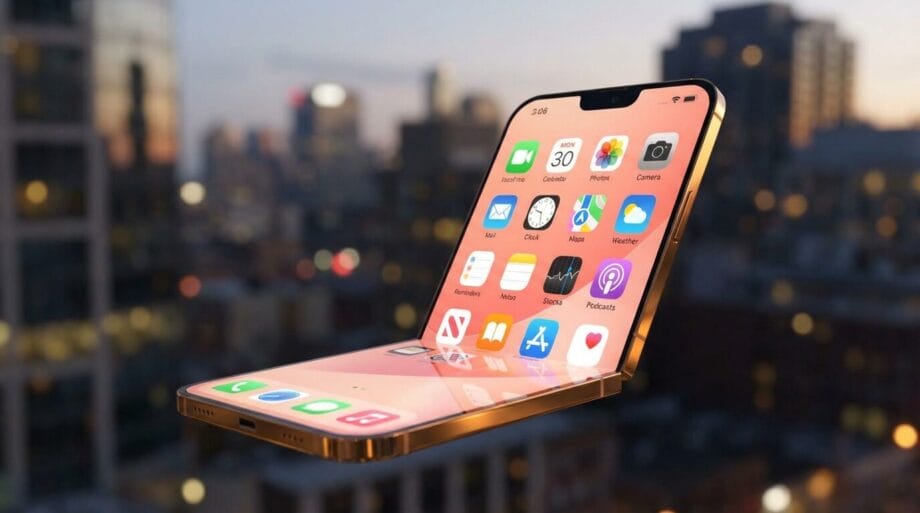
Analysts have speculated on various price thresholds, generally concluding that it will commence at no less than $2,000, thus placing it significantly above the iPhone Pro Max and aligning more closely with the premium tiers of the company’s Macs and iPads.
In spite of a plethora of rumors and conjectures, numerous specifics remain unclear, including the final product nomenclature, dimensions, software features, and the manner in which iOS will adapt to a foldable framework.
Unease regarding durability, reparability, and the long-term reliability of a foldable iPhone also persists. Presently, it appears that Apple is proceeding cautiously, ensuring it delivers a product that meets its storied standards before unveiling it to the public. Anticipate further updates as the launch date nears, which will illuminate this eagerly awaited device.
Source link: News.ssbcrack.com.