Quick Summary
The best SaaS demo video style isn’t the flashiest – it’s the one that drives conversions.
High-converting videos deliver clarity, connection, and a strong CTA. Animated explainers work best for awareness, screencast walkthroughs drive trial and demo sign-ups, and customer stories boost close rates at the decision stage.
Top SaaS teams build a video stack across the funnel and measure impact on sign-ups, close rates, and revenue – not just views.
Introduction
Choosing between different SaaS demo video styles can feel a bit like standing at a buffet with a small plate. Animation looks fun. Live action feels serious. Screencasts seem straightforward. Mixed media looks fancy.
You know you cannot do everything at once, and you do not just want views. You want sign-ups, demo requests, and real revenue.
That is where thinking in terms of SaaS demo video styles becomes powerful. Each style has its own strengths, weak spots, and sweet spots in your sales process.
Some styles are perfect at making a complex product easy to grasp. Others shine when a buyer is already interested and only needs to see how the product works in real life.
The hard part is that many SaaS teams pick video styles based on what looks cool or what a competitor did. That is a fast way to burn the budget on videos that win design awards but do not move your trial or MRR numbers. You need a clear way to connect style to conversion, not just to aesthetics.
What Makes A SaaS Demo Video Style “High-Converting”?

Before you compare styles, you need a simple test for what “good” means. For SaaS, a high-converting video does more than rack up views. It drives trial sign-ups, demo requests, upgrades, and, in time, growth in monthly recurring revenue. That is how you should judge different SaaS demo video styles.
You can think about conversion in three pillars:
- Clarity: The video has to make your product and its value easy to understand, even if the product deals with topics like data pipelines, security, or AI.
- Connection: The viewer needs to feel that you understand their world and problems and that your product is made for someone like them.
- Compulsion: There has to be a clear push toward a next step, with a direct call to action that feels natural, not forced.
The “best” style is not the same for every SaaS product. It depends on how complex your product is, how experienced your audience is, and where they are in their decision process.
A security engineer making an enterprise call has very different needs from a solo founder trying a tool for the first time.
A common mistake is choosing style based on trend posts about the best SaaS demo videos or what looks impressive on social feeds. A better approach is to evaluate each style on:
- production cost.
- time to produce.
- how easy it is to update.
- how well you can track its effect on real conversions.
That is the framework we will use in the next section.
The 5 Core SaaS Demo Video Styles (And When Each One Converts Best)
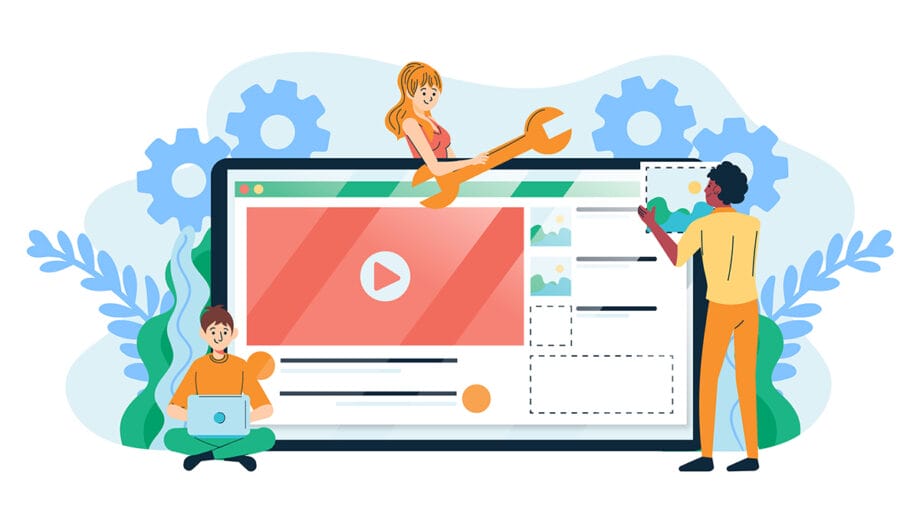
1. Animated Explainer Videos: Best For Simplifying Complex Products
Animated explainers are often your best friend when your product is abstract or technical. You can show data moving, permissions changing, or AI making smart choices in a way that feels simple and visual. Where a plain screen recording would confuse, animation can show the “invisible” parts of your product clearly.
Within animation, common options include: Character-based animation, Tech-style motion graphics, and Whiteboard animation.
For conversions, animated explainers are strongest at the top of your marketing funnel. Their job is to help someone “get it” in under a minute and move from mild interest to real curiosity.
They may not drive as many instant trial sign-ups as a detailed demo, but they set up the rest of your funnel by raising understanding and trust.
2. Screencast/Product Walkthrough Videos
Screencast demos are the straight test drive. You show the product on screen, walk through real workflows, and let people see what they would actually click. Among SaaS demo video styles, this is often the one that has the clearest and fastest impact on trial and demo conversions.
There is a big gap between a random screen recording and a conversion-focused walkthrough. High-performing screencasts:
- Open with a quick setup of who the video is for and what you will show.
- Use zooms and highlights to focus attention and follow a realistic user path instead of jumping around.
- Slow down on key moments, with narration that feels like a guided tour of a day in the life, not a feature dump.
Screencasts shine for prospects who already understand the problem and want to know whether your product fits their exact use case. They remove doubt and help someone answer “Will this actually work for my team and me?” in a very direct way. This is why they are perfect for mid-funnel pages and sales follow-up emails.
3. Live-Action Customer Story Videos
When a buyer is close to signing but still nervous, a polished screencast is not always enough. They want to see and hear from people like them who already made the choice. That is where live-action customer stories take over as some of the best SaaS demo videos for late-stage deals.
These videos use real customers on camera, sharing specific problems and outcomes. The strongest ones feel honest, not scripted. The customer talks about real numbers, real time saved, or real risk reduced, instead of only saying “we love this product”.
You often see a light documentary style, where interviews are mixed with shots of the team working and quick glimpses of the product in context.
4. Mixed Media (Live-Action + Animation)
Mixed media videos combine live action with animation or motion graphics. Think about a person working at a laptop while animated UI cards float on screen, or a talking-head founder interview with clean, animated callouts that highlight key results. Done right, this style gives you both human warmth and technical clarity.
One reason mixed media converts well is that it keeps visual interest high. When you switch between faces, real settings, and animated overlays, viewers stay engaged longer. At the same time, those animated UI elements and graphics help explain complex features in a way that a raw talking-head video never could.
Grammarly’s well-known demo, where you see typing on screen and smart overlays correcting it, is a good reference for this approach.
5. Story-Driven/Scenario-Based Videos
Story-driven demo videos follow a character or a company through a situation that looks a lot like your buyer’s day. You might see a stressed operations lead juggling spreadsheets, a teacher handling too many tools, or a team drowning in email. The software enters the story and changes how things play out.
A story is powerful because it helps people imagine themselves using your product. Instead of listing features, you watch a short “mini episode” where the pain is clear, and the outcome is better work, calm, or speed.
That emotional shift moves someone from “this seems interesting” to “I want that result”, which is where conversion really starts.
These videos work especially well when your product solves workflow or people problems, not just technical ones. Project management tools, support platforms, communication apps, and similar products all benefit from this style.
When the market is crowded, and feature sets feel similar, the team that tells the most human story often wins.
How To Match Video Style To Your Sales Funnel Stage
No single video can do everything. People at different stages of their decision process need different kinds of proof. When you map video styles to funnel stages, your videos stop fighting each other and start working as a system.
Think about the funnel this way:

- Top Of Funnel (Awareness): The goal is attention and basic understanding. Animated explainers and short positioning videos shine here. They are easy to share, fast to understand, and do not ask for a big time commitment.
- Middle Of Funnel (Consideration): You are speaking with people who already know they have a problem and are comparing options. Screencast demos and clear product walkthroughs carry most of the weight here.
- Bottom Of Funnel (Decision): Buyers want social proof and lower perceived risk. This is where live-action customer stories, detailed case study videos, and sometimes mixed media demos have the greatest effect.
- Post-Purchase (Onboarding And Expansion): After purchase, screencast tutorials and onboarding videos take over. They shorten time to value and reduce churn by helping new users get quick wins.
The best SaaS companies do not just have one hero video. They build a portfolio that covers awareness, consideration, decision, and onboarding in a planned way.
If you are short on budget and can only create a few videos, a smart starting plan is:
- one strong mid-funnel product demo, plus
- at least one customer story video.
The demo has the highest direct impact on sign-ups, and the testimonial supports every late-stage conversation your sales team has. From there, you can layer in an animated explainer video and more tutorials over time.
Real Conversion Data: Which Styles Actually Drive Results
Opinions about the SaaS demo videos are easy to find. Hard numbers matter more. While exact results always vary, some clear patterns show up again and again across SaaS products and markets.
When a strong product demo video sits on a key landing page, it often raises trial or demo request conversions by twenty to thirty percent compared with a similar page that uses text and static images only.
Customer testimonial videos tend to have a big effect on close rates, especially in enterprise deals. When sales teams send the right case study video during the final evaluation, it is common to see close rates in that stage climb by 15 to 25 percent.
On the brand side, well-placed explainer videos on home pages can multiply time on site and cut bounce rates by half or more. Viewers who watch a full short explainer stick around longer, click deeper into your product pages, and enter your funnel with more context.
Screencasts and walkthroughs show the highest direct impact on trial sign-ups, while explainers and customer stories play more of a supporting role over many touch-points.
Useful metrics to watch include:
- conversion rate on pages with and without video.
- demo and trial request volume.
- video completion and rewatch rates.
- time on page and scroll depth for key URLs.
Testing is key. A simple A/B test between two versions of a landing page, each using a different video style, can teach you a lot. So can watching completion rates and drop-off points. Those metrics tell you which videos have the potential to drive conversions, even before you see the full effect in your CRM.
Conclusion
There’s no single demo style that works for every SaaS. The best videos match the format to the audience, product complexity, and buying stage. Animated explainers simplify ideas, walkthroughs drive consideration, and customer stories build late-stage trust. Production quality earns attention, while authenticity earns belief – and a clear CTA turns that belief into action.
Winning SaaS teams don’t rely on one video. They build a planned video stack that supports buyers from first touch to onboarding. Start by reviewing what you already have, then fill the gaps that matter most.


