Smart wearable technology from brands such as Google and Apple offers a commendable avenue for monitoring health and fitness. However, these gadgets are not devoid of risks.
They possess access to sensitive personal health information, including your geographical location, sleep patterns, and exercise habits.
While the specifics of data collection can fluctuate based on user settings and preferences, the overarching concern lies in the potential security vulnerabilities associated with smartwatches.
The advantages of utilizing smartwatches are manifold. The health metrics they track can be pivotal in identifying potential medical issues at an early stage, assessing bodily responses to therapies, and furnishing healthcare providers with continuous health data.
Nevertheless, given that this technology is relatively nascent and governed by mega-corporations like Google and Apple, there exists a propensity for data commercialization.
Despite the legal frameworks that govern the collection and distribution of personal health information, one must ponder: to what extent can this sensitive data be commodified and traded?
Potential Risks to Your Health Data
Google’s Fitbit privacy policy asserts that users retain control over their data-sharing preferences. It encourages users to navigate their settings to tailor data access, stating the ability to erase smartwatch data at any moment.
While it claims not to commoditize user data for advertising, there exist caveats regarding consent; data may be shared in certain exigent circumstances, such as legal obligations.
The prospect of courts mandating disclosure of smartwatch data is unnerving. Benjamin Smarr, an associate professor at the University of California San Diego, explores how smartwatches can assist women in tracking pregnancy and miscarriage through temperature data.
Yet, there are apprehensions that such information might be subpoenaed by courts in jurisdictions with restrictive abortion laws.
Despite Apple’s advocacy for robust health data protection via its applications, its privacy policy raises significant concerns.
The policy states that personal health data is not sold outright; however, it does allow for sharing with affiliated companies and service providers under seemingly broad conditions.
This indicates that third-party entities could potentially gain access to your health information through your smartwatch.
Illustrative Instances of Data Sharing from Smartwatches
There is a palpable unease regarding the non-consensual sharing of personal information. While avenues exist to purge your data from the internet, users may inadvertently share information without their knowledge.
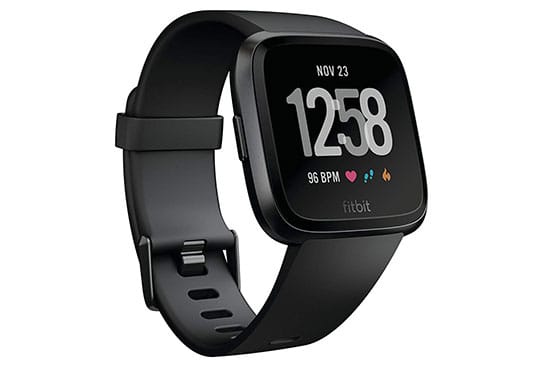
In 2022, Google incurred nearly $400 million in penalties following its exposure of location tracking practices through Fitbit, even when users disabled the feature.
A previous episode in 2018 highlighted US military personnel unwittingly disclosing workout data via the athletic social network, Strava, revealing troop locations and patrol routes, thereby jeopardizing operational security.
Moreover, a study published in 2025 within the journal Nature lamented that companies like Apple and Google tend to obfuscate the specifics surrounding user data sharing, routinely lacking transparency about the rationale behind data dissemination.
Despite expectations that location data should be easily safeguardable, its aggregation through smartwatches has historically posed significant issues.
Although smartwatches provide insightful medical monitoring capabilities, it is evident that substantial progress is required before users can regard them as securely impermeable.
Source link: Bgr.com.