Musk Expresses Discontent Over Karpathy’s Comparisons of Autonomous Driving Technologies
The CEO of Tesla, Elon Musk, has expressed dissatisfaction regarding observations made by the company’s former AI leader, Andrej Karpathy.
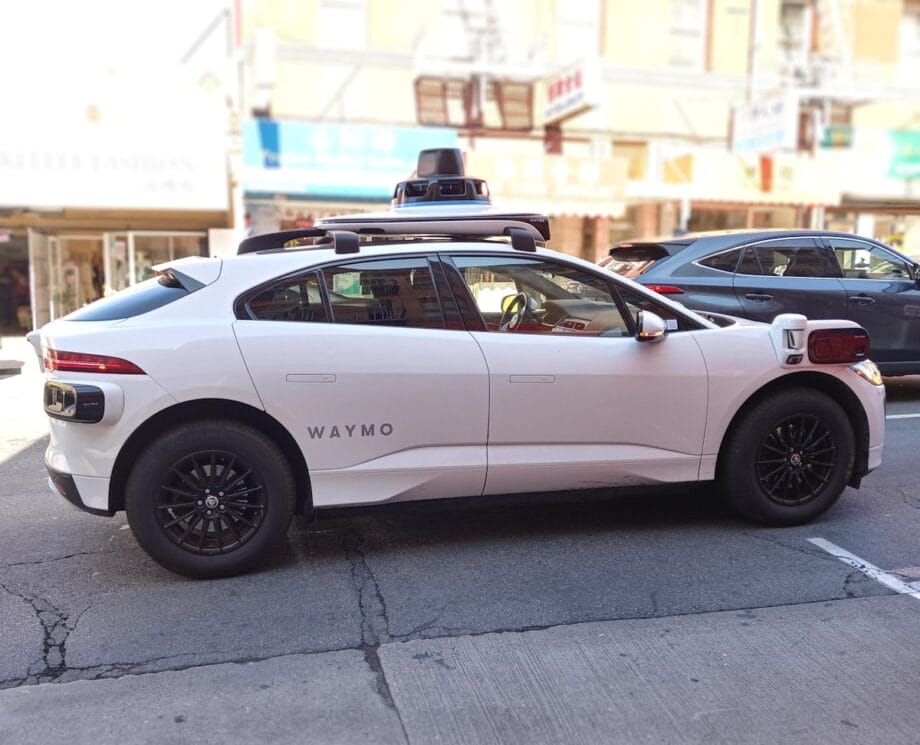
Karpathy recently drew parallels between Tesla’s Full Self-Driving (FSD) system and the autonomous software developed by Waymo, a subsidiary of Alphabet. An X user, Yunchen Jin, shared intriguing insights from a dialogue with Karpathy, during which the latter lauded both Tesla and Waymo’s autonomous driving technologies.
However, he underscored that the disparities between the two systems would become increasingly pronounced as their operational scales expanded. Previously, Karpathy had characterized the experience of utilizing Tesla’s FSD as akin to journeying on a magnetic levitation train.
Karpathy’s Assessment of Waymo versus Tesla Software
Reflecting on previous statements, Karpathy noted, “Waymo has a hardware challenge, whereas Tesla grapples with software issues.” In an incident where a power outage in San Francisco incapacitated Waymo’s operations, Tesla’s FSD remained functional.
As Jin elaborated, Waymo’s architecture is “modular,” heavily reliant on high-definition maps, LiDAR, various sensors, 5G connectivity, and a plethora of neural networks.
This structure operates effectively until one module fails, as evidenced by when traffic lights malfunctioned, leading the HD map to misalign with actual conditions, forcing the vehicle into a safety mode.
Conversely, Tesla’s FSD operates on an “end-to-end” approach, where a singular expansive neural network processes camera pixels to direct steering and braking. This methodology embodies Karpathy’s concept of Software 2.0: training a neural network using billions of miles driven by humans, whereby the “code” translates to the model weights, allowing for more human-like driving.
Jin contemplated, “At this juncture, Waymo appears to be entangled in significant software complications. Its modular strategy might lead to scaling issues and dependency traps. In the long term, Tesla’s FSD is poised to prevail.”
When queried if he still regarded Waymo’s software as superior to Tesla’s, Karpathy remarked, “Each system currently provides what feels to me like an impeccable driving experience—smooth, assured, and functional. There may be inherent differences, yet one must await their emergence or review their performance across numerous vehicles.”
Musk’s Reaction to Karpathy’s Perspective
In response to Jin’s post, Musk retorted that Karpathy’s perspective was “outdated.” He asserted, “Andrej’s insights are no longer relevant. Tesla’s AI software has progressed significantly since his departure. The intelligence density per gigabyte of Tesla’s AI surpasses all current competition by a substantial margin.”
Tesla’s Advancements and Market Position
Recently, Tesla unveiled FSD version 14, garnering commendations for enhanced navigation fluidity and upgraded safety measures. Additionally, the company is advancing its efforts toward the driverless testing of its Robotaxi fleet.
Meanwhile, Waymo continues to maintain a stronghold in the U.S. robotaxi domain, reporting 14 million paid rides anticipated for 2025. The Alphabet-owned entity is also planning to extend its reach into European markets, while Baidu-backed Apollo Go has announced its intentions to enter the UK in collaboration with Uber and Lyft.
Source link: Timesofindia.indiatimes.com.